Orthodontics, School of Stomatology, Shanghai Engineering Research Center of Tooth Restoration and Regeneration, Tongji University, Shanghai, China.
Faculty of Dentistry, The University of Hong Kong, Sai Ying Pun, Hong Kong, China.
J Cell Physiol. 2020 May;235(5):4466-4480. doi: 10.1002/jcp.29323. Epub 2019 Oct 23.
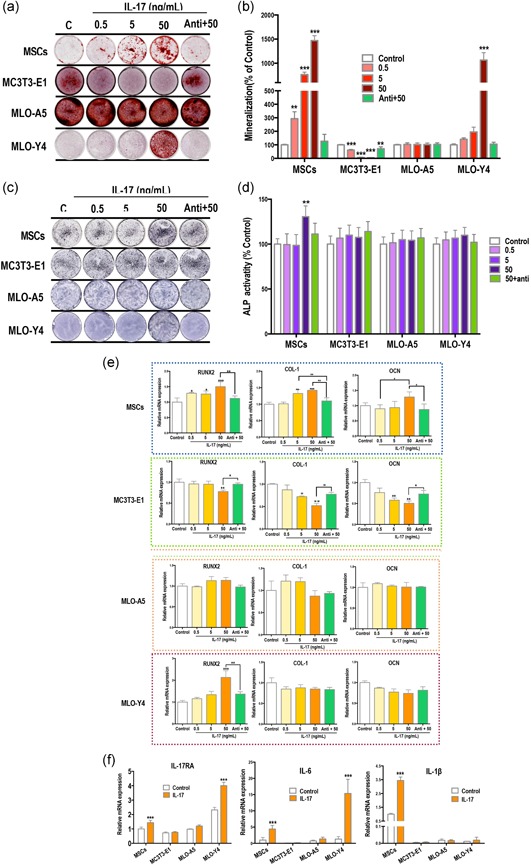
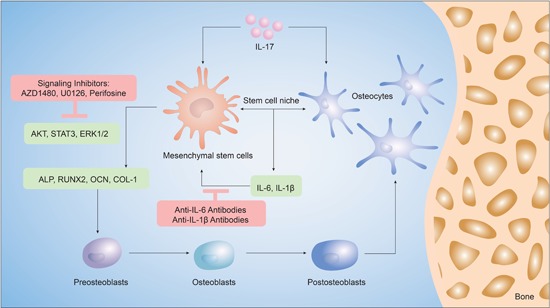
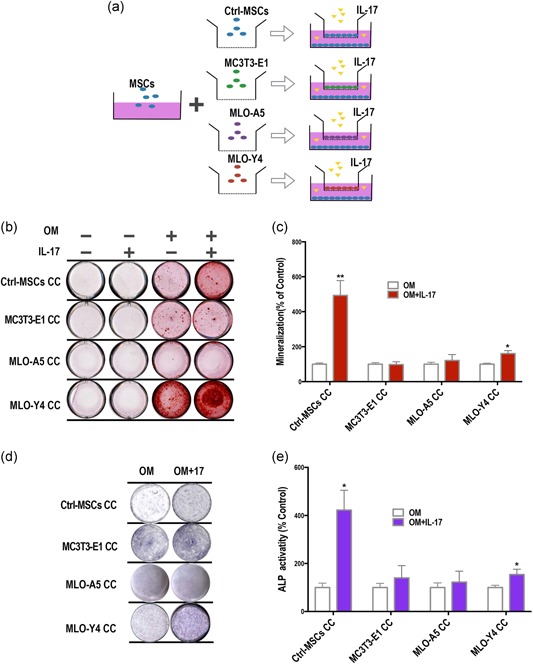
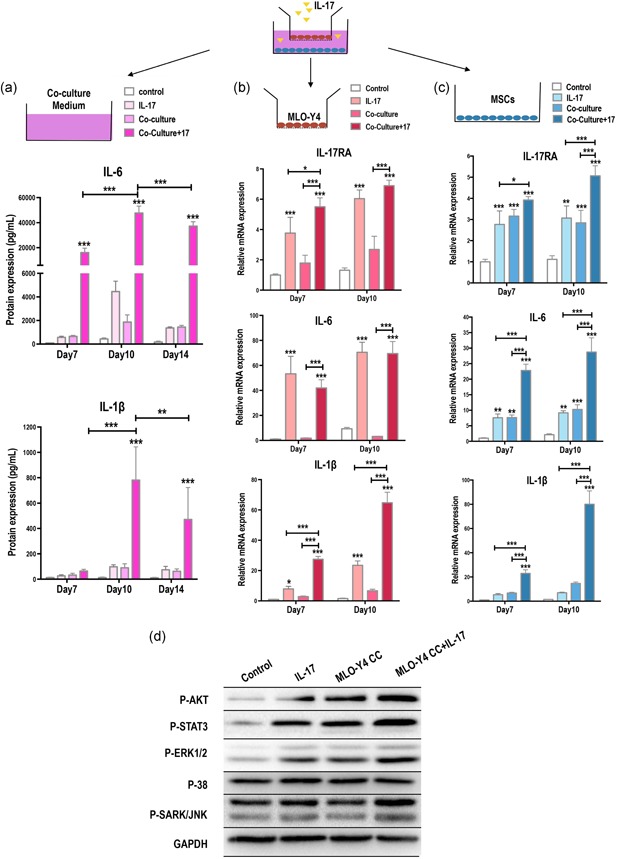
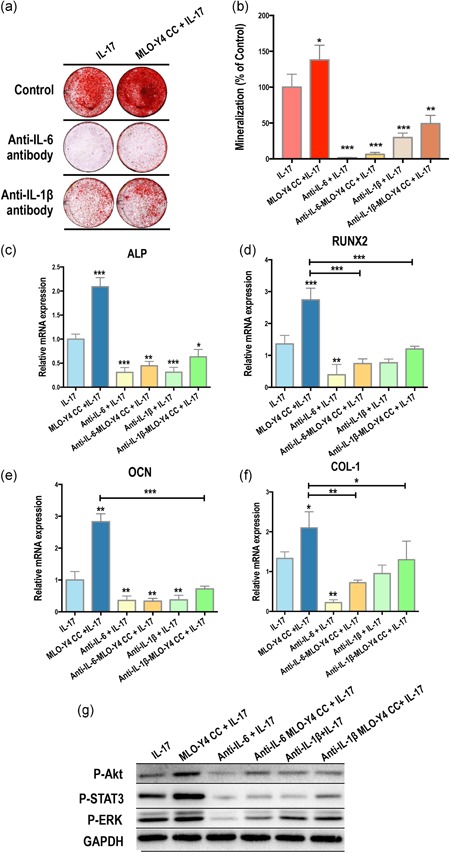
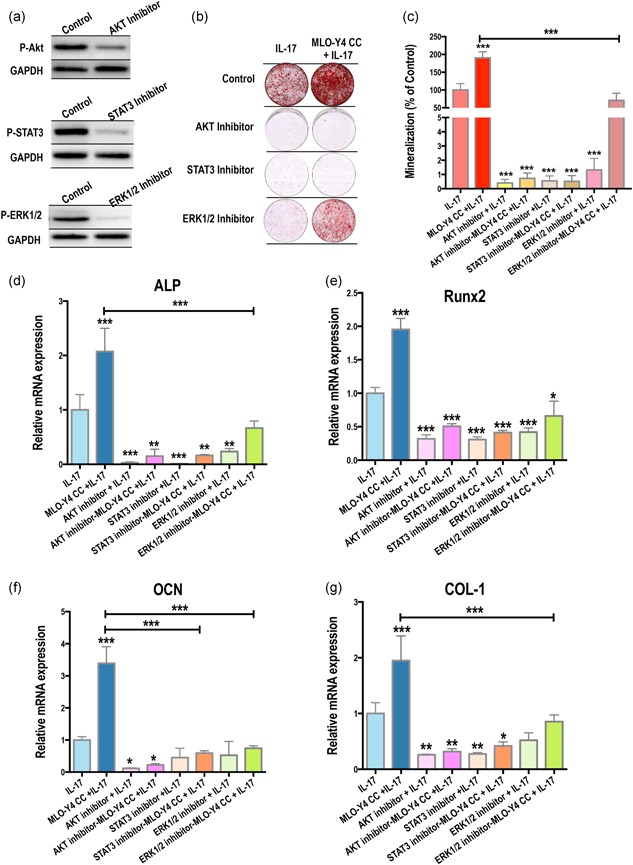
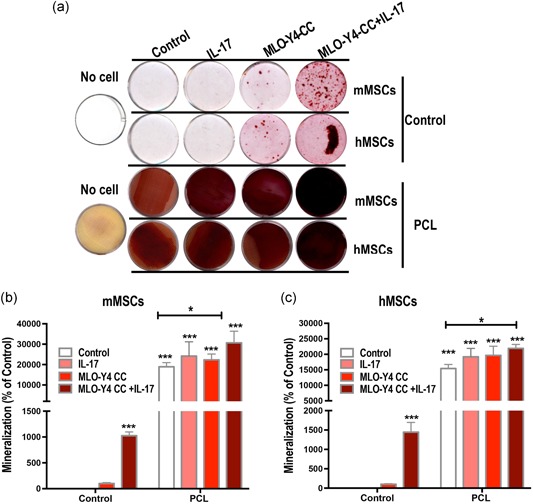
Bone remodeling is a strictly regulated dynamic process that cycles between bone formation and resorption, and interleukin-17 (IL-17) critically orchestrates the activation and differentiation of both osteoblasts and osteoclasts. Mesenchymal stem cells (MSCs) within their native environment receive biochemical stimuli from surrounding cells that influences their differentiation into bone precursors, while the roles of osteocytes in regulating the osteogenic differentiation of MSCs remain unclear. This study investigated the specific roles of IL-17 signaling cascades and osteocyte-specific pathways in the osteogenesis of MSCs. Using a transwell coculture (CC) system, we explored the effects of osteocytes and osteoblasts on the osteogenesis of MSCs with and without IL-17 supplementation. A polycaprolactone (PCL) three-dimensional (3D) culture model was used to evaluate their osteogenic potential in the presence of osteocytes and IL-17. Notably, IL-17 induced osteogenesis in MSCs, which could be attenuated by blocking IL-17 receptor A. The osteogenic differentiation of MSCs promoted by IL-17 was further enhanced by CC with osteocytes. Moreover, proinflammatory cytokines IL-6 and IL-1β played an important role in IL-17-dependent differentiation, via the phosphorylation of AKT, signal transducer and activator of transcription 3, and extracellular signal-regulated kinase 1/2 signaling pathways in the MSC niche. The present study confirms a synergistic effect of osteocytes and IL-17 in the production of biochemical signals to stimulate the osteogenic differentiation of MSCs, which could be further promoted in the PCL 3D-scaffold. These findings provide important insight into the mechanisms of MSCs activation and osteogenic differentiation within the native stem cell niche, and suggest a possible role of IL-17 in bone tissue engineering.
骨重建是一个严格调控的动态过程,包括骨形成和骨吸收两个过程,白细胞介素 17(IL-17)在骨母细胞和破骨细胞的激活和分化中起着关键的调节作用。在其天然环境中的间充质干细胞(MSCs)从周围细胞接收生化刺激,影响其分化为成骨前体细胞,而骨细胞在调节 MSCs 成骨分化中的作用尚不清楚。本研究探讨了 IL-17 信号通路和骨细胞特异性通路在 MSCs 成骨中的特定作用。使用 Transwell 共培养(CC)系统,我们研究了有无 IL-17 补充时,骨细胞和破骨细胞对 MSCs 成骨的影响。使用聚己内酯(PCL)三维(3D)培养模型评估在存在骨细胞和 IL-17 时它们的成骨潜力。值得注意的是,IL-17 诱导 MSCs 成骨,阻断 IL-17 受体 A 可减弱这种作用。IL-17 促进 MSCs 成骨,CC 中加入骨细胞可进一步增强这种作用。此外,促炎细胞因子 IL-6 和 IL-1β 通过 MSC 龛中 AKT、信号转导和转录激活因子 3 和细胞外信号调节激酶 1/2 信号通路的磷酸化,在 IL-17 依赖性分化中发挥重要作用。本研究证实了骨细胞和 IL-17 协同产生生化信号,刺激 MSCs 成骨分化,在 PCL 3D 支架中可进一步促进。这些发现为了解 MSCs 在天然干细胞龛中的激活和成骨分化机制提供了重要线索,并提示 IL-17 在骨组织工程中的可能作用。