Department of Molecular Systems Biology, Helmholtz-Centre for Environmental Research (UFZ), Permoserstraße 15, 04318, Leipzig, Germany.
Department of Chemical and Product Safety, German Federal Institute for Risk Assessment (BfR), Max-Dohrn-Straße 8-10, 10589, Berlin, Germany.
Part Fibre Toxicol. 2019 Oct 25;16(1):38. doi: 10.1186/s12989-019-0321-5.
Nanomaterials (NMs) can be fine-tuned in their properties resulting in a high number of variants, each requiring a thorough safety assessment. Grouping and categorization approaches that would reduce the amount of testing are in principle existing for NMs but are still mostly conceptual. One drawback is the limited mechanistic understanding of NM toxicity. Thus, we conducted a multi-omics in vitro study in RLE-6TN rat alveolar epithelial cells involving 12 NMs covering different materials and including a systematic variation of particle size, surface charge and hydrophobicity for SiO NMs. Cellular responses were analyzed by global proteomics, targeted metabolomics and SH2 profiling. Results were integrated using Weighted Gene Correlation Network Analysis (WGCNA).
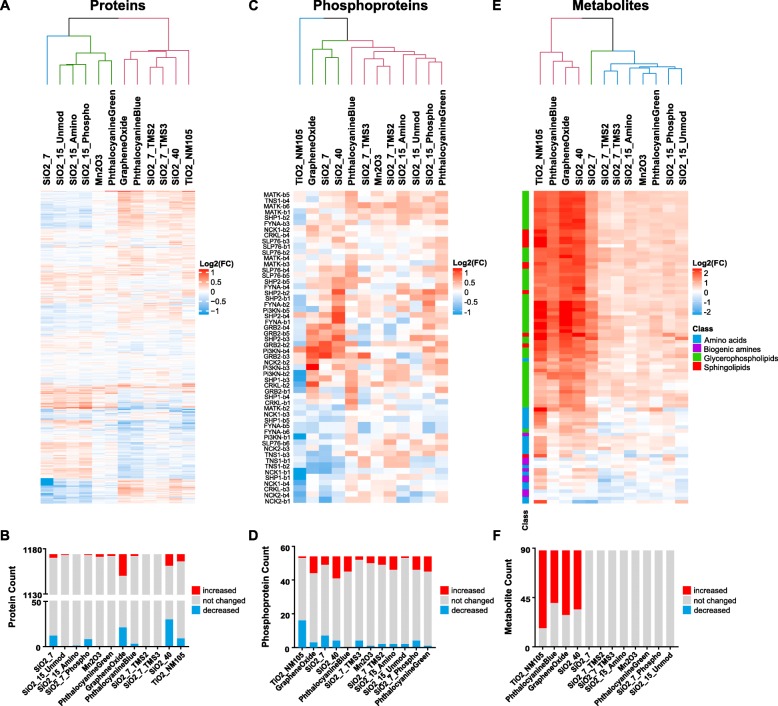
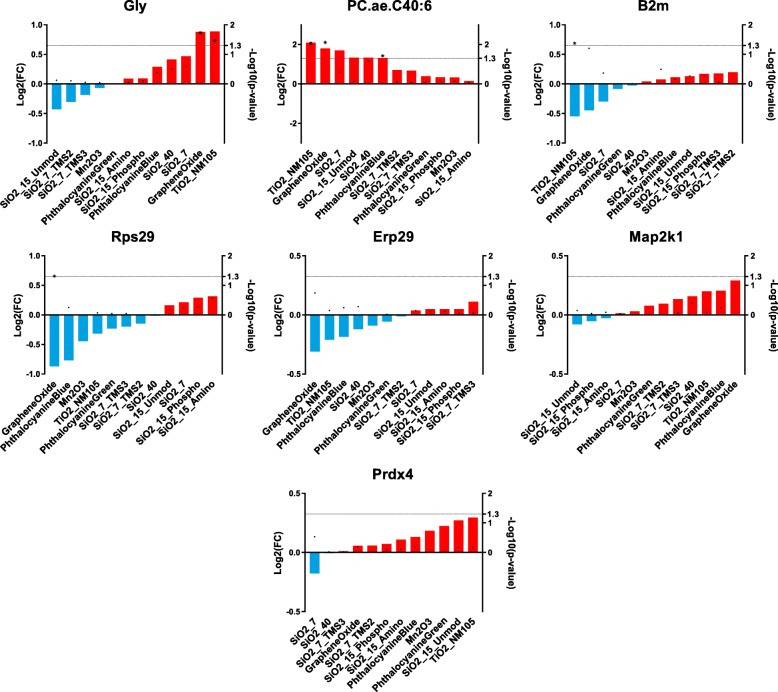
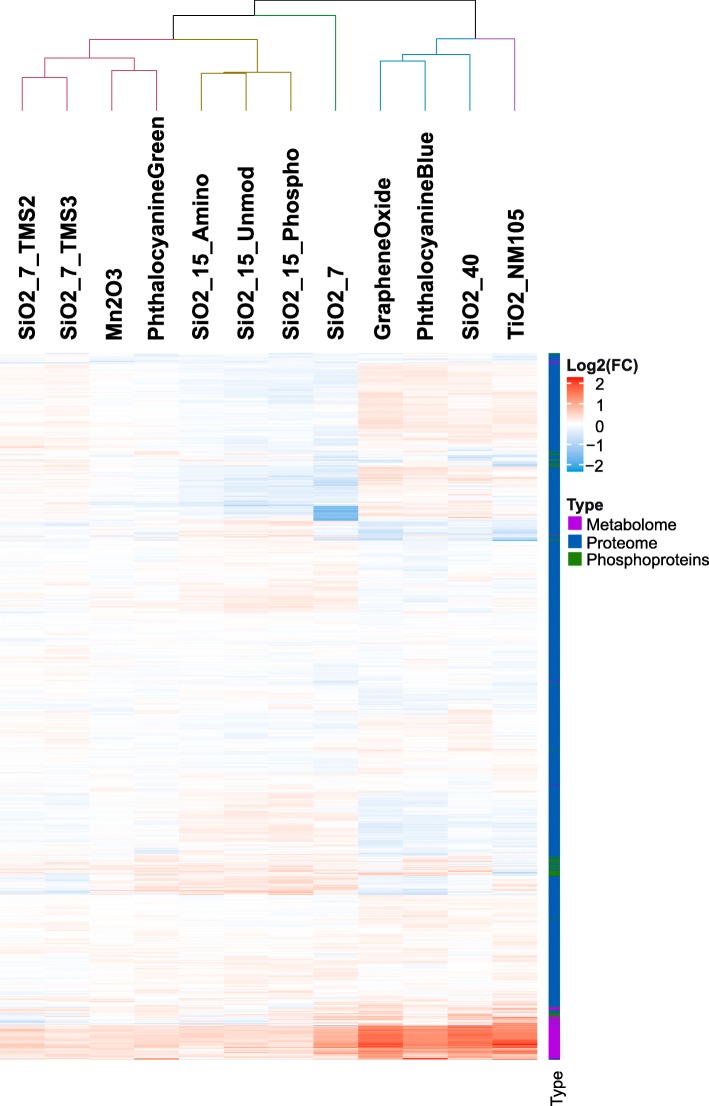
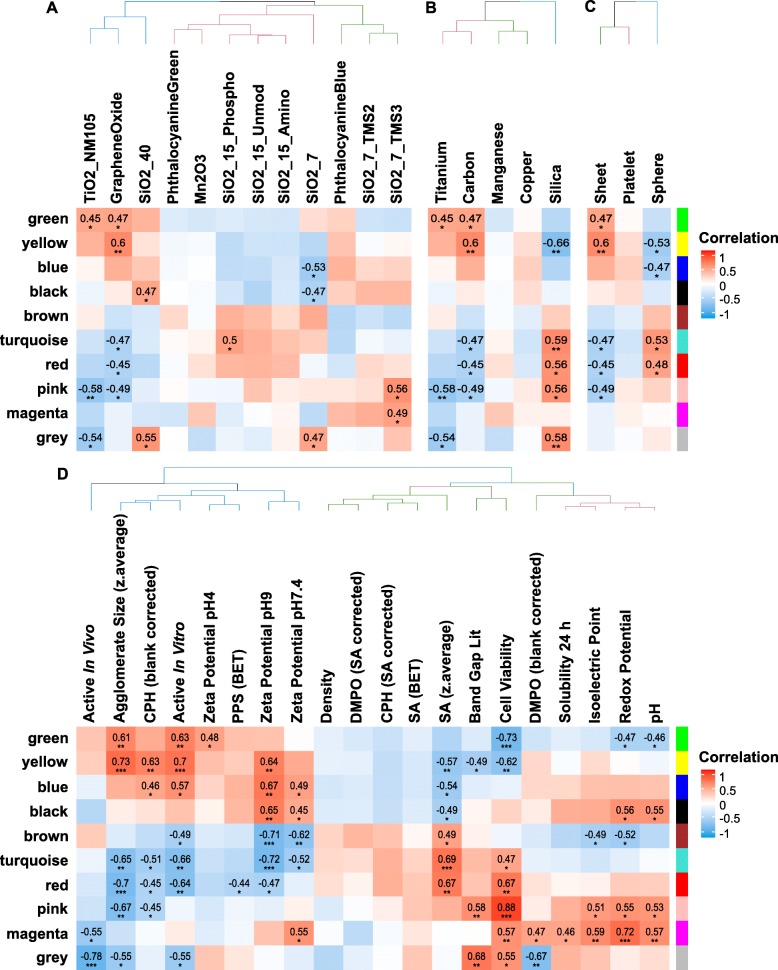
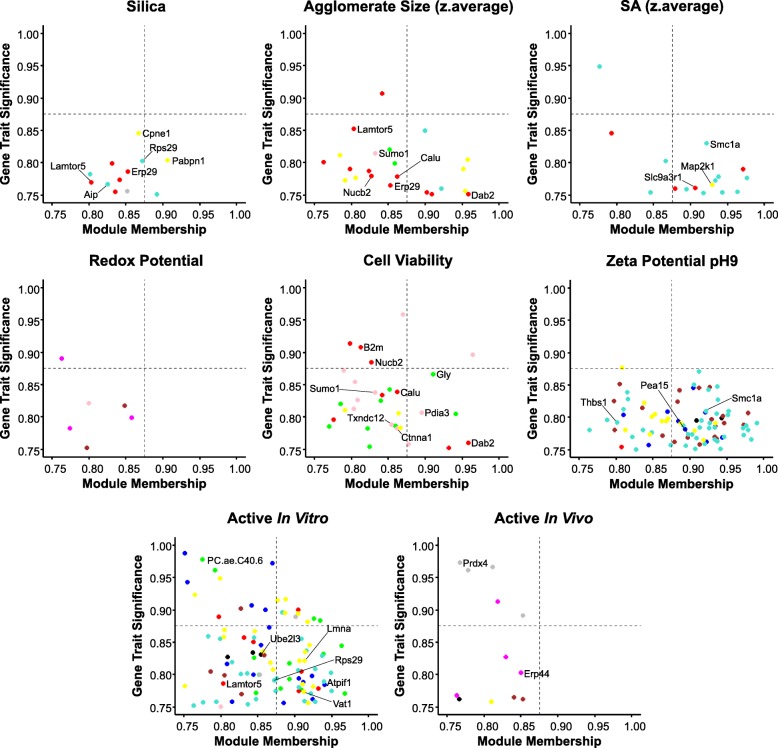
Cluster analyses involving all data sets separated Graphene Oxide, TiO2_NM105, SiO2_40 and Phthalocyanine Blue from the other NMs as their cellular responses showed a high degree of similarities, although apical in vivo results may differ. SiO2_7 behaved differently but still induced significant changes. In contrast, the remaining NMs were more similar to untreated controls. WGCNA revealed correlations of specific physico-chemical properties such as agglomerate size and redox potential to cellular responses. A key driver analysis could identify biomolecules being highly correlated to the observed effects, which might be representative biomarker candidates. Key drivers in our study were mainly related to oxidative stress responses and apoptosis.
Our multi-omics approach involving proteomics, metabolomics and SH2 profiling proved useful to obtain insights into NMs Mode of Actions. Integrating results allowed for a more robust NM categorization. Moreover, key physico-chemical properties strongly correlating with NM toxicity were identified. Finally, we suggest several key drivers of toxicity that bear the potential to improve future testing and assessment approaches.
纳米材料 (NMs) 可以通过精细调整其性质来产生大量变体,每种变体都需要进行彻底的安全评估。分组和分类方法可以减少测试的数量,这些方法原则上适用于 NMs,但仍主要是概念性的。一个缺点是对 NM 毒性的机制理解有限。因此,我们在 RLE-6TN 大鼠肺泡上皮细胞中进行了一项多组学体外研究,涉及 12 种 NMs,涵盖了不同的材料,包括系统地改变 SiO NMs 的粒径、表面电荷和疏水性。通过全局蛋白质组学、靶向代谢组学和 SH2 谱分析来分析细胞反应。使用加权基因相关网络分析 (WGCNA) 整合结果。
涉及所有数据集的聚类分析将氧化石墨烯、TiO2_NM105、SiO2_40 和酞菁蓝与其他 NMs 分开,因为它们的细胞反应表现出高度的相似性,尽管体内的顶端结果可能不同。SiO2_7 的行为不同,但仍诱导了显著的变化。相比之下,其余的 NMs 与未处理的对照更为相似。WGCNA 揭示了特定物理化学性质(如团聚体大小和氧化还原电位)与细胞反应之间的相关性。关键驱动因素分析可以识别与观察到的效应高度相关的生物分子,这些生物分子可能是有代表性的生物标志物候选物。我们研究中的关键驱动因素主要与氧化应激反应和细胞凋亡有关。
我们的多组学方法涉及蛋白质组学、代谢组学和 SH2 谱分析,证明有助于深入了解 NMs 的作用模式。整合结果可以对 NMs 进行更稳健的分类。此外,还确定了与 NM 毒性强烈相关的关键物理化学性质。最后,我们提出了一些毒性的关键驱动因素,这些因素有可能改进未来的测试和评估方法。