Bawankar Pritam, Bhattacharjee Harsha, Barman Manabjyoti, Soibam Ronel, Deka Hemalata, Chandra Kuri Ganesh, Medhi Jnanankar
Department of Vitreo-Retina Surgery, Sri Sankaradeva Nethralaya, Guwahati, Assam, India.
Department of Oculoplastic, Sri Sankaradeva Nethralaya, Guwahati, Assam, India.
J Ophthalmic Vis Res. 2019 Jul 18;14(3):257-266. doi: 10.18502/jovr.v14i3.4781. eCollection 2019 Jul-Sep.
To report the investigation of an outbreak of multidrug-resistant (MDR) endophthalmitis in 13 patients after cataract surgery and to emphasize on the importance of clinical profile, risk factors, and treatment outcomes.
This was a hospital-based, retrospective case study with 13 consecutive patients who had man- ual small-incision cataract surgery with intraocular lens (IOL) implantation and developed acute postoperative endophthalmitis. The anterior chamber taps, vitreous aspirates, and environ- mental surveillance specimens were inoculated for culturing. Antibiotic susceptibility testing was performed using the agar diffusion method. Pulsed-field gel electrophoresis (PFGE) was used to determine the relation- ship between bacterial isolates recovered from study patients and contaminated surveillance samples.
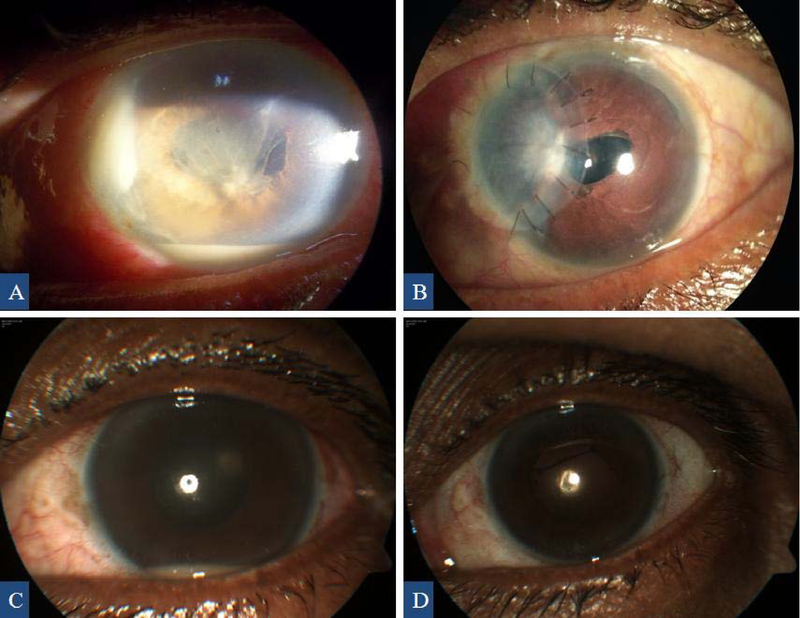
was isolated from all 13 eyes with acute postoperative endophthalmitis and the trypan blue solutions used during surgery. Sensitivity tests revealed that all isolates had an identical resistance to multiple drugs and were only susceptible to imipenem. Genomic DNA typing of isolates recovered from patients and trypan blue solutions showed an identical banding pattern on the PFGE. Despite the prompt use of intravitreal antibiotics and early vitrectomy with IOL explantation in some patients, the outcome was poor in about 50% of patients.
Positive microbiology and genomic DNA typing results proved that the contaminated trypan blue solutions were the source of infection in this outbreak. Postoperative endophthalmitis caused by is often associated with a poor visual prognosis despite prompt treatment with intravitreal antibiotics.
报告对13例白内障手术后发生耐多药(MDR)眼内炎的疫情调查,并强调临床特征、危险因素及治疗结果的重要性。
这是一项基于医院的回顾性病例研究,连续纳入13例接受了人工小切口白内障手术并植入人工晶状体(IOL)且术后发生急性眼内炎的患者。对前房穿刺液、玻璃体抽吸物及环境监测标本进行接种培养。采用琼脂扩散法进行抗生素敏感性试验。使用脉冲场凝胶电泳(PFGE)确定从研究患者中分离出的细菌与受污染监测样本之间的关系。
在所有13只术后发生急性眼内炎的眼中以及手术中使用的台盼蓝溶液中均分离出[具体细菌名称未给出]。敏感性试验显示,所有分离株对多种药物具有相同的耐药性,仅对亚胺培南敏感。从患者和台盼蓝溶液中分离出的[具体细菌名称未给出]的基因组DNA分型在PFGE上显示出相同的条带模式。尽管部分患者及时使用了玻璃体内抗生素并早期进行了玻璃体切除术及取出IOL,但约50%的患者预后较差。
微生物学和基因组DNA分型阳性结果证明,受污染的台盼蓝溶液是此次疫情的感染源。尽管及时使用玻璃体内抗生素治疗,但由[具体细菌名称未给出]引起的术后眼内炎通常与较差的视力预后相关。