Center of Advanced Electronic and Communication Engineering, Faculty of Engineering and Built Environment, Universiti Kebangsaan Malaysia, Bangi, 43600, Malaysia.
Department of Computer Science and Engineering, Jagannath University, Dhaka, Bangladesh.
Sci Rep. 2019 Oct 29;9(1):15491. doi: 10.1038/s41598-019-51620-z.
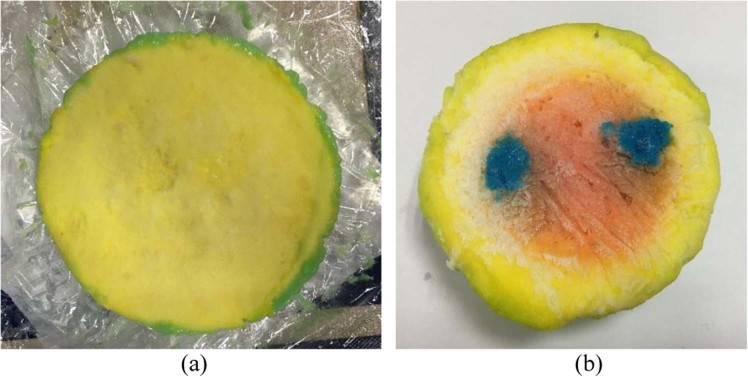
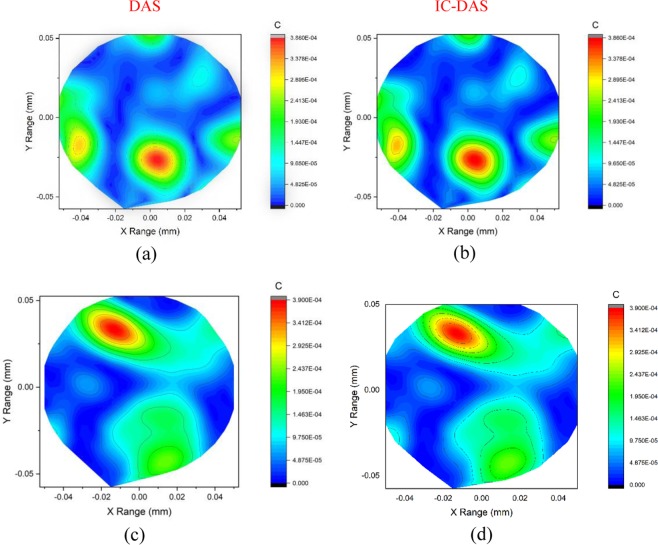
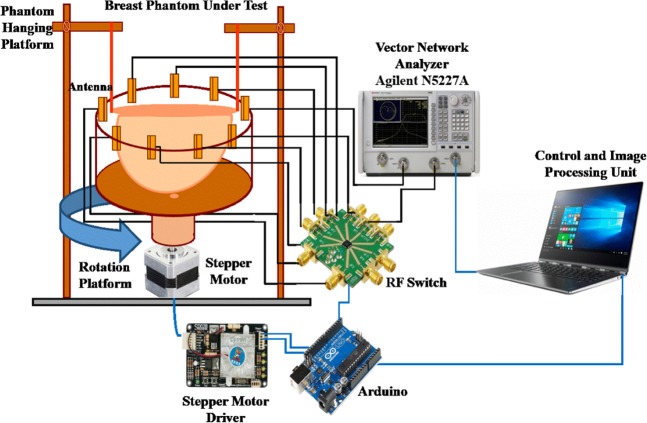
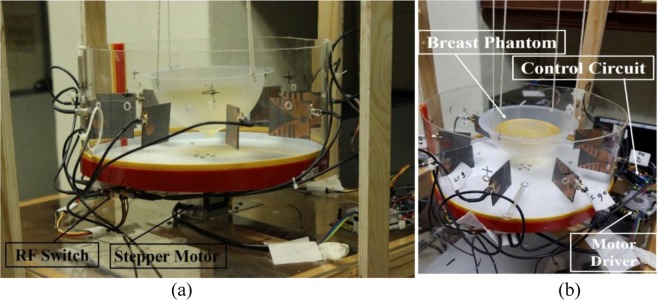
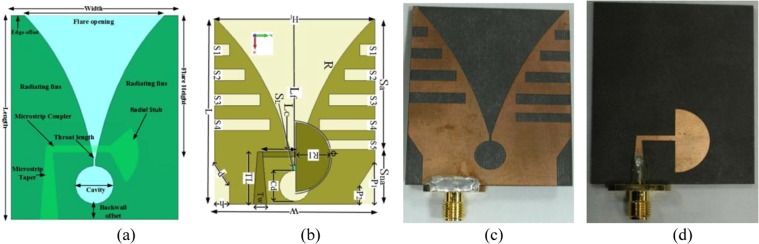
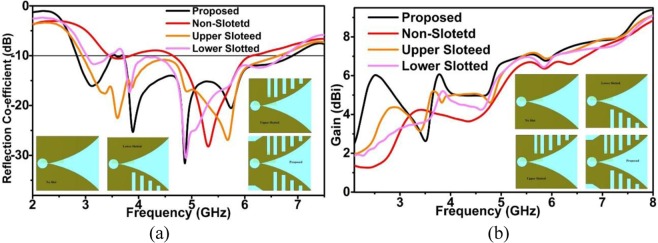
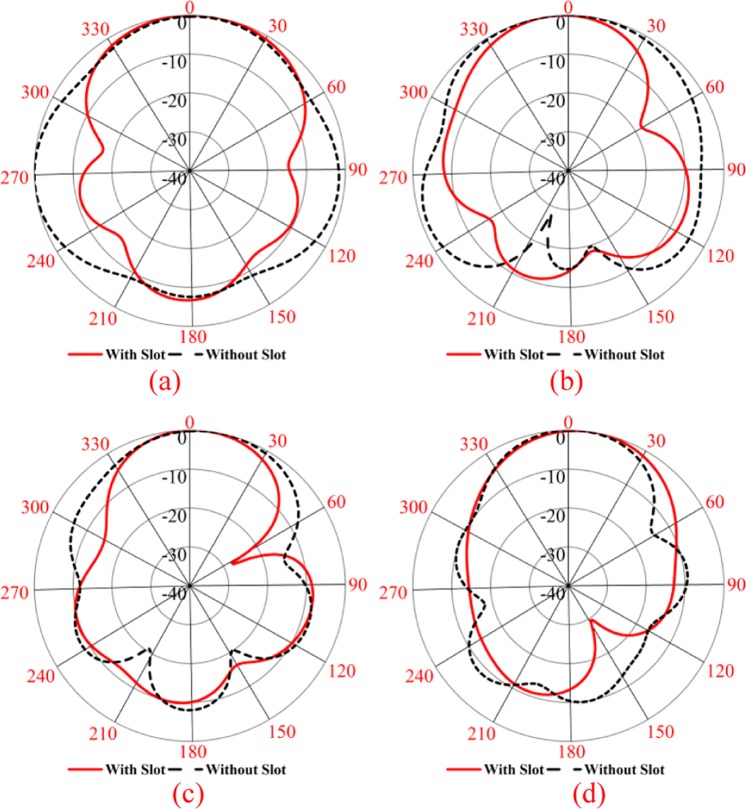
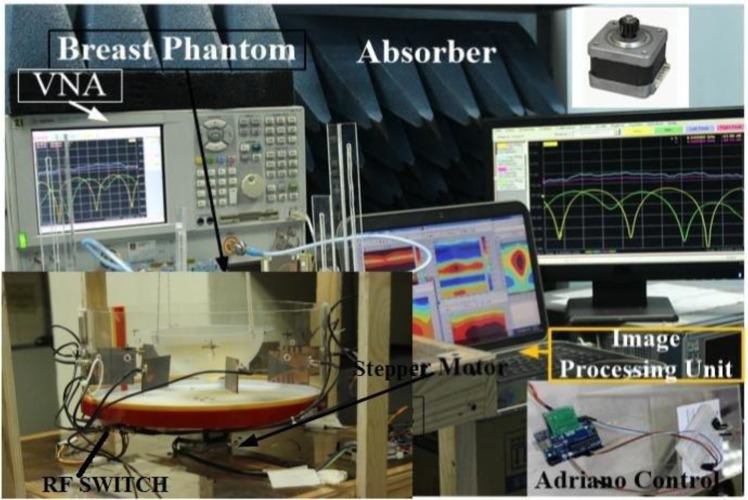
Globally, breast cancer is a major reason for female mortality. Due to the limitations of current clinical imaging, the researchers are encouraged to explore alternative and complementary tools to available techniques to detect the breast tumor in an earlier stage. This article outlines a new, portable, and low-cost microwave imaging (MWI) system using an iterative enhancing technique for breast imaging. A compact side slotted tapered slot antenna is designed for microwave imaging. The radiating fins of tapered slot antenna are modified by etching nine rectangular side slots. The irregular slots on the radiating fins enhance the electrical length as well as produce strong directive radiation due to the suppression of induced surface currents that radiate vertically at the outer edges of the radiating arms with end-fire direction. It has remarkable effects on efficiency and gain. With the addition of slots, the side-lobe levels are reduced, the gain of the main-lobe is increased and corrects the squint effects simultaneously, thus improving the characteristics of the radiation. For experimental validation, a heterogeneous breast phantom was developed that contains dielectric properties identical to real breast tissues with the inclusion of tumors. An alternative PC controlled and microcontroller-based mechanical MWI system is designed and developed to collect the antenna scattering signal. The radiated backscattered signals from the targeted area of the human body are analyzed to reveal the changes in dielectric properties in tissues. The dielectric constants of tumorous cells are higher than that of normal tissues due to their higher water content. The remarkable deviation of the scattered field is processed by using newly proposed Iteratively Corrected Delay and Sum (IC-DAS) algorithm and the reconstruction of the image of the phantom interior is done. The developed UWB (Ultra-Wideband) antenna based MWI has been able to perform the detection of tumorous cells in breast phantom that can pave the way to saving lives.
全球范围内,乳腺癌是导致女性死亡的主要原因之一。由于当前临床成像的局限性,研究人员被鼓励探索替代和补充工具,以现有的技术更早地检测乳房肿瘤。本文概述了一种新的、便携式的、低成本的微波成像(MWI)系统,该系统使用迭代增强技术进行乳房成像。设计了一种紧凑的侧边开槽锥形缝隙天线用于微波成像。锥形缝隙天线的辐射鳍通过蚀刻九个矩形侧边缝隙进行修改。辐射鳍上的不规则缝隙会增加电气长度,并由于抑制感应表面电流而产生强定向辐射,这些感应表面电流在辐射臂的外边缘垂直辐射,具有端射方向。这对效率和增益有显著的影响。通过添加缝隙,降低了旁瓣电平,增加了主瓣增益,并同时校正了斜视效应,从而改善了辐射特性。为了进行实验验证,开发了一种包含与真实乳房组织相同介电特性的异质乳房体模,并包含肿瘤。设计并开发了一种替代的 PC 控制和基于微控制器的机械 MWI 系统来收集天线散射信号。分析从人体目标区域辐射的反向散射信号,以揭示组织中介电特性的变化。由于肿瘤细胞的含水量较高,其介电常数高于正常组织。通过使用新提出的迭代校正延迟和求和(IC-DAS)算法处理显著偏离的散射场,并对体模内部的图像进行重建。基于超宽带(UWB)天线的 MWI 已经能够检测乳房体模中的肿瘤细胞,为拯救生命铺平了道路。