Department of Anesthesiology, University of Michigan Medical School, Ann Arbor, MI, USA; Center for Consciousness Science, University of Michigan Medical School, Ann Arbor, MI, USA; MD-PhD Program, University of Utah School of Medicine, Salt Lake City, UT, USA.
Department of Anesthesiology, University of Michigan Medical School, Ann Arbor, MI, USA; Center for Consciousness Science, University of Michigan Medical School, Ann Arbor, MI, USA.
Neuroimage. 2020 Feb 1;206:116316. doi: 10.1016/j.neuroimage.2019.116316. Epub 2019 Oct 29.
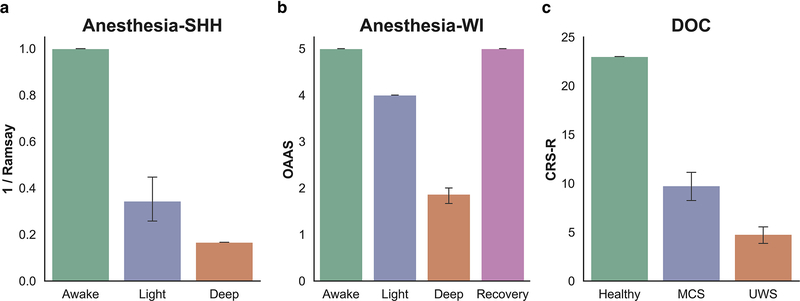
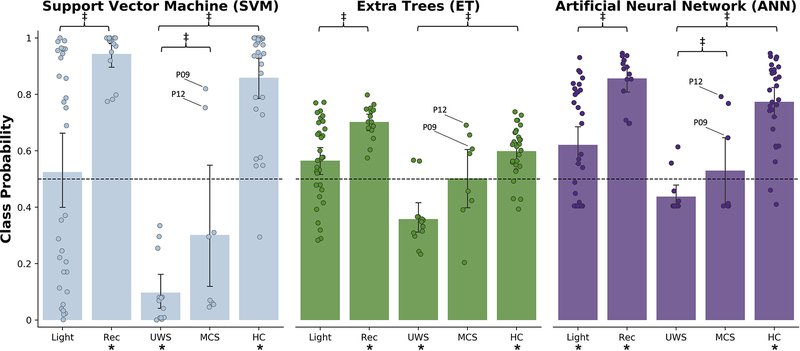
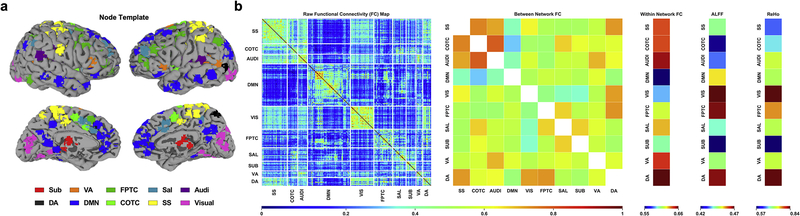
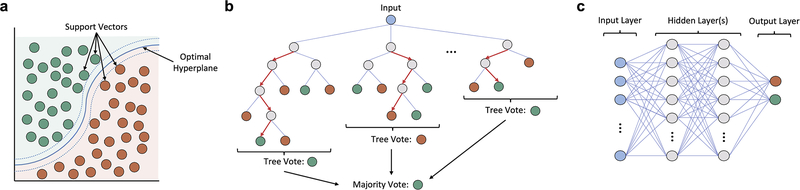
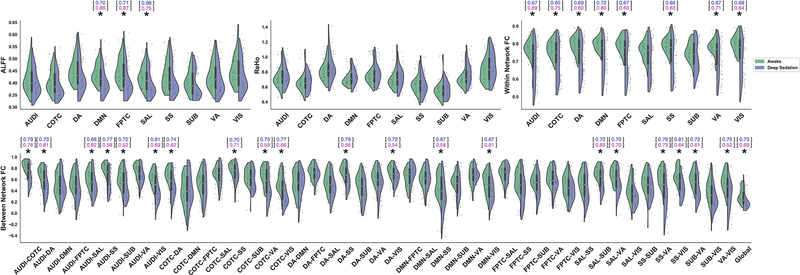
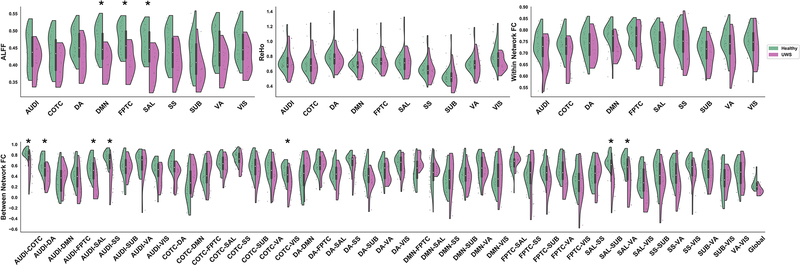
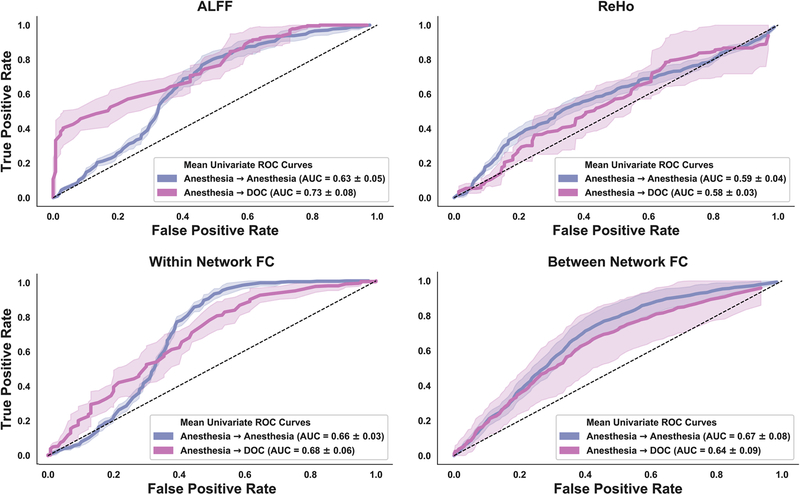
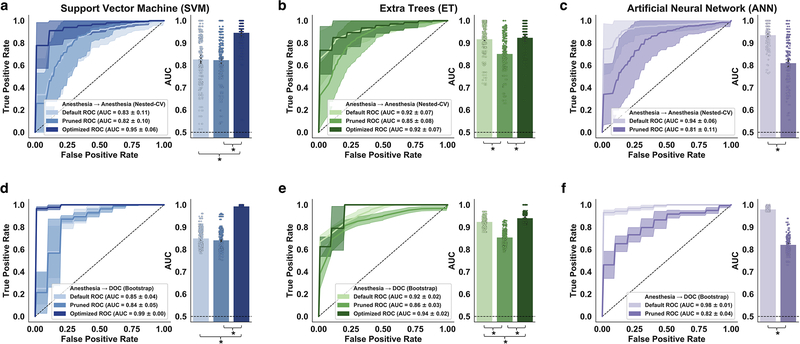
Determining the level of consciousness in patients with disorders of consciousness (DOC) remains challenging. To address this challenge, resting-state fMRI (rs-fMRI) has been widely used for detecting the local, regional, and network activity differences between DOC patients and healthy controls. Although substantial progress has been made towards this endeavor, the identification of robust rs-fMRI-based biomarkers for level of consciousness is still lacking. Recent developments in machine learning show promise as a tool to augment the discrimination between different states of consciousness in clinical practice. Here, we investigated whether machine learning models trained to make a binary distinction between conscious wakefulness and anesthetic-induced unconsciousness would then be capable of reliably identifying pathologically induced unconsciousness. We did so by extracting rs-fMRI-based features associated with local activity, regional homogeneity, and interregional functional activity in 44 subjects during wakefulness, light sedation, and unresponsiveness (deep sedation and general anesthesia), and subsequently using those features to train three distinct candidate machine learning classifiers: support vector machine, Extra Trees, artificial neural network. First, we show that all three classifiers achieve reliable performance within-dataset (via nested cross-validation), with a mean area under the receiver operating characteristic curve (AUC) of 0.95, 0.92, and 0.94, respectively. Additionally, we observed comparable cross-dataset performance (making predictions on the DOC data) as the anesthesia-trained classifiers demonstrated a consistent ability to discriminate between unresponsive wakefulness syndrome (UWS/VS) patients and healthy controls with mean AUC's of 0.99, 0.94, 0.98, respectively. Lastly, we explored the potential of applying the aforementioned classifiers towards discriminating intermediate states of consciousness, specifically, subjects under light anesthetic sedation and patients diagnosed as having a minimally conscious state (MCS). Our findings demonstrate that machine learning classifiers trained on rs-fMRI features derived from participants under anesthesia have potential to aid the discrimination between degrees of pathological unconsciousness in clinical patients.
确定意识障碍(DOC)患者的意识水平仍然具有挑战性。为了解决这一挑战,静息态 fMRI(rs-fMRI)已被广泛用于检测 DOC 患者与健康对照之间的局部、区域和网络活动差异。尽管在这方面已经取得了相当大的进展,但仍缺乏基于 rs-fMRI 的稳健意识水平生物标志物。机器学习的最新发展有望成为一种工具,以增强临床实践中不同意识状态的区分。在这里,我们研究了训练有素的机器学习模型是否能够将有意识的清醒与麻醉诱导的无意识进行二元区分,然后能够可靠地识别病理性诱导的无意识。我们通过在 44 名受试者清醒、轻度镇静和无反应(深度镇静和全身麻醉)期间提取与局部活动、区域同质性和区域间功能活动相关的 rs-fMRI 特征,并使用这些特征来训练三种不同的候选机器学习分类器:支持向量机、Extra Trees、人工神经网络。首先,我们表明所有三种分类器在数据集内都能实现可靠的性能(通过嵌套交叉验证),平均接收者操作特征曲线(ROC)下面积(AUC)分别为 0.95、0.92 和 0.94。此外,我们观察到类似的跨数据集性能(对 DOC 数据进行预测),因为麻醉训练的分类器表现出一致的能力,能够区分无反应性觉醒综合征(UWS/VS)患者和健康对照,平均 AUC 分别为 0.99、0.94 和 0.98。最后,我们探讨了将上述分类器应用于区分中间意识状态的潜力,特别是轻度麻醉镇静下的受试者和被诊断为最小意识状态(MCS)的患者。我们的研究结果表明,基于麻醉参与者的 rs-fMRI 特征训练的机器学习分类器有可能帮助区分临床患者的病理性无意识程度。