Department of Anesthesiology and Intensive Care Medicine, Rostock Medical Breath Research Analytics and Technologies (ROMBAT), Rostock University Medical Centre, Rostock, Germany.
Department of Pediatrics, Rostock University Medical Centre, Rostock, Germany.
Sci Rep. 2019 Oct 31;9(1):15707. doi: 10.1038/s41598-019-52165-x.
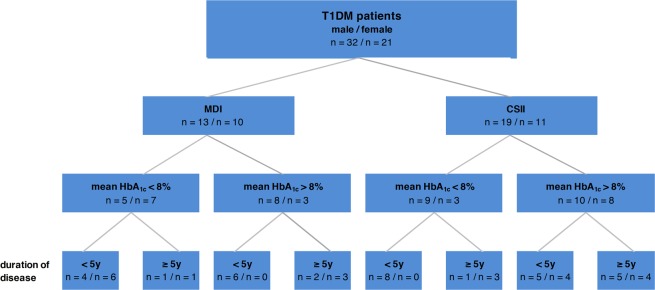
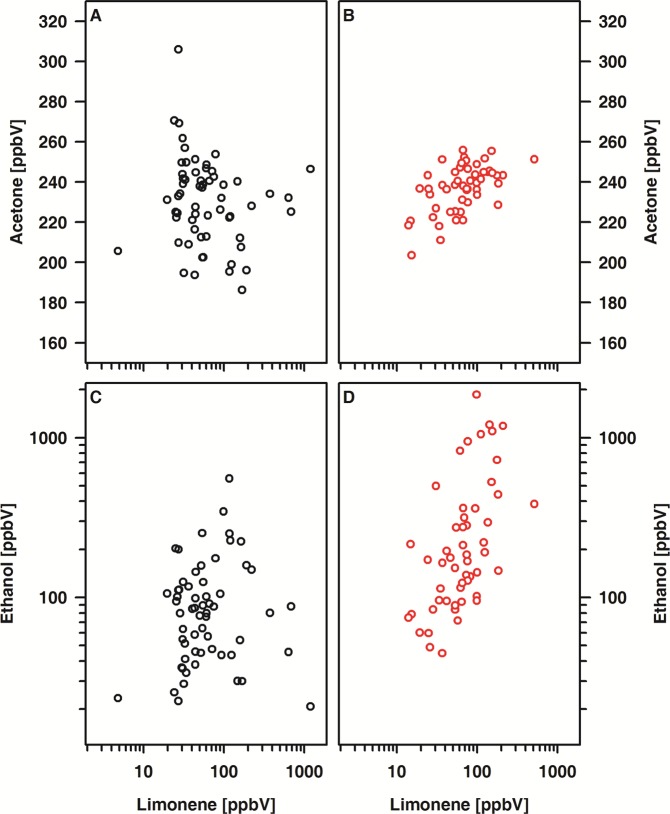
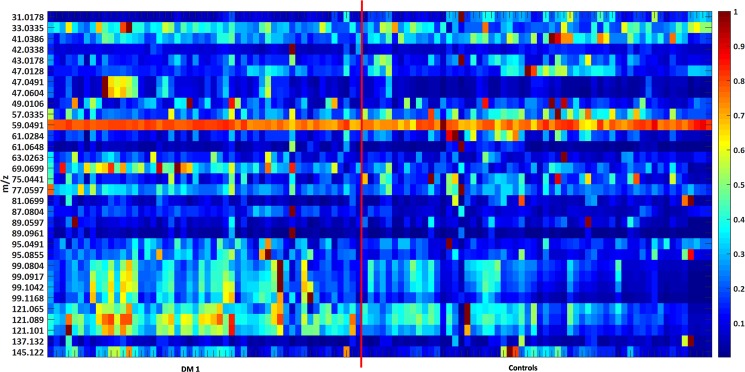
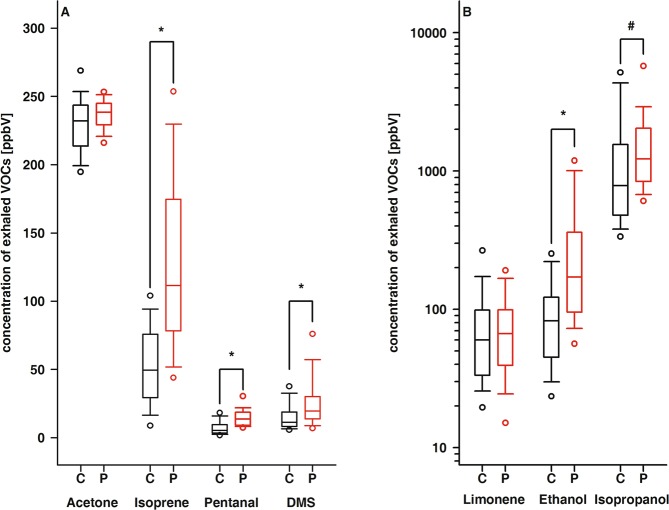
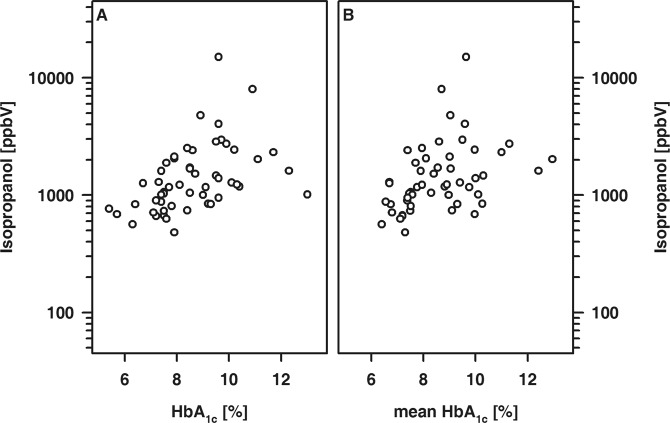
Monitoring metabolic adaptation to type 1 diabetes mellitus in children is challenging. Analysis of volatile organic compounds (VOCs) in exhaled breath is non-invasive and appears as a promising tool. However, data on breath VOC profiles in pediatric patients are limited. We conducted a cross-sectional study and applied quantitative analysis of exhaled VOCs in children suffering from type 1 diabetes mellitus (T1DM) (n = 53) and healthy controls (n = 60). Both groups were matched for sex and age. For breath gas analysis, a very sensitive direct mass spectrometric technique (PTR-TOF) was applied. The duration of disease, the mode of insulin application (continuous subcutaneous insulin infusion vs. multiple daily insulin injection) and long-term metabolic control were considered as classifiers in patients. The concentration of exhaled VOCs differed between T1DM patients and healthy children. In particular, T1DM patients exhaled significantly higher amounts of ethanol, isopropanol, dimethylsulfid, isoprene and pentanal compared to healthy controls (171, 1223, 19.6, 112 and 13.5 ppbV vs. 82.4, 784, 11.3, 49.6, and 5.30 ppbV). The most remarkable differences in concentrations were found in patients with poor metabolic control, i.e. those with a mean HbA above 8%. In conclusion, non-invasive breath testing may support the discovery of basic metabolic mechanisms and adaptation early in the progress of T1DM.
监测儿童 1 型糖尿病代谢适应情况具有挑战性。分析呼气中的挥发性有机化合物(VOC)是非侵入性的,似乎是一种很有前途的工具。然而,儿科患者呼气 VOC 谱的数据有限。我们进行了一项横断面研究,应用定量分析方法检测了 53 例 1 型糖尿病(T1DM)患儿(n=53)和 60 例健康对照者(n=60)的呼气中挥发性有机化合物。两组患者在性别和年龄上相匹配。用于呼吸气体分析的是一种非常灵敏的直接质谱技术(PTR-TOF)。疾病持续时间、胰岛素应用方式(持续皮下胰岛素输注与多次每日胰岛素注射)和长期代谢控制被视为患者的分类器。T1DM 患者与健康儿童的呼气 VOC 浓度存在差异。特别是,与健康对照组相比,T1DM 患者呼气中的乙醇、异丙醇、二甲基硫醚、异戊二烯和戊醛浓度明显更高(171、1223、19.6、112 和 13.5 ppbV 与 82.4、784、11.3、49.6 和 5.30 ppbV)。代谢控制较差的患者(即平均 HbA1c 超过 8%的患者)浓度差异最为显著。总之,非侵入性呼气测试可能有助于发现 1 型糖尿病进展早期的基本代谢机制和适应性。