Department of Pharmacology, University of Virginia, Charlottesville, VA, USA.
Health Sciences Library, University of Virginia, Charlottesville, VA, USA.
Sci Rep. 2019 Oct 31;9(1):15709. doi: 10.1038/s41598-019-51874-7.
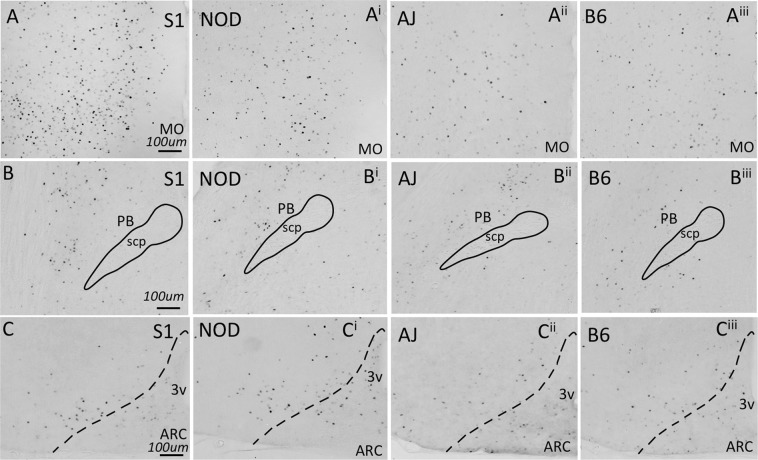
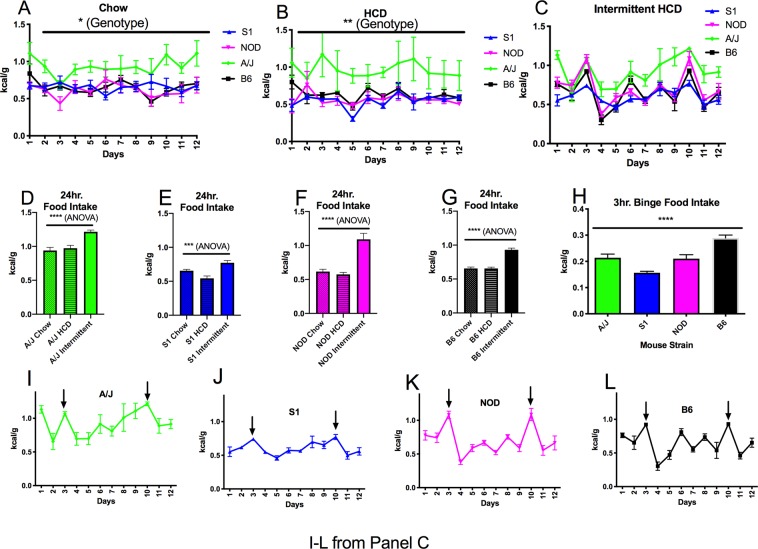
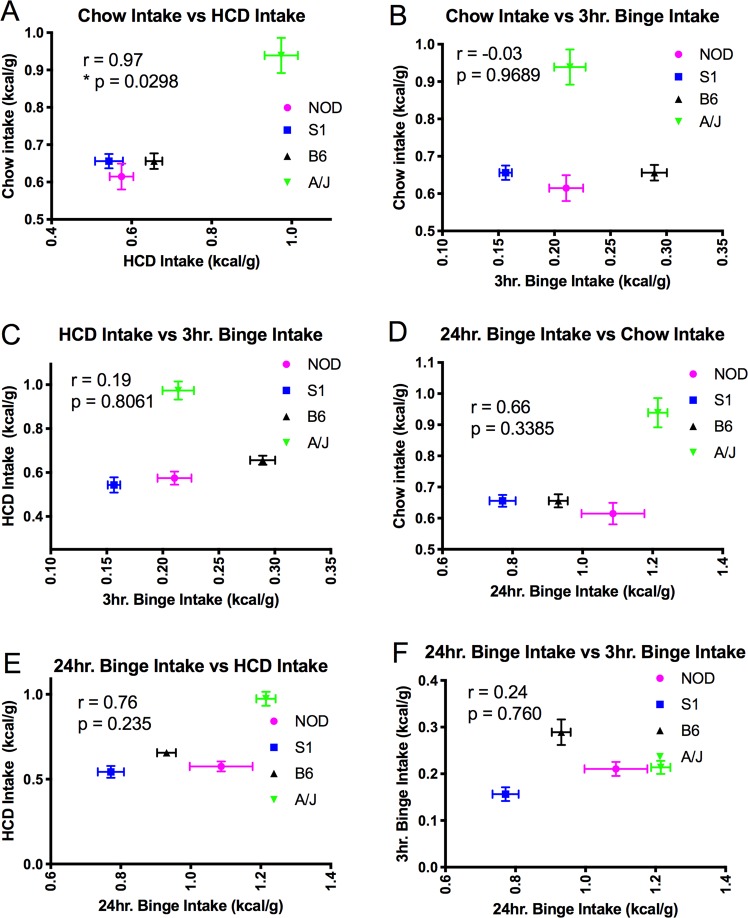
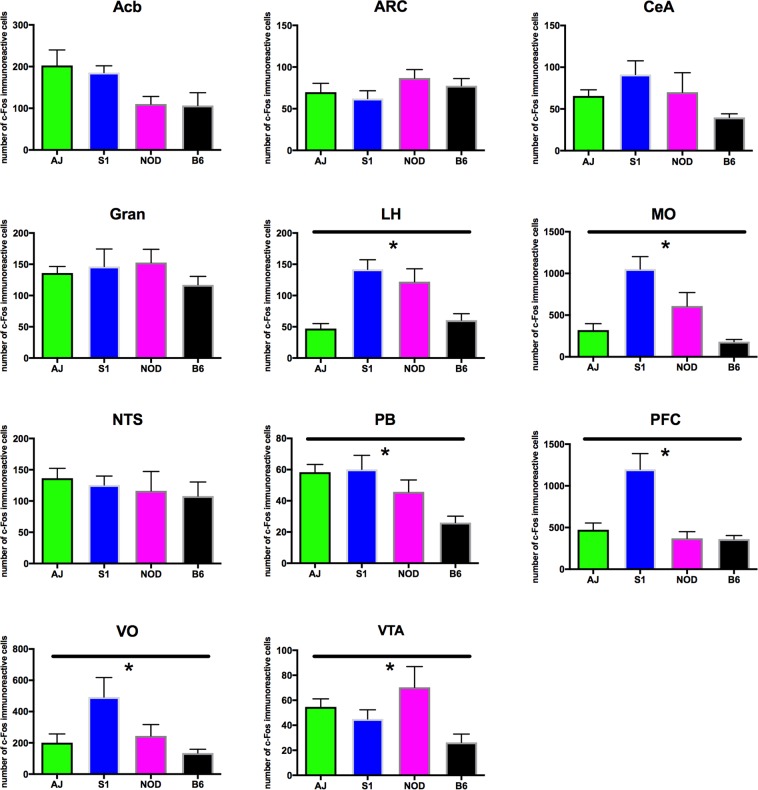
Identifying genetic variants that regulate binge eating (BE) is critical for understanding the factors that control this behavior and for the development of pharmacological treatment strategies. Although several studies have revealed specific genes capable of affecting BE behavior, less is known about how genetic variation modulates BE. Thus, through a paradigm that promoted binge-like food intake through intermittent access to high calorie diet (HCD), we quantified food-intake in four inbred mouse strains: C57Bl/6J (B6), NOD/LtJ (NOD), 129S1/SvlmJ (S1), and A/J (AJ). We report that genetic variation likely influences the chronic regulation of food intake and the binge-like consumption of a palatable HCD. AJ mice consumed more of both standard chow and HCD than the other three strains tested when both diets were available ad libitum, while S1 mice consumed significantly less HCD than other strains during intermittent HCD access. Behavioral differences were also associated with differential changes in c-Fos immunohistochemistry in brain regions traditionally associated with appetite regulation. Our results identify 129S1/SvlmJ as a strain that exhibits low levels of binge feeding behavior and suggests that this strain could be useful in the investigation of the influence of genetic variation in the control of binge food intake.
确定调节暴食(BE)的遗传变异对于理解控制这种行为的因素以及开发药理学治疗策略至关重要。尽管有几项研究揭示了能够影响 BE 行为的特定基因,但关于遗传变异如何调节 BE 的了解较少。因此,通过一种促进通过间歇性获得高热量饮食(HCD)来产生暴食样食物摄入的范式,我们量化了四种近交系小鼠的食物摄入量:C57Bl/6J(B6)、NOD/LtJ(NOD)、129S1/SvlmJ(S1)和 A/J(AJ)。我们报告说,遗传变异可能影响食物摄入的慢性调节和美味 HCD 的暴食样消耗。当两种饮食均可自由获取时,AJ 小鼠比其他三种测试的菌株消耗更多的标准饲料和 HCD,而 S1 小鼠在间歇性 HCD 摄入期间消耗的 HCD 明显少于其他菌株。行为差异也与传统上与食欲调节相关的脑区的 c-Fos 免疫组织化学的差异变化相关。我们的结果确定 129S1/SvlmJ 为表现出低水平暴食行为的菌株,并表明该菌株可用于研究遗传变异对暴食食物摄入控制的影响。