Kragh Astrid Rolin, Folke Fredrik, Andelius Linn, Ries Emma Slebsager, Rasmussen Rasmus Vedby, Hansen Carolina Malta
Emergency Medical Services Copenhagen, University of Copenhagen, Telegrafvej 5, DK-2750 Ballerup, Copenhagen, Denmark.
Department of Cardiology, Gentofte University Hospital, Gentofte Hospitalsvej 1, 2900, Hellerup, Copenhagen, Denmark.
BMC Emerg Med. 2019 Nov 4;19(1):64. doi: 10.1186/s12873-019-0278-6.
Dispatched citizen responders are increasingly involved in out-of-hospital cardiac arrest (OHCA) resuscitation which can lead to severe stress. It is unknown which psychological assessment tools are most appropriate to evaluate psychological distress in this population. The aim of this systematic review was to identify and evaluate existing assessment tools used to measure psychological distress with emphasis on citizen responders who attempted resuscitation.
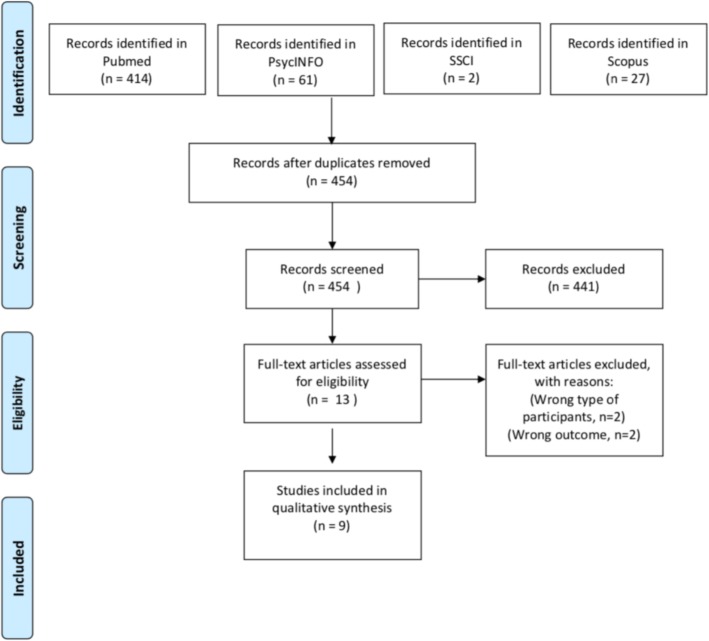
A systematic literature search conducted by two reviewers was carried out in March 2018 and revised in July 2018. Four databases were searched: PubMed, PsycInfo, Scopus, and The Social Sciences Citation Index. A total of 504 studies examining assessment tools to measure psychological distress reactions after acute traumatic events were identified, and 9 fulfilled the inclusion criteria for further analysis. The selected studies were assessed for methodological quality using the Scottish Intercollegiate Guidelines Network.
The Impact of Event Scale (IES) and The Impact of Event Scale-Revised (IES-R) were the preferred assessment tools, and were used on diverse populations exposed to various traumatic events. One study included lay rescuers performing bystander cardiopulmonary resuscitation and this study used the IES. The IES and the IES-R also have proven a high validity in various other populations. The Clinical administered PTSD scale (CAPS) was applied in two studies. Though the CAPS is comparable to both the IES-R and the IES, the CAPS assess PTSD symptoms in general and not in relation to a specific experienced event, which makes the scale less suitable when measuring stress due to a specific resuscitation attempt.
The IES and the IES-R seem to be solid measures for psychological distress among people experiencing an acute psychological traumatic event. However, only one study has assessed psychological distress among citizen responders in OHCA for which the IES-R scale was used, and therefore, further research on this topic is warranted.
派遣公民急救人员越来越多地参与院外心脏骤停(OHCA)复苏,这可能导致严重压力。目前尚不清楚哪种心理评估工具最适合评估该人群的心理困扰。本系统评价的目的是识别和评估用于测量心理困扰的现有评估工具,重点是尝试进行复苏的公民急救人员。
2018年3月由两名评价者进行了系统的文献检索,并于2018年7月进行了修订。检索了四个数据库:PubMed、PsycInfo、Scopus和社会科学引文索引。共识别出504项研究评估急性创伤事件后测量心理困扰反应的评估工具,其中9项符合进一步分析的纳入标准。使用苏格兰校际指南网络对所选研究的方法学质量进行评估。
事件影响量表(IES)和修订后的事件影响量表(IES-R)是首选的评估工具,用于不同的遭受各种创伤事件的人群。一项研究纳入了进行旁观者心肺复苏的非专业救援人员,该研究使用了IES。IES和IES-R在其他各种人群中也已证明具有较高的效度。两项研究应用了临床管理的创伤后应激障碍量表(CAPS)。虽然CAPS与IES-R和IES相当,但CAPS总体上评估创伤后应激障碍症状,而非与特定经历事件相关的症状,这使得该量表在测量因特定复苏尝试导致的压力时不太适用。
IES和IES-R似乎是经历急性心理创伤事件人群心理困扰的可靠测量方法。然而,仅有一项研究评估了使用IES-R量表的OHCA中公民急救人员的心理困扰,因此,有必要对该主题进行进一步研究。