Hodgins Breanna, Pillet Stephane, Landry Nathalie, Ward Brian J
1Department of Experimental Medicine, McGill University, Montreal, Quebec Canada.
2Research Institute of McGill University Health Centre, 1001 Boul Decarie, Room EM33248, Montreal, QC H4A 3J1 Canada.
Immun Ageing. 2019 Nov 4;16:27. doi: 10.1186/s12979-019-0167-6. eCollection 2019.
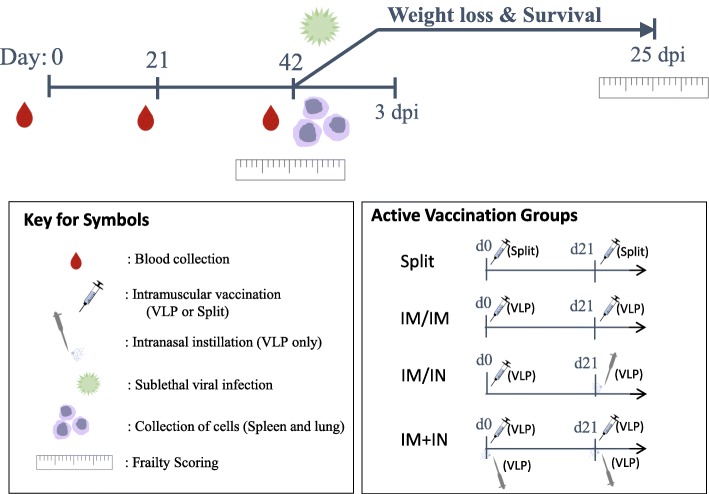
Administered intramuscularly (IM), plant-derived, virus-like-particle (VLP) vaccines based on the influenza hemagglutinin (HA) protein elicit both humoral and cellular responses that can protect aged mice from lethal challenge. Unlike split virus vaccines, VLPs can be administered by different routes including intranasally (IN). We evaluated novel vaccine strategies such as prime-pull (IM boosted by IN) and multi-modality vaccination (IM and IN given simultaneously). We wished to determine if these approaches would provide better quality protection in old mice after less severe (borderline-lethal) challenge (ie: immunogenicity, frailty and survival).
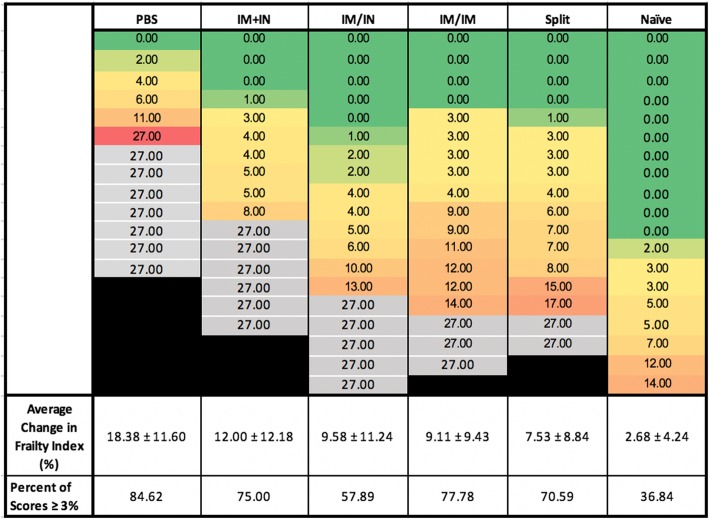
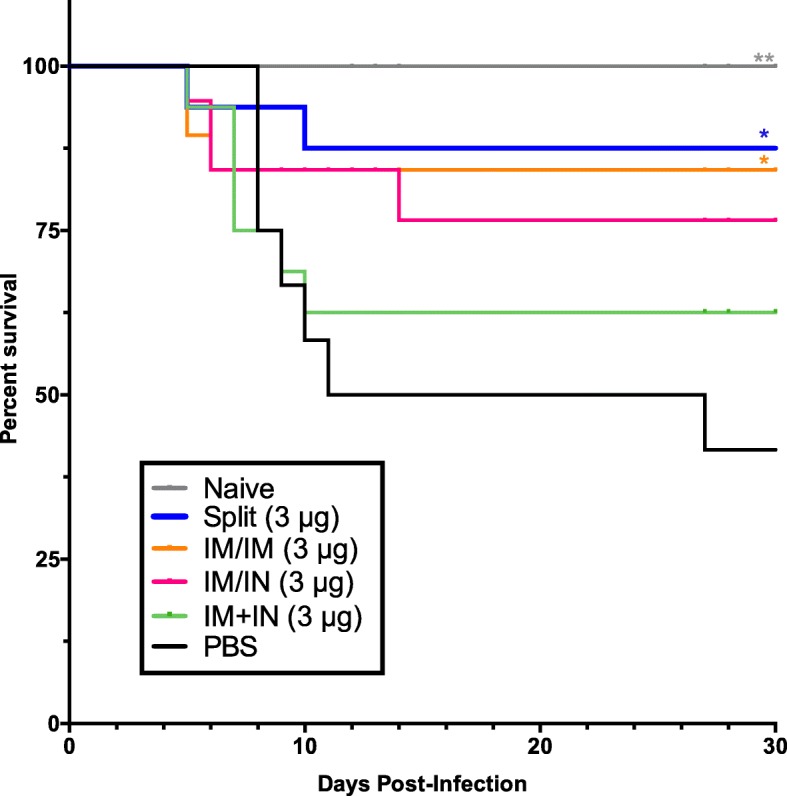
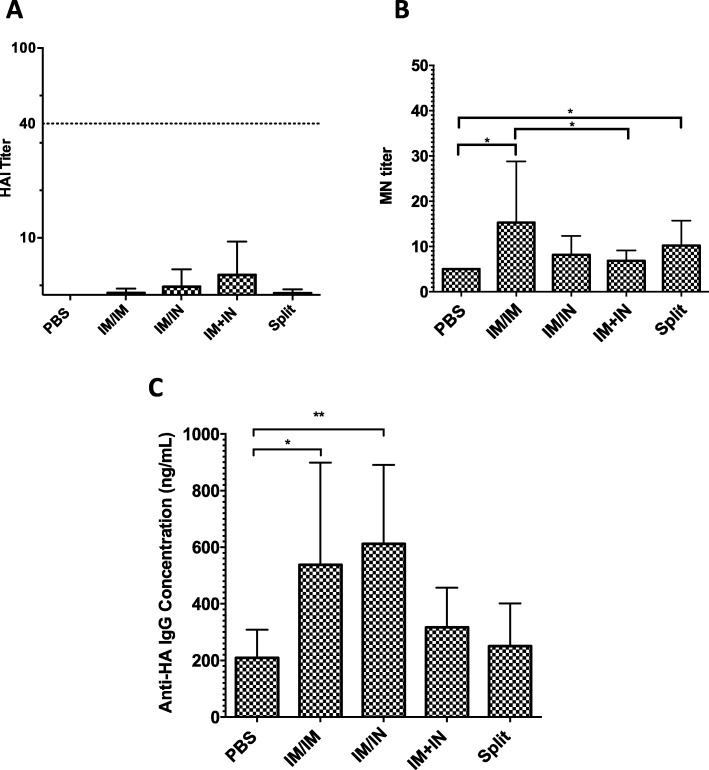
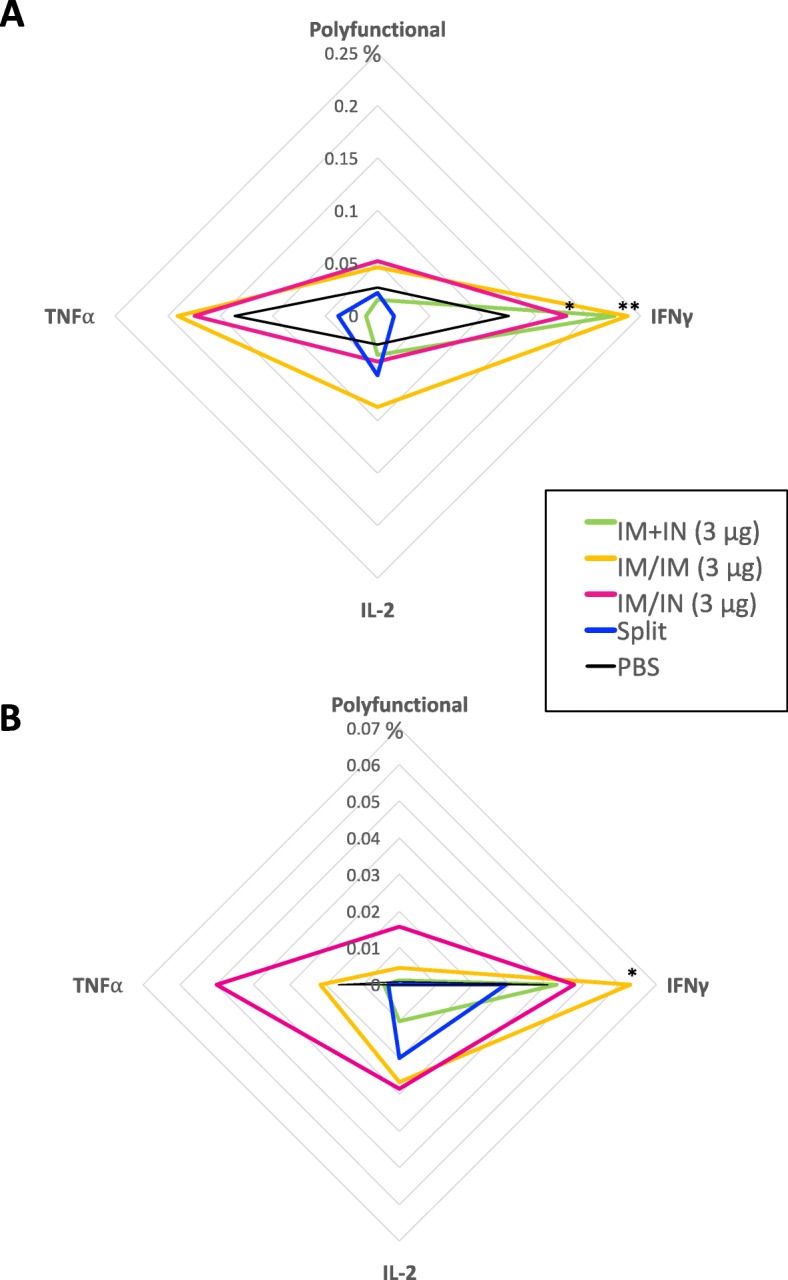
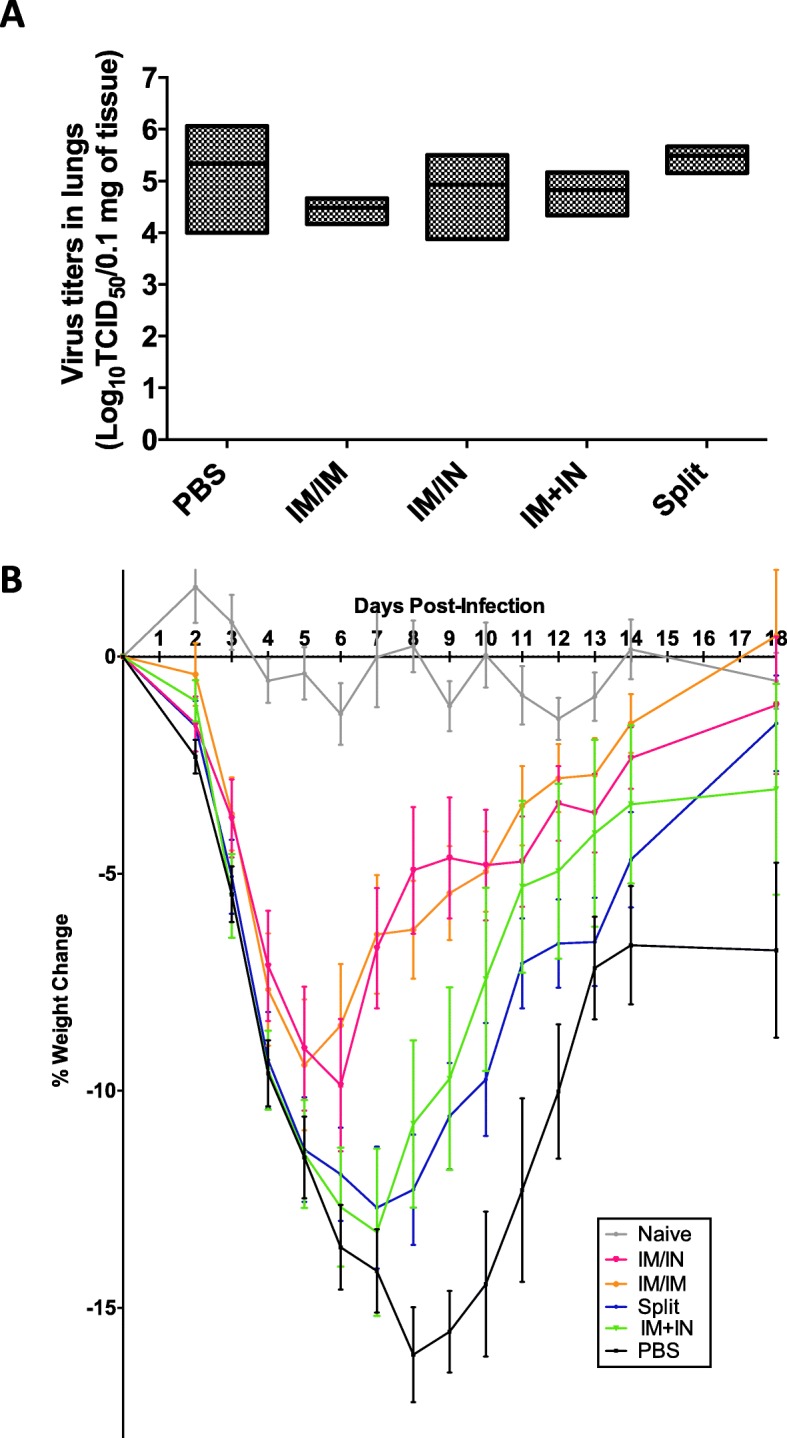
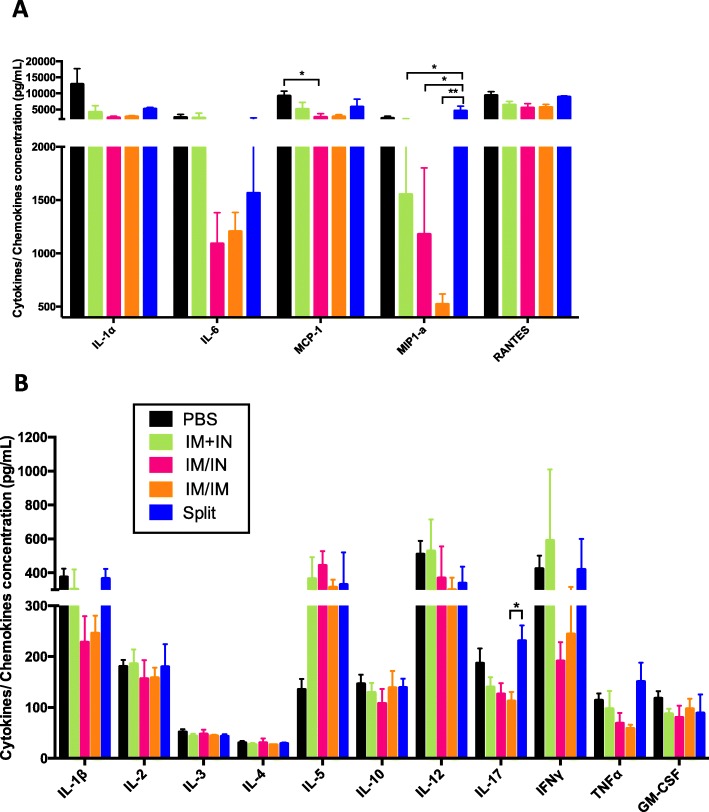
Survival rates were similar in all vaccinated groups. Antibody responses were modest in all groups but tended to be higher in VLP groups compared to inactivated influenza vaccine (IIV) recipients. All VLP groups had higher splenocyte T cell responses than the split virus group. Lung homogenate chemokine/cytokine levels and virus loads were lower in the VLP groups compared to IIV recipients 3 days after challenge ( < 0.05 for viral load vs all VLP groups combined). The VLP-vaccinated groups also had less weight loss and recovered more rapidly than the IIV recipients. There was limited evidence of an immunologic or survival advantage with IN delivery of the VLP vaccine.
Compared to IIV, the plant-derived VLP vaccine induced a broader immune response in aged mice (cellular and humoral) using either traditional (IM/IM) or novel schedules (multi-modality, prime-pull).
基于流感血凝素(HA)蛋白的植物源病毒样颗粒(VLP)疫苗通过肌肉注射(IM)给药,可引发体液和细胞免疫反应,保护老年小鼠免受致命攻击。与裂解病毒疫苗不同,VLP可通过不同途径给药,包括鼻内给药(IN)。我们评估了新型疫苗策略,如初免-追加免疫(通过鼻内给药加强肌肉注射)和多模式疫苗接种(同时进行肌肉注射和鼻内给药)。我们希望确定这些方法在轻度(临界致死)攻击后是否能为老年小鼠提供更高质量的保护(即免疫原性、虚弱程度和存活率)。
所有接种疫苗的组存活率相似。所有组的抗体反应均较弱,但与灭活流感疫苗(IIV)接种者相比,VLP组的抗体反应往往更高。所有VLP组的脾细胞T细胞反应均高于裂解病毒组。与IIV接种者相比,VLP组在攻击后3天的肺匀浆趋化因子/细胞因子水平和病毒载量较低(病毒载量与所有VLP组合并相比<0.05)。接种VLP疫苗的组体重减轻也较少,比IIV接种者恢复得更快。关于鼻内接种VLP疫苗的免疫或生存优势的证据有限。
与IIV相比,植物源VLP疫苗使用传统(IM/IM)或新型接种方案(多模式、初免-追加免疫)在老年小鼠中诱导了更广泛的免疫反应(细胞免疫和体液免疫)。