Bearden Daniel W, Sheen David A, Simón-Manso Yamil, Benner Bruce A, Rocha Werickson F C, Blonder Niksa, Lippa Katrice A, Beger Richard D, Schnackenberg Laura K, Sun Jinchun, Mehta Khyati Y, Cheema Amrita K, Gu Haiwei, Marupaka Ramesh, Nagana Gowda G A, Raftery Daniel
Chemical Sciences Division, National Institute of Standards and Technology, Gaithersburg, MD 20899, USA.
Biomolecular Measurement Division, National Institute of Standards and Technology, Gaithersburg, MD 20899, USA.
Metabolites. 2019 Nov 7;9(11):270. doi: 10.3390/metabo9110270.
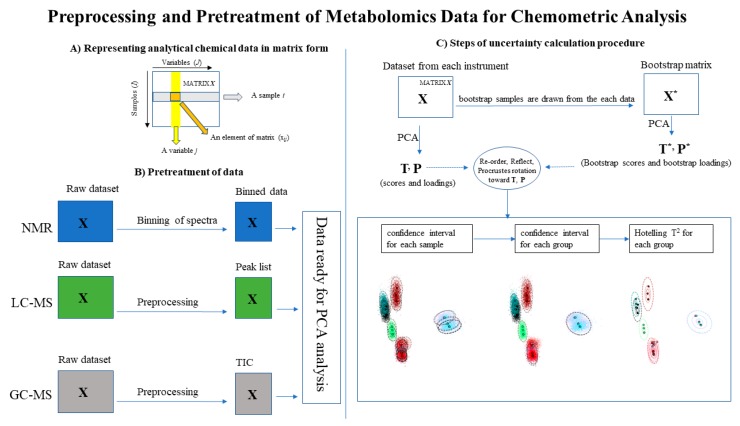
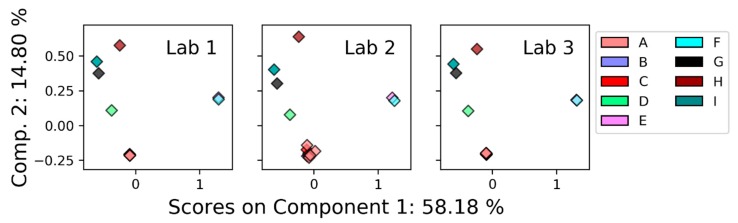
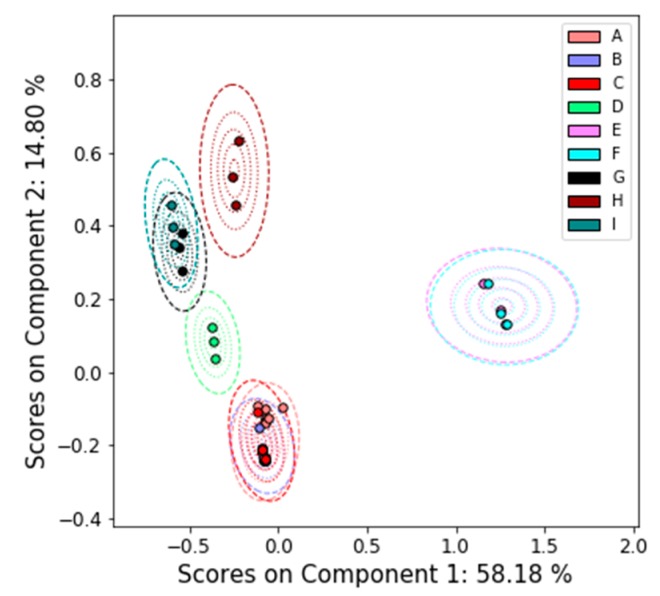
There is a lack of experimental reference materials and standards for metabolomics measurements, such as urine, plasma, and other human fluid samples. Reasons include difficulties with supply, distribution, and dissemination of information about the materials. Additionally, there is a long lead time because reference materials need their compositions to be fully characterized with uncertainty, a labor-intensive process for material containing thousands of relevant compounds. Furthermore, data analysis can be hampered by different methods using different software by different vendors. In this work, we propose an alternative implementation of reference materials. Instead of characterizing biological materials based on their composition, we propose using untargeted metabolomic data such as nuclear magnetic resonance (NMR) or gas and liquid chromatography-mass spectrometry (GC-MS and LC-MS) profiles. The profiles are then distributed with the material accompanying the certificate, so that researchers can compare their own metabolomic measurements with the reference profiles. To demonstrate this approach, we conducted an interlaboratory study (ILS) in which seven National Institute of Standards and Technology (NIST) urine Standard Reference Materials (SRMs) were distributed to participants, who then returned the metabolomic data to us. We then implemented chemometric methods to analyze the data together to estimate the uncertainties in the current measurement techniques. The participants identified similar patterns in the profiles that distinguished the seven samples. Even when the number of spectral features is substantially different between platforms, a collective analysis still shows significant overlap that allows reliable comparison between participants. Our results show that a urine suite such as that used in this ILS could be employed for testing and harmonization among different platforms. A limited quantity of test materials will be made available for researchers who are willing to repeat the protocols presented here and contribute their data.
代谢组学测量缺乏实验参考材料和标准,例如尿液、血浆及其他人体液体样本。原因包括材料供应、分发以及信息传播方面的困难。此外,由于参考材料需要对其成分进行充分表征且具有不确定性,这是一个针对包含数千种相关化合物的材料的劳动密集型过程,所以准备时间很长。再者,不同供应商使用不同软件的不同方法可能会妨碍数据分析。在这项工作中,我们提出了一种参考材料的替代实施方案。我们提议不再基于成分来表征生物材料,而是使用非靶向代谢组学数据,如核磁共振(NMR)或气相和液相色谱 - 质谱(GC - MS和LC - MS)图谱。然后将这些图谱与附带证书的材料一起分发,以便研究人员能够将自己的代谢组学测量结果与参考图谱进行比较。为了证明这种方法,我们进行了一项实验室间研究(ILS),将七种美国国家标准与技术研究院(NIST)尿液标准参考物质(SRM)分发给参与者,参与者随后将代谢组学数据返回给我们。然后我们采用化学计量学方法共同分析数据,以估计当前测量技术中的不确定性。参与者在区分七个样本的图谱中识别出了相似的模式。即使不同平台之间的光谱特征数量存在显著差异,集体分析仍显示出明显的重叠,这使得参与者之间能够进行可靠的比较。我们的结果表明,像本ILS中使用的尿液套件可用于不同平台之间的测试和协调。对于愿意重复此处介绍的方案并提供数据的研究人员,将提供有限数量的测试材料。