Department of Neurology, Johns Hopkins School of Medicine, Baltimore, MD, United States; Center for Language and Cognition Groningen (CLCG), University of Groningen, Netherlands.
Department of Biostatistics, Johns Hopkins School of Public Health, Baltimore, MD, United States.
Brain Lang. 2020 Jan;200:104707. doi: 10.1016/j.bandl.2019.104707. Epub 2019 Nov 5.
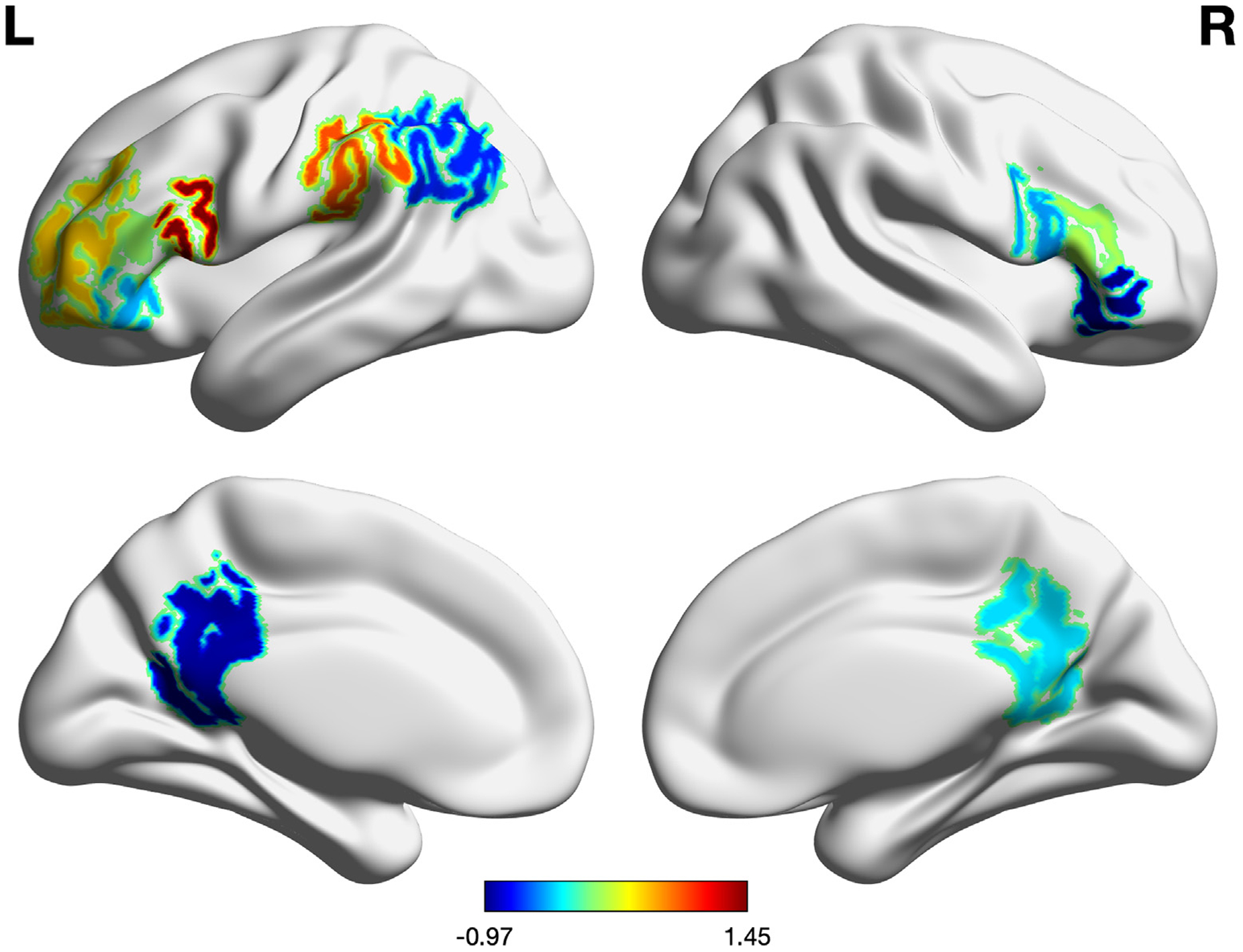
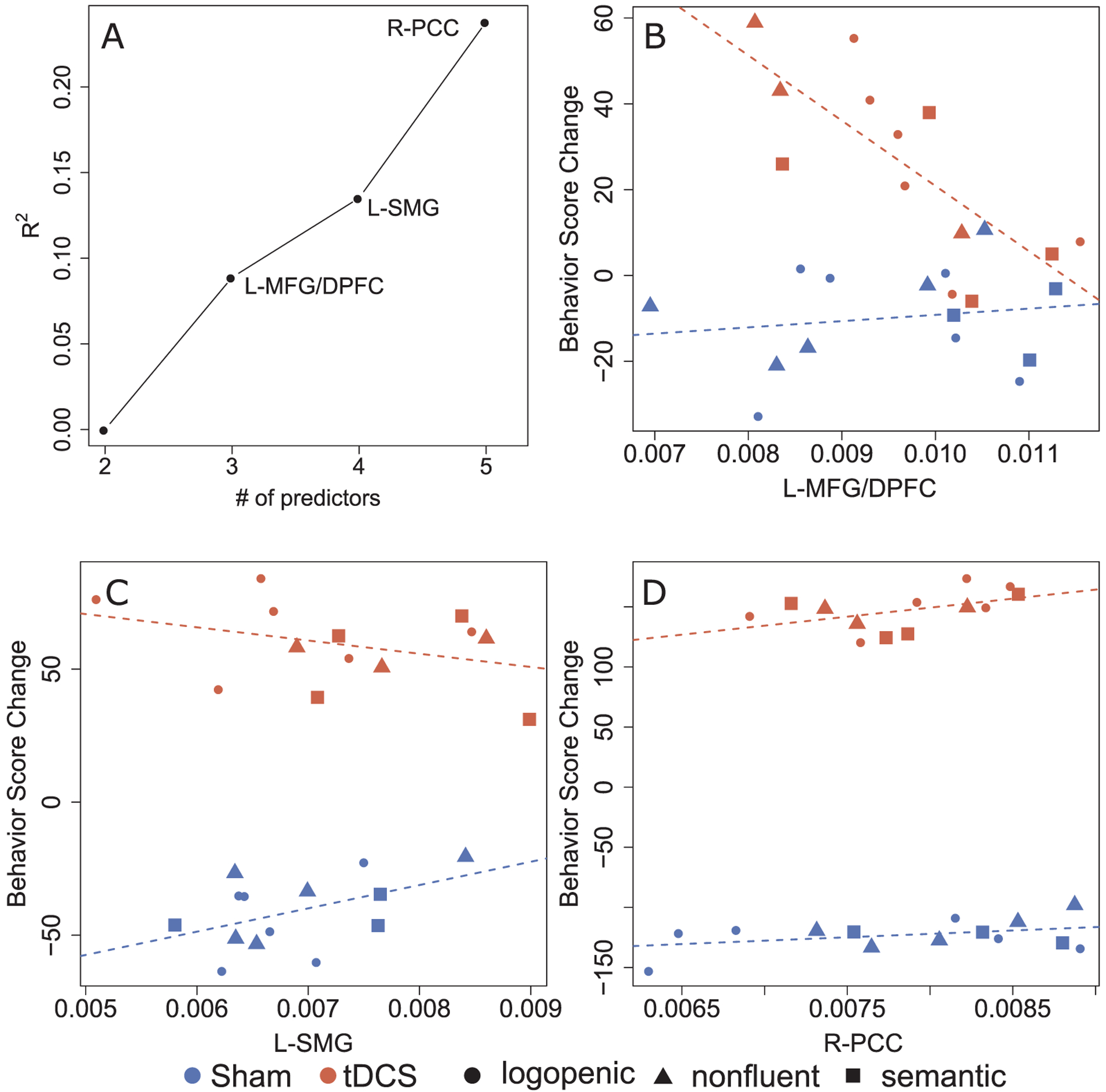
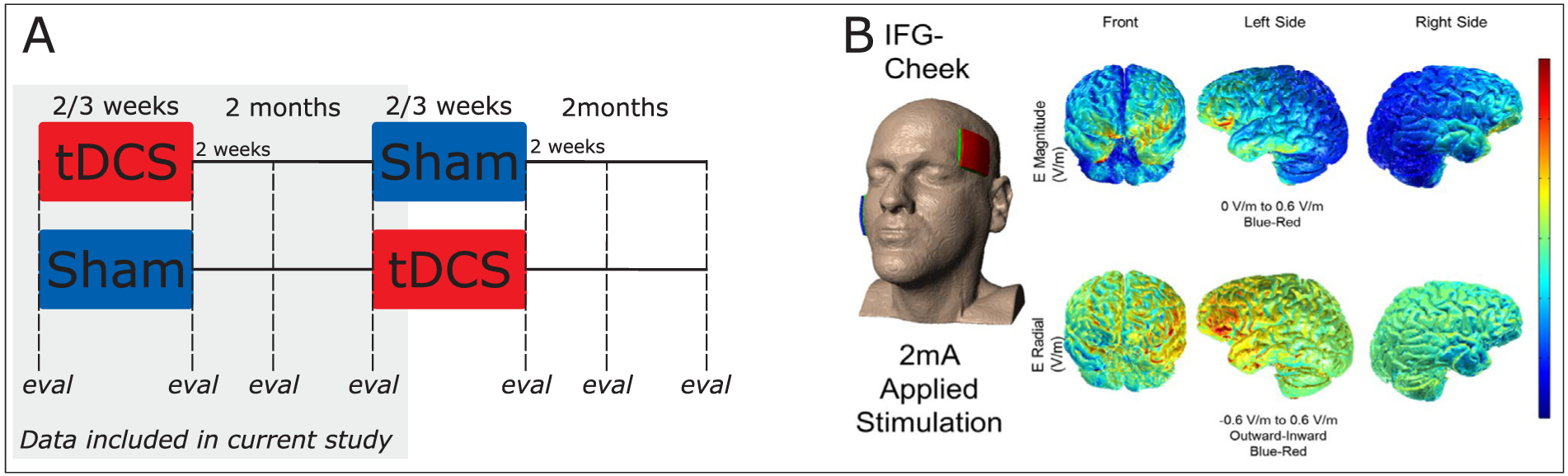
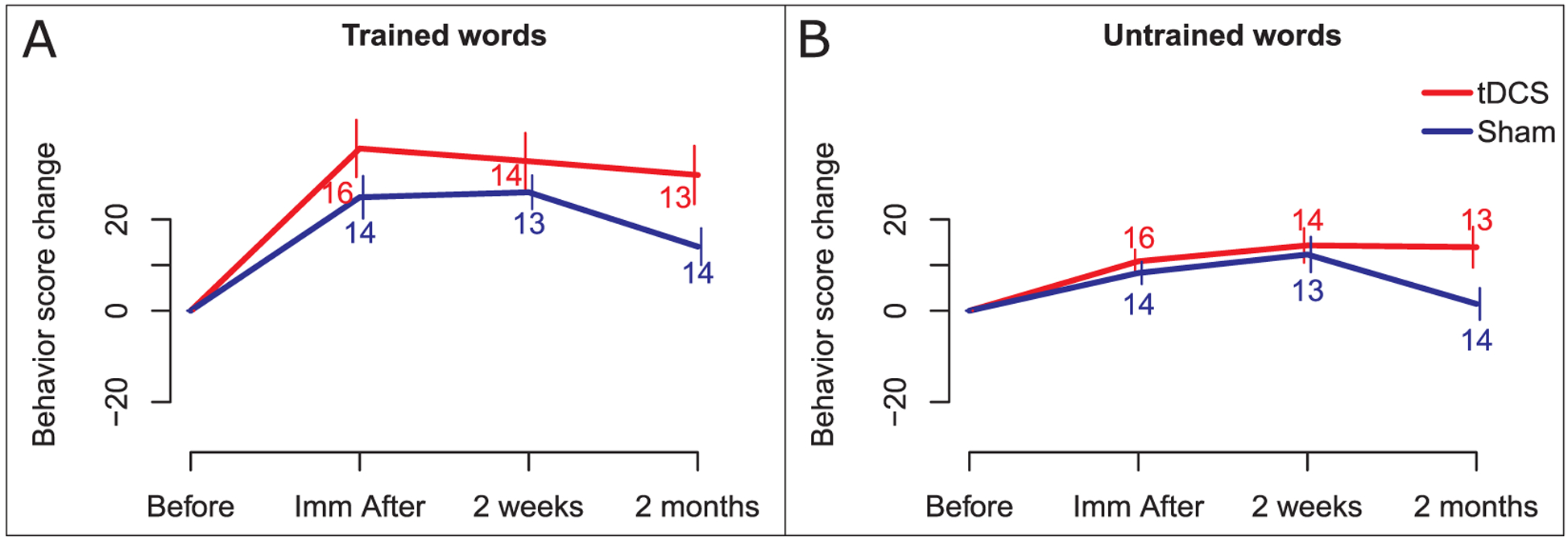
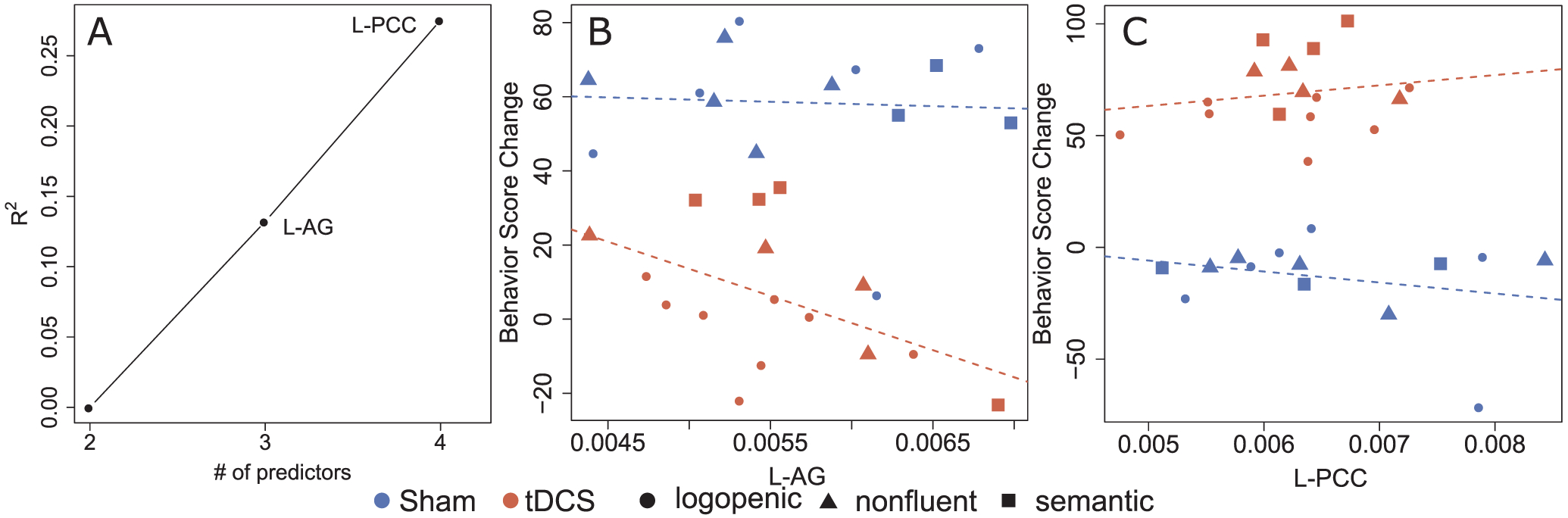
The current study aims to determine the brain areas critical for response to anodal transcranial direct current stimulation (tDCS) in PPA. Anodal tDCS and sham were administered over the left inferior frontal gyrus (IFG), combined with written naming/spelling therapy. Thirty people with PPA were included in this study, and assessed immediately, 2 weeks, and 2 months post-therapy. We identified anatomical areas whose volumes significantly predicted the additional tDCS effects. For trained words, the volumes of the left Angular Gyrus and left Posterior Cingulate Cortex predicted the additional tDCS gain. For untrained words, the volumes of the left Middle Frontal Gyrus, left Supramarginal Gyrus, and right Posterior Cingulate Cortex predicted the additional tDCS gain. These findings show that areas involved in language, attention and working memory contribute to the maintenance and generalization of stimulation effects. The findings highlight that tDCS possibly affects areas anatomically or functionally connected to stimulation targets.
本研究旨在确定与阳极经颅直流电刺激(tDCS)反应相关的大脑区域。在左侧额下回(IFG)上给予阳极 tDCS 和假刺激,并结合书面命名/拼写治疗。这项研究纳入了 30 名 PPA 患者,并在治疗后立即、2 周和 2 个月进行评估。我们确定了体积显著预测 tDCS 附加效应的解剖区域。对于训练过的单词,左角回和左后扣带回皮质的体积预测了 tDCS 的附加增益。对于未训练过的单词,左额中回、左缘上回和右后扣带回皮质的体积预测了 tDCS 的附加增益。这些发现表明,涉及语言、注意力和工作记忆的区域有助于刺激效应的维持和泛化。这些发现强调了 tDCS 可能会影响与刺激靶点在解剖学上或功能上相连的区域。