Mao Dacheng, Li Ningwei, Xiong Zheshun, Sun Yubing, Xu Guangyu
Department of Electrical and Computer Engineering, University of Massachusetts, Amherst, MA 01003, USA.
Department of Mechanical and Industrial Engineering, University of Massachusetts, Amherst, MA 01003, USA.
iScience. 2019 Nov 22;21:403-412. doi: 10.1016/j.isci.2019.10.024. Epub 2019 Oct 19.
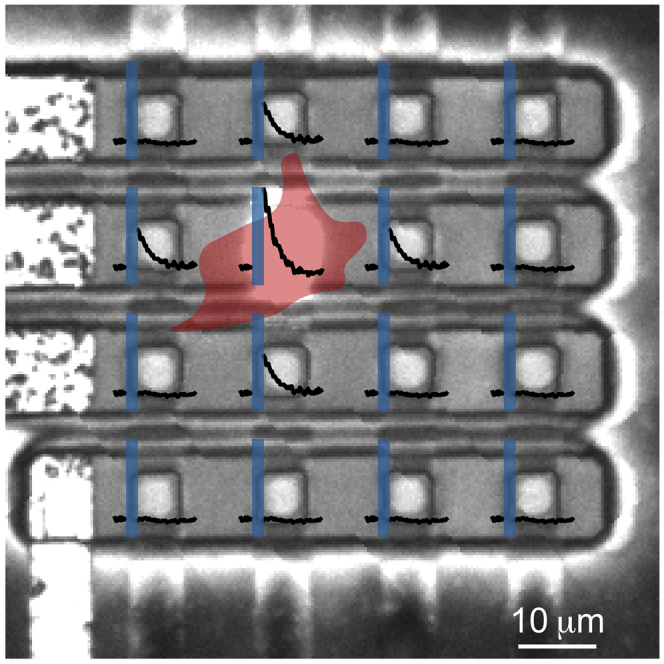
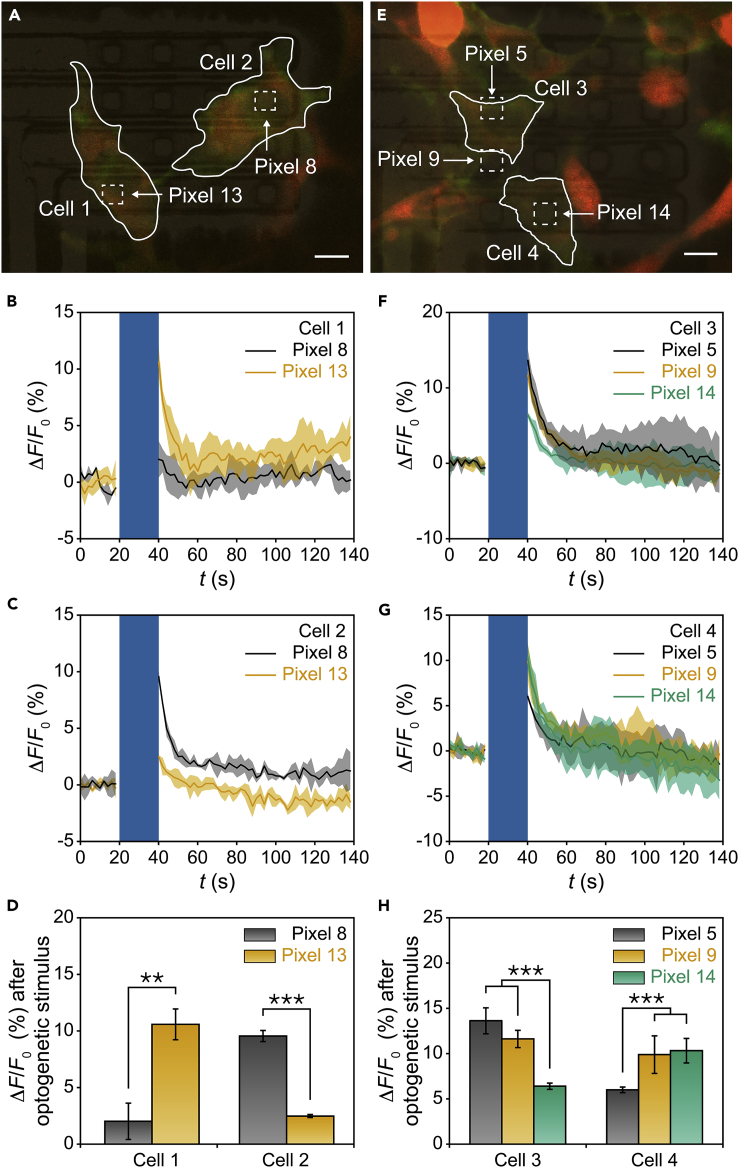
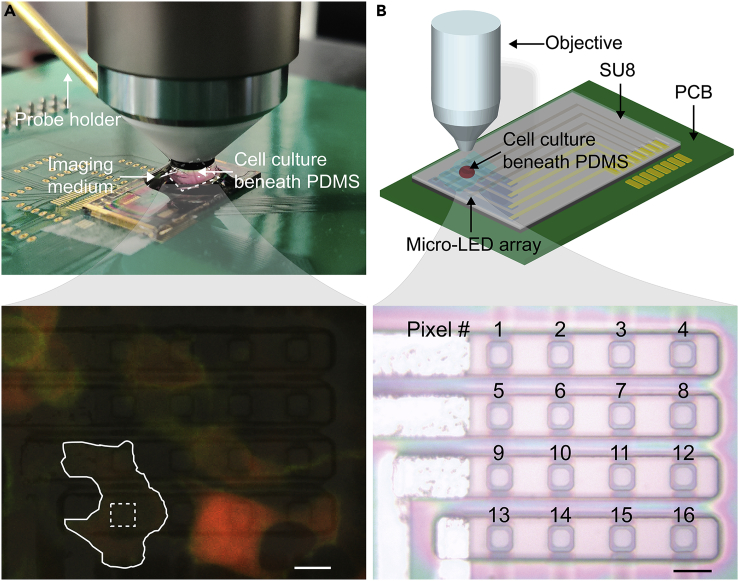
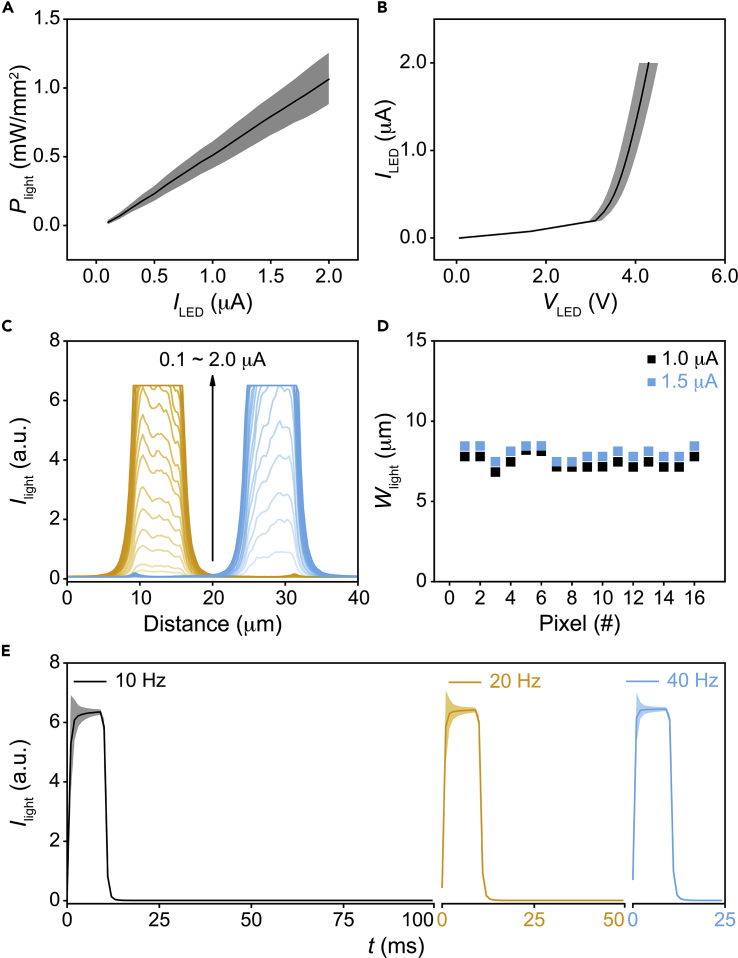
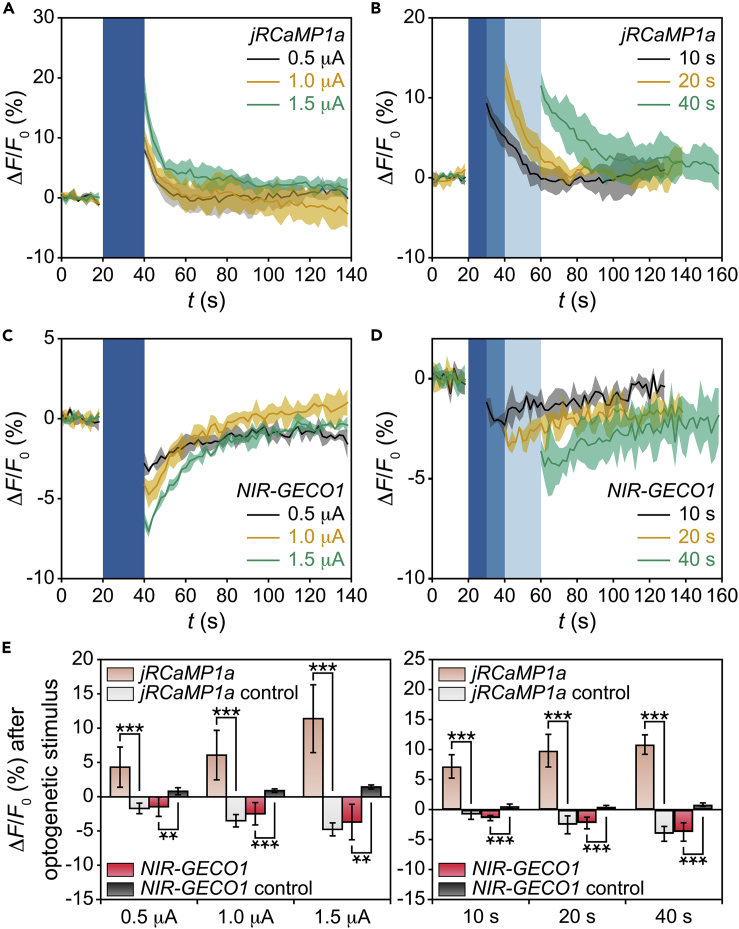
Precise optogenetic control, ideally down to single cells in dense cell populations, is essential in understanding the heterogeneity of cell networks. Devices with such capability, if built in a chip scale, will advance optogenetic studies at cellular levels in a variety of experimental settings. Here we demonstrate optogenetic control of intracellular Ca dynamics at the single cell level using a 16-μm pitched micro-light emitting diode (LED) array that features high brightness, small spot size, fast response, and low voltage operation. Individual LED pixels are able to reliably trigger intracellular Ca transients, confirmed by fluorescence microscopy and control experiments and cross-checked by two genetically coded Ca indicators. Importantly, our array can optogenetically address individual cells that are sub-10 μm apart in densely packed cell populations. These results suggest the possible use of the micro-LED array toward a lab-on-a-chip for single-cell optogenetics, which may allow for pharmaceutical screening and fundamental studies on a variety of cell networks.
精确的光遗传学控制,理想情况下能精确到密集细胞群体中的单个细胞,这对于理解细胞网络的异质性至关重要。具备这种能力的设备若能制成芯片规模,将推动在各种实验环境下细胞水平的光遗传学研究。在此,我们展示了使用具有高亮度、小光斑尺寸、快速响应和低电压操作特点的16微米间距微发光二极管(LED)阵列,在单细胞水平上对细胞内钙动力学进行光遗传学控制。通过荧光显微镜和对照实验证实,单个LED像素能够可靠地触发细胞内钙瞬变,并由两种基因编码的钙指示剂进行交叉核对。重要的是,我们的阵列能够以光遗传学方式处理紧密堆积细胞群体中相距不到10微米的单个细胞。这些结果表明,微LED阵列有可能用于单细胞光遗传学的芯片实验室,这可能有助于药物筛选和对各种细胞网络的基础研究。