Institute of Medical Engineering, Graz University of Technology, Stremayrgasse 16, 8010, Graz, Austria.
Laboratory of FMRI Technology (LOFT), Mark & Mary Stevens Neuroimaging and Informatics Institute, Keck School of Medicine, University of Southern California, Los Angeles, CA, USA.
Neuroimage. 2020 Feb 1;206:116337. doi: 10.1016/j.neuroimage.2019.116337. Epub 2019 Nov 9.
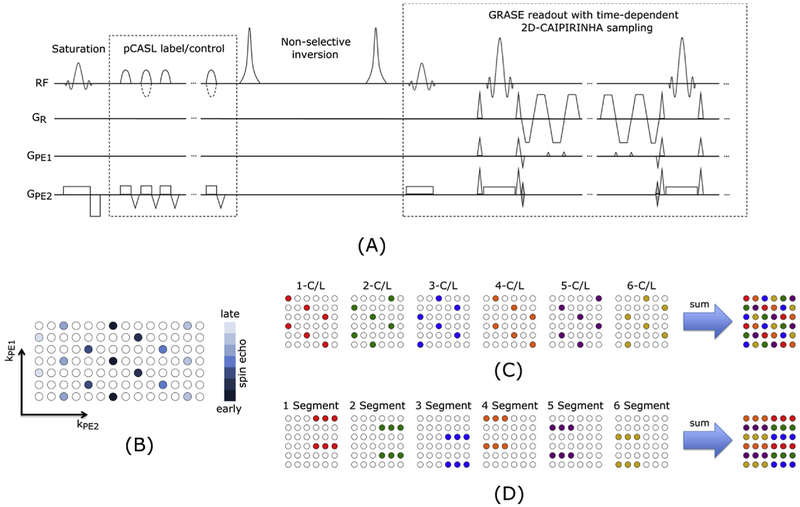
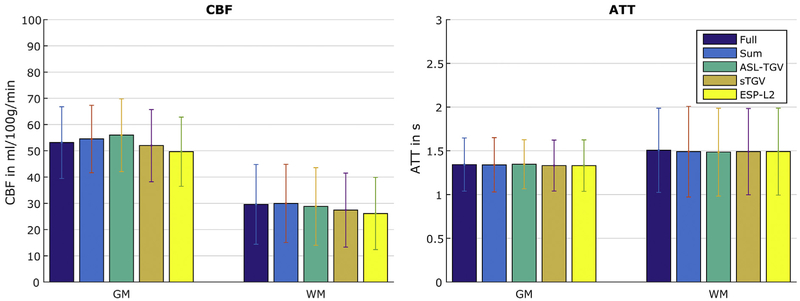
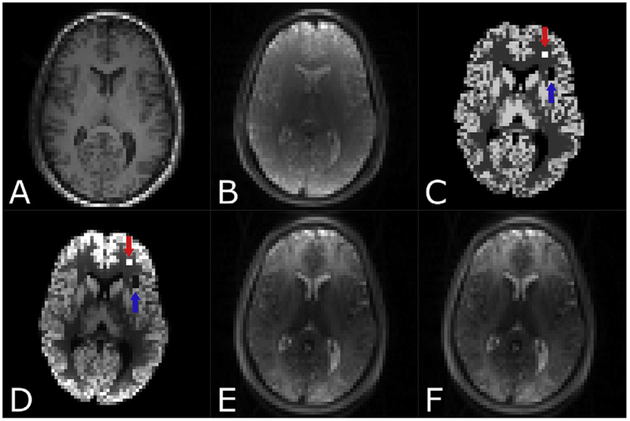
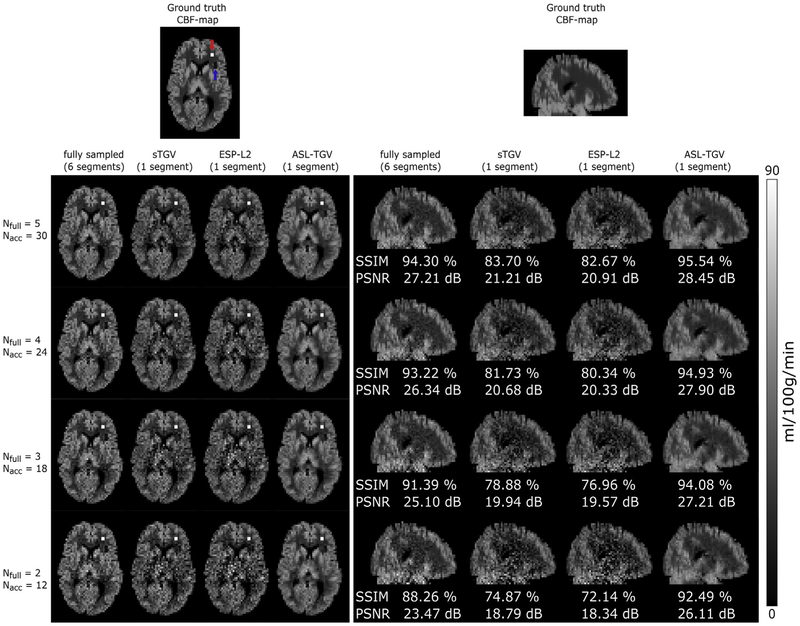
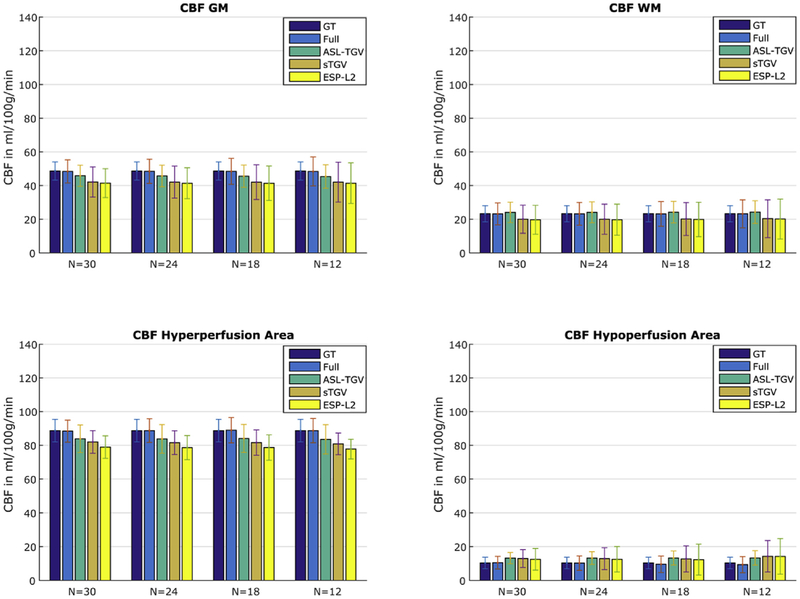
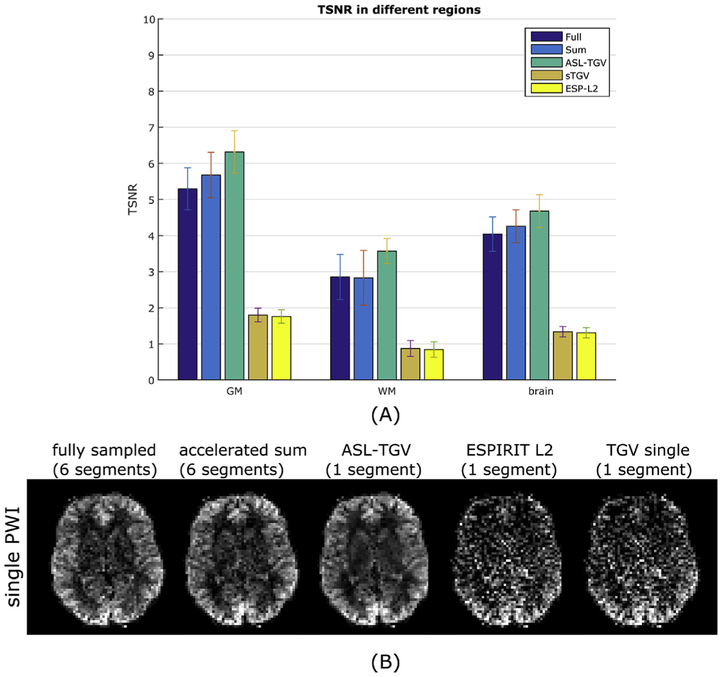
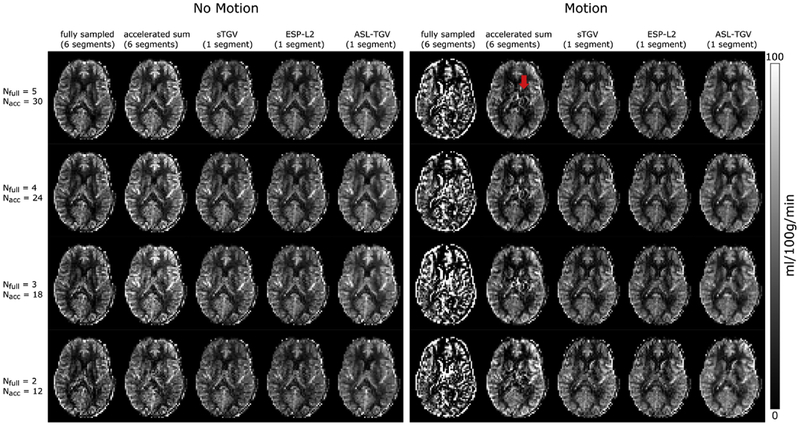
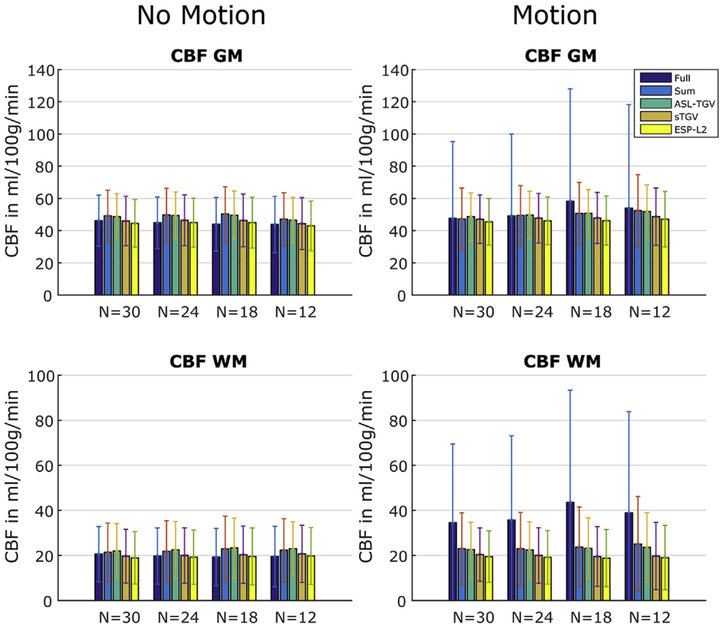
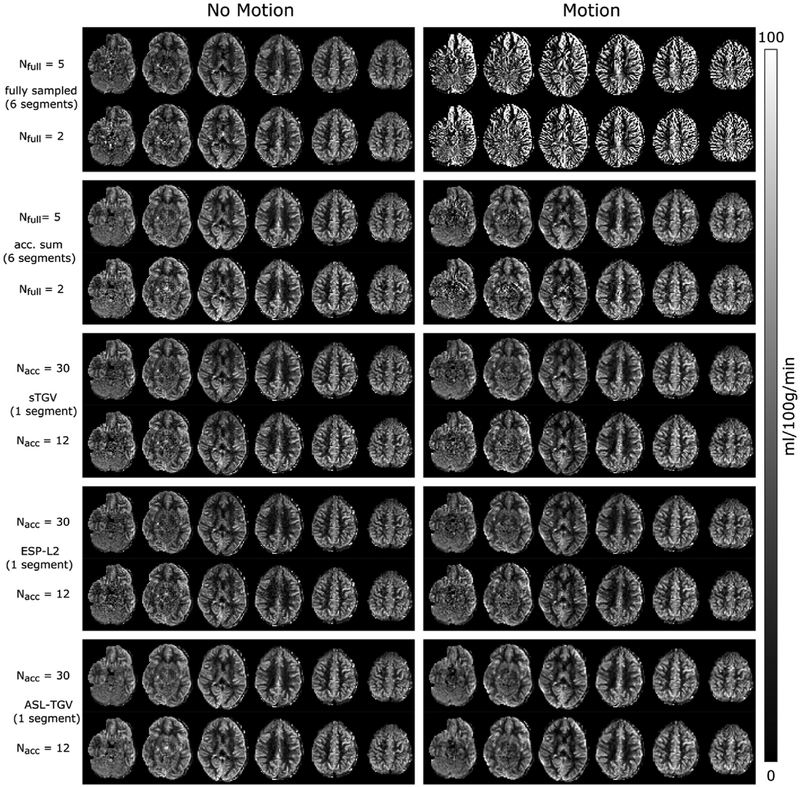
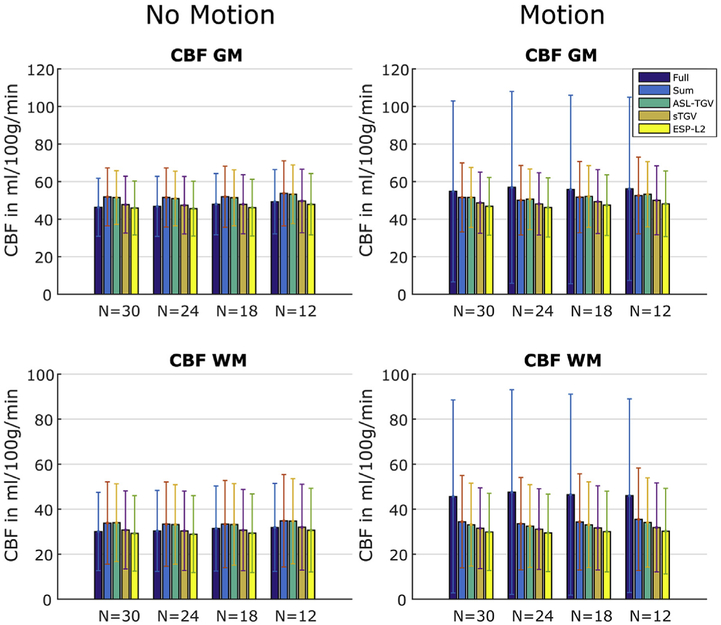
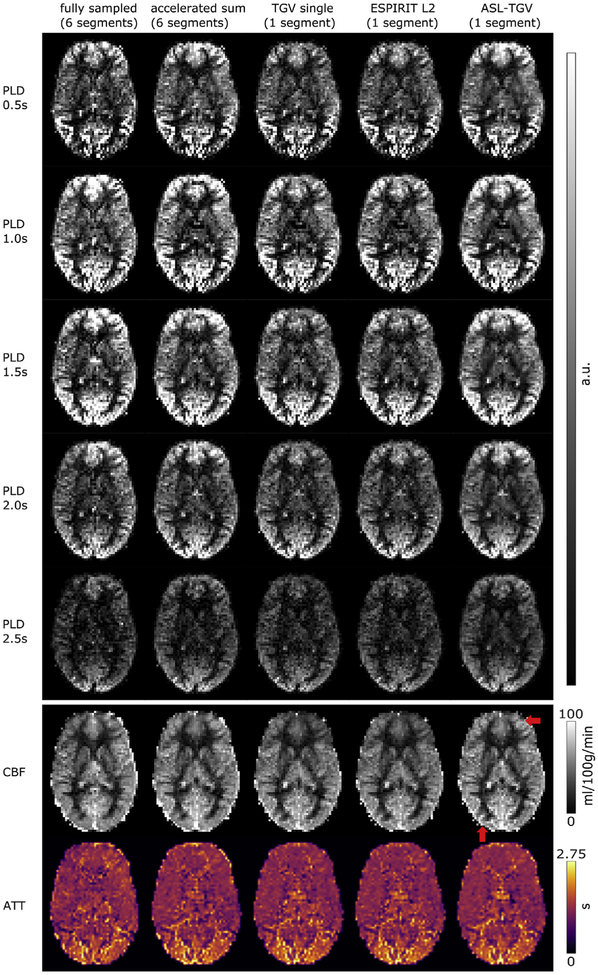
For ASL perfusion imaging in clinical settings the current guidelines recommends pseudo-continuous arterial spin labeling with segmented 3D readout. This combination achieves the best signal to noise ratio with reasonable resolution but is prone to motion artifacts due to the segmented readout. Motion robust single-shot 3D acquisitions suffer from image blurring due to the T2 decay of the sampled signals during the long readout. To tackle this problem, we propose an accelerated 3D-GRASE sequence with a time-dependent 2D-CAIPIRINHA sampling pattern. This has several advantages: First, the single-shot echo trains are shortened by the acceleration factor; Second, the temporal incoherence between measurements is increased; And third, the coil sensitivity maps can be estimated directly from the averaged k-space data. To obtain improved perfusion images from the undersampled time series, we developed a variational image reconstruction approach employing spatio-temporal total-generalized-variation (TGV) regularization. The proposed ASL-TGV method reduced the total acquisition time, improved the motion robustness of 3D ASL data, and the image quality of the cerebral blood flow (CBF) maps compared to those by a standard segmented approach. An evaluation was performed on 5 healthy subjects including intentional movement for 2 subjects. Single-shot whole brain CBF-maps with high resolution 3.1 × 3.1 × 3 mm and image quality can be acquired in 1min 46sec. Additionally high quality CBF- and arterial transit time (ATT) -maps from single-shot multi-post-labeling delay (PLD) data can be gained with the proposed method. This method may improve the robustness of 3D ASL in clinical settings, and may be applied for perfusion fMRI.
对于临床环境中的 ASL 灌注成像,当前的指南建议使用分段 3D 读取的伪连续动脉自旋标记。这种组合实现了最佳的信噪比和合理的分辨率,但由于分段读取,容易出现运动伪影。由于在长读取期间采样信号的 T2 衰减,运动鲁棒的单次 3D 采集会导致图像模糊。为了解决这个问题,我们提出了一种具有时变 2D-CAIPIRINHA 采样模式的加速 3D-GRASE 序列。这有几个优点:首先,通过加速因子缩短单次回波列车;其次,增加了测量之间的时间不连贯性;第三,可以直接从平均 k 空间数据中估计线圈灵敏度图。为了从欠采样时间序列中获得改进的灌注图像,我们开发了一种使用时空全广义变分(TGV)正则化的变分图像重建方法。与标准分段方法相比,所提出的 ASL-TGV 方法减少了总采集时间,提高了 3D ASL 数据的运动鲁棒性,并且改善了脑血流(CBF)图的图像质量。对包括 2 名故意运动的 5 名健康受试者进行了评估。可以在 1 分 46 秒内采集具有高分辨率 3.1×3.1×3mm 和图像质量的单次全脑 CBF 图。此外,还可以使用该方法从单次多后标记延迟(PLD)数据中获得高质量的 CBF 和动脉渡越时间(ATT)图。该方法可以提高临床环境中 3D ASL 的鲁棒性,并可应用于灌注 fMRI。