Neščáková Zuzana, Zheng Kai, Liverani Liliana, Nawaz Qaisar, Galusková Dagmar, Kaňková Hana, Michálek Martin, Galusek Dušan, Boccaccini Aldo R
Dept. of Biomaterials, FunGlass - Centre for Functional and Surface Functionalized Glass, Alexander Dubček University of Trenčín, Slovakia.
Institute of Biomaterials, Department of Materials Science and Engineering, University of Erlangen, Nuremberg, Germany.
Bioact Mater. 2019 Oct 27;4:312-321. doi: 10.1016/j.bioactmat.2019.10.002. eCollection 2019 Dec.
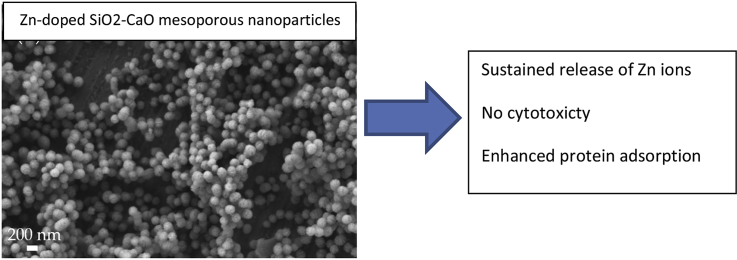
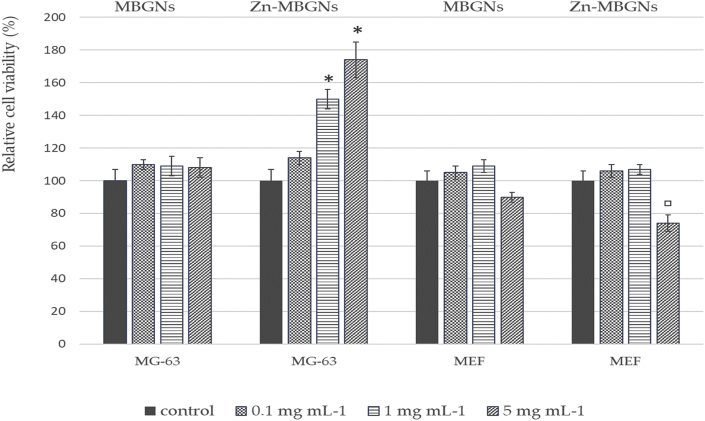
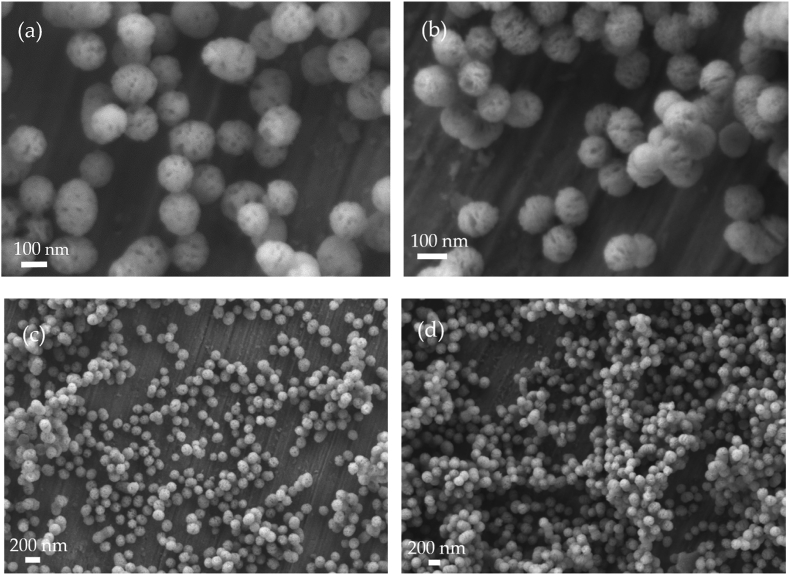
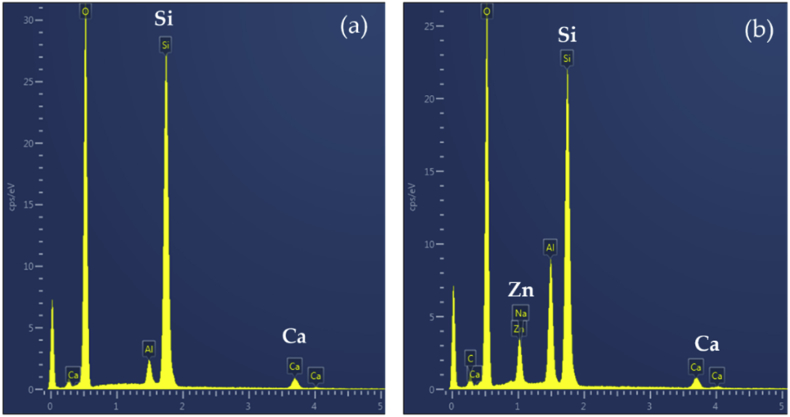
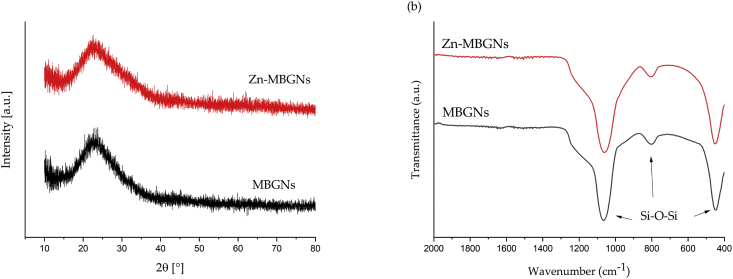
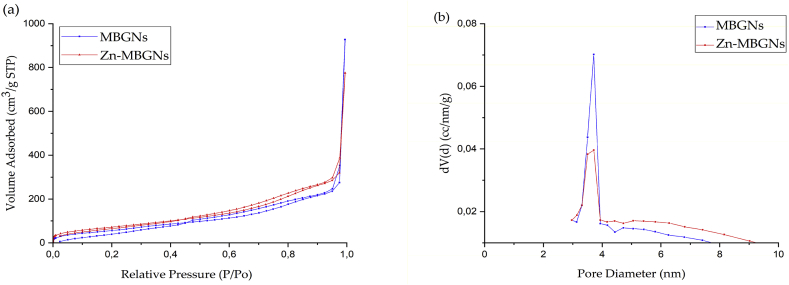
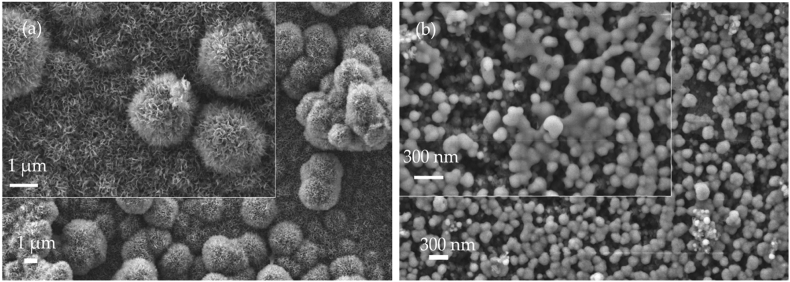
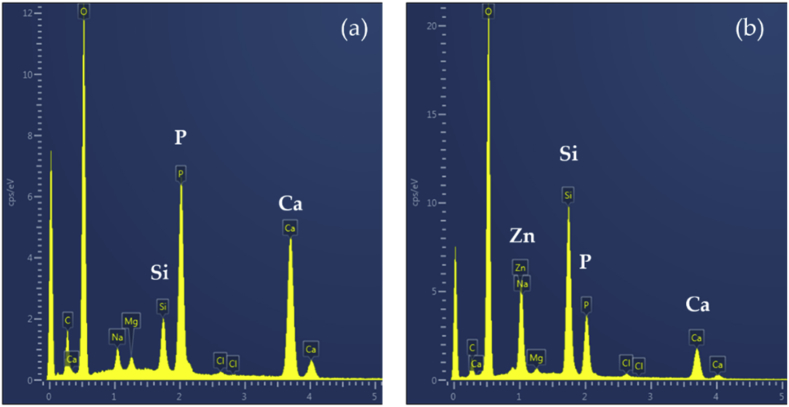
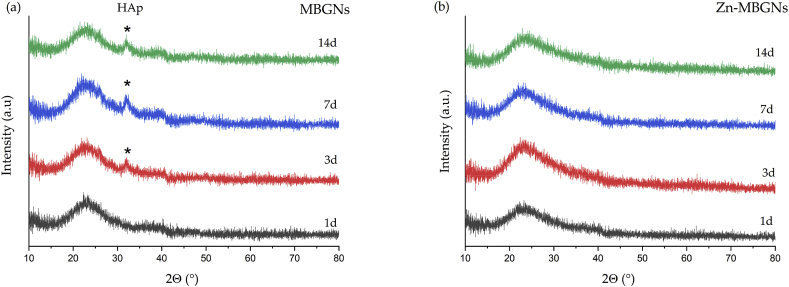
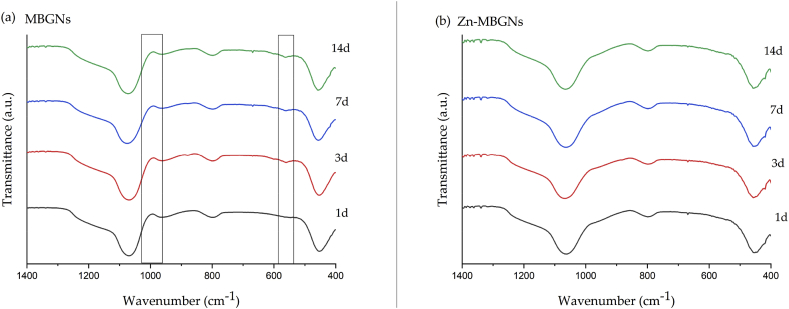
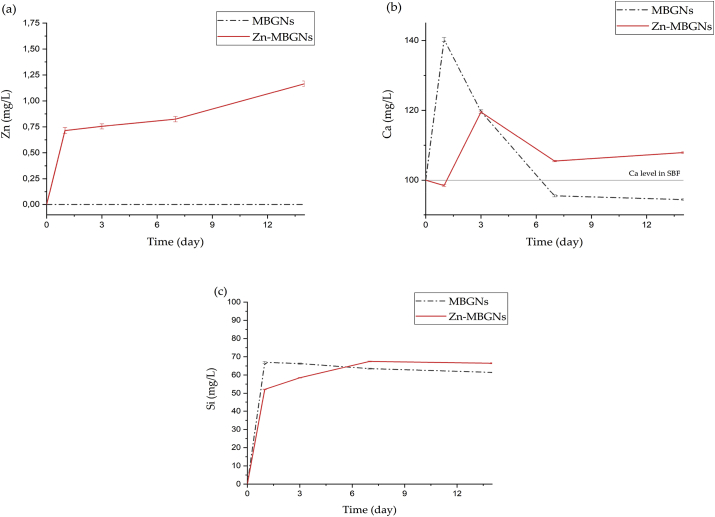
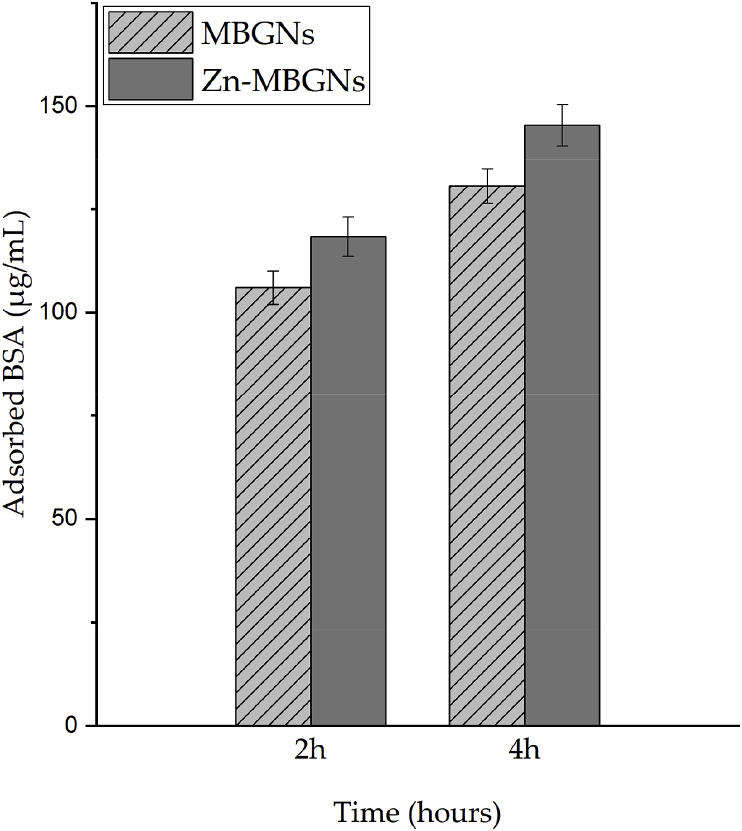
Mesoporous bioactive glasses have been widely investigated for applications in bone tissue regeneration and, more recently, in soft tissue repair and wound healing. In this study we produced mesoporous bioactive glass nanoparticles (MBGNs) based on the SiO-CaO system. With the intention of adding subsidiary biological function, MBGNs were doped with Zn ions. Zn-MBGNs with 8 mol% ZnO content were synthesized via microemulsion assisted sol-gel method. The synthesized particles were homogeneous in shape and size. They exhibited spherical shape, good dispersity, and a size of 130 ± 10 nm. The addition of zinc precursors did not affect the morphology of particles, while their specific surface area increased in comparison to MBGNs. The presence of Zn ions inhibited the formation of hydroxycarbonate apatite (HCAp) on the particles after immersion in simulated body fluid (SBF). No formation of HCAp crystals on the surface of Zn-MBGNs could be observed after 14 days of immersion. Interestingly, powders containing relatively high amount of zinc released Zn ions in low concentration (0.6-1.2 mg L) but in a sustained manner. This releasing feature enables Zn-MBGNs to avoid potentially toxic levels of Zn ions, indeed Zn-MBGNs were seen to improve the differentiation of osteoblast-like cells (MG-63). Additionally, Zn-MBGNs showed higher ability to adsorb proteins in comparison to MBGNs, which could indicate a favourable later attachment of cells. Due to their advantageous morphological and physiochemical properties, Zn-MBGNs show great potential as bioactive fillers or drug delivery systems in a variety of applications including bone regeneration and wound healing.
介孔生物活性玻璃已被广泛研究用于骨组织再生,最近也用于软组织修复和伤口愈合。在本研究中,我们制备了基于SiO-CaO体系的介孔生物活性玻璃纳米颗粒(MBGNs)。为了添加辅助生物学功能,MBGNs用锌离子进行了掺杂。通过微乳液辅助溶胶-凝胶法合成了ZnO含量为8mol%的Zn-MBGNs。合成的颗粒形状和尺寸均匀。它们呈球形,分散性好,尺寸为130±10nm。锌前驱体的添加不影响颗粒的形态,但其比表面积相对于MBGNs有所增加。锌离子的存在抑制了颗粒在模拟体液(SBF)中浸泡后羟基碳酸磷灰石(HCAp)的形成。浸泡14天后,在Zn-MBGNs表面未观察到HCAp晶体的形成。有趣的是,含有相对大量锌的粉末以低浓度(0.6-……此处原文有误,推测应为0.6 - 1.2mg/L)持续释放锌离子。这种释放特性使Zn-MBGNs能够避免锌离子潜在的毒性水平,实际上Zn-MBGNs被发现可改善成骨样细胞(MG-63)的分化。此外,与MBGNs相比,Zn-MBGNs表现出更高的蛋白质吸附能力,这可能表明细胞后期附着良好。由于其有利的形态和物理化学性质,Zn-MBGNs在包括骨再生和伤口愈合在内的各种应用中作为生物活性填料或药物递送系统具有巨大潜力。