Auvray N, Loret B, Benhabib S, Cazayous M, Zhong R D, Schneeloch J, Gu G D, Forget A, Colson D, Paul I, Sacuto A, Gallais Y
Université de Paris, Matériaux et Phénomènes Quantiques, CNRS UMR 7162, F-75205, Paris, France.
Condensed Matter Physics and Materials Science Department, Brookhaven National Laboratory, Upton, NY, 11973, USA.
Nat Commun. 2019 Nov 15;10(1):5209. doi: 10.1038/s41467-019-12940-w.
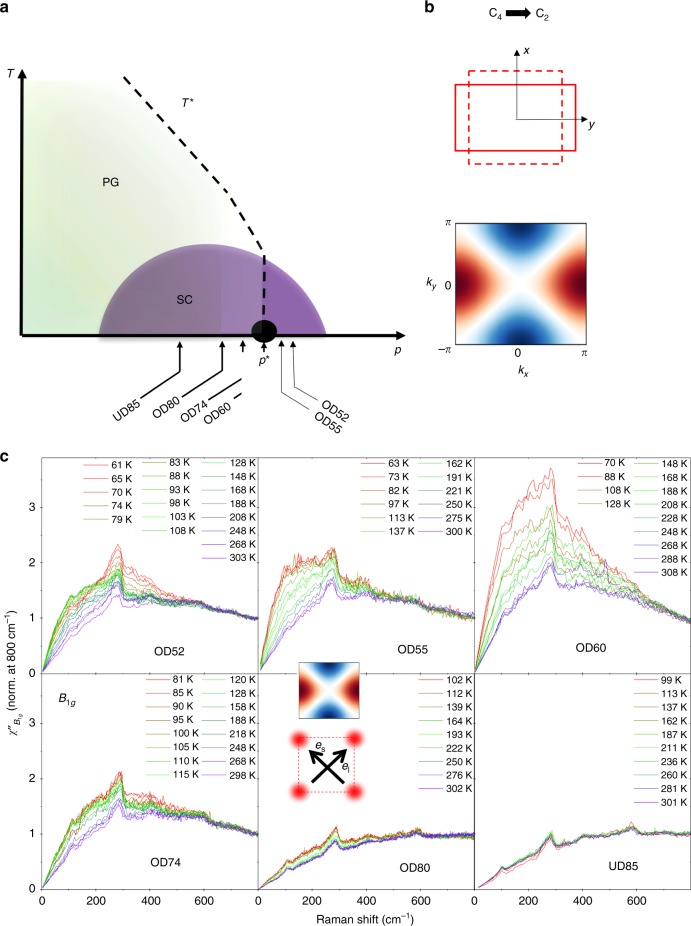
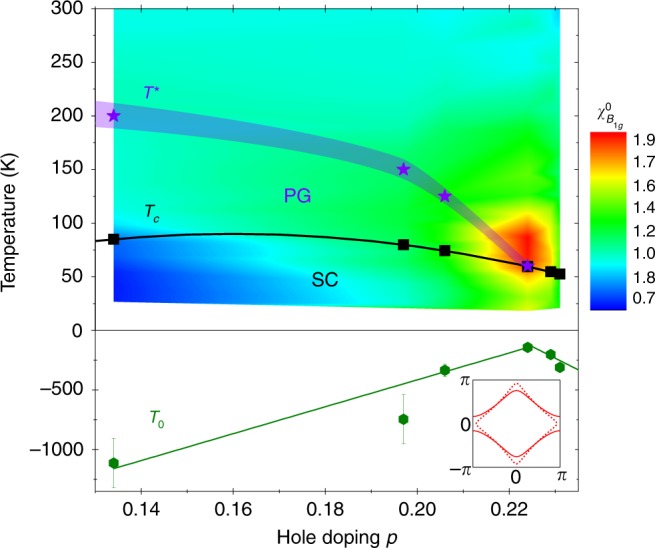
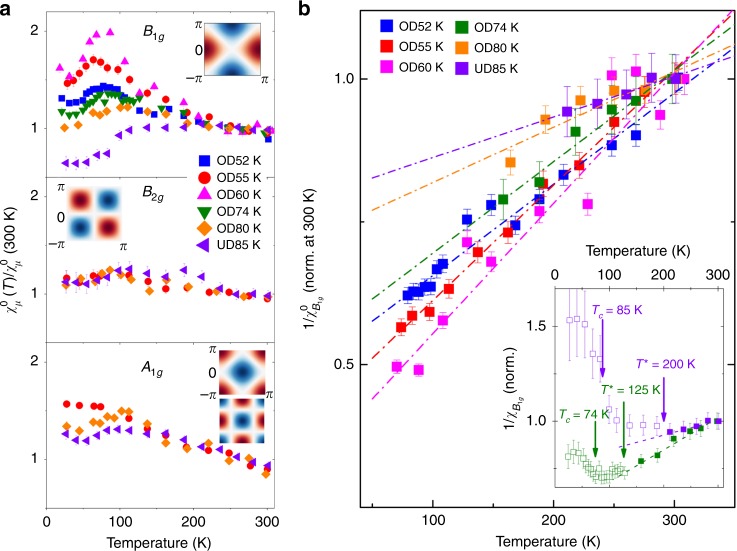
Establishing the presence and the nature of a quantum critical point in their phase diagram is a central enigma of the high-temperature superconducting cuprates. It could explain their pseudogap and strange metal phases, and ultimately their high superconducting temperatures. Yet, while solid evidences exist in several unconventional superconductors of ubiquitous critical fluctuations associated to a quantum critical point, in the cuprates they remain undetected until now. Here using symmetry-resolved electronic Raman scattering in the cuprate [Formula: see text], we report the observation of enhanced electronic nematic fluctuations near the endpoint of the pseudogap phase. While our data hint at the possible presence of an incipient nematic quantum critical point, the doping dependence of the nematic fluctuations deviates significantly from a canonical quantum critical scenario. The observed nematic instability rather appears to be tied to the presence of a van Hove singularity in the band structure.
在其相图中确定量子临界点的存在及其性质是高温超导铜酸盐的一个核心谜团。这可以解释它们的赝能隙和奇异金属相,以及最终它们的高超导温度。然而,虽然在几种非常规超导体中存在与量子临界点相关的普遍临界涨落的确凿证据,但在铜酸盐中,直到现在这些涨落仍未被发现。在这里,我们利用铜酸盐[公式:见正文]中对称性分辨的电子拉曼散射,报告了在赝能隙相端点附近增强的电子向列涨落的观测结果。虽然我们的数据暗示可能存在一个初始向列量子临界点,但向列涨落的掺杂依赖性与典型的量子临界情形有显著偏差。观察到的向列不稳定性似乎与能带结构中范霍夫奇点的存在有关。