Hall John F, McLean Julie B, Jones Savannah M, Moore Mark A, Nicholson Michelle D, Dorsch Kimberly A
Flagstaff Bone and Joint, Flagstaff, AZ, USA.
LifeNet Health, 1864 Concert Drive, Virginia Beach, VA, 23455, USA.
J Orthop Surg Res. 2019 Nov 15;14(1):372. doi: 10.1186/s13018-019-1424-2.
Low back pain (LBP) is the leading cause of absence from work, disability, and impaired quality of life. Fusion surgery may be indicated when non-operative treatments have failed to provide relief. Surgery may include the use of fusion-enhancing implants, such as cellular bone allografts (CBAs). The purpose of this retrospective study was to evaluate efficacy and safety of one CBA (V-CBA) in patients who underwent instrumented posterolateral fusion (IPLF).
Retrospective data were collected from 150 consecutive patients who had undergone IPLF surgery between January 1, 2015, and March 31, 2018, in which V-CBA was used. All surgeries were performed by one surgeon. V-CBA was mixed with local autograft bone. Patient diagnoses included degenerative disc disease, spondylosis, spondylolisthesis, or spondylolysis with or without stenosis. Standing anteroposterior (AP) and lateral images were collected prior to surgery and again at the terminal visit, which took place between 6 and 33 months post-operatively. De-identified images were assessed radiologically. Adverse events were documented. The primary composite endpoint of fusion status was dependent upon two main criteria: bridging bone per the Lenke scale (classified as "A" definitely solid or "B" possibly solid) and posterior hardware status (intact). Lenke scale C or D were categorized as pseudarthrosis.
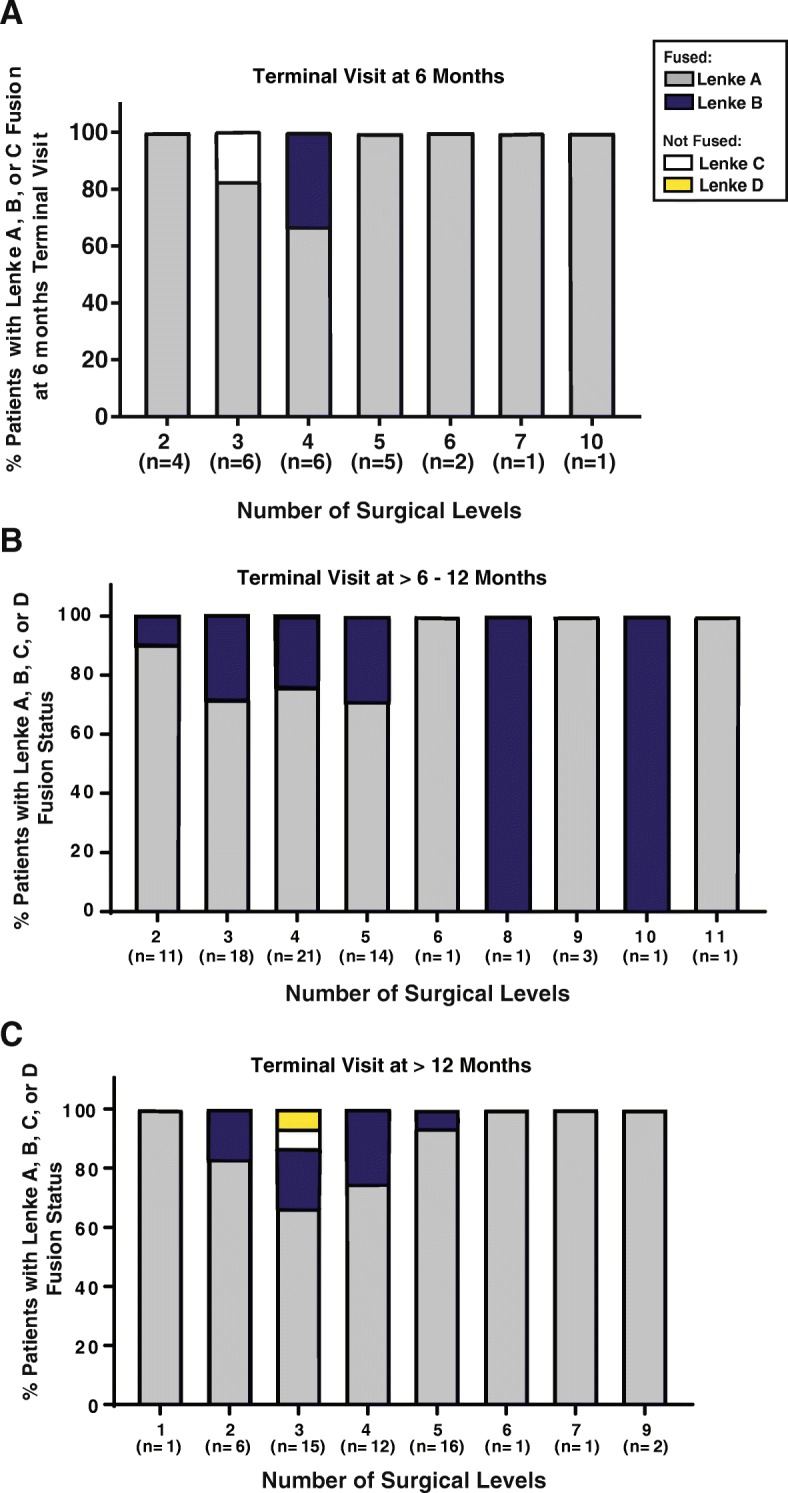
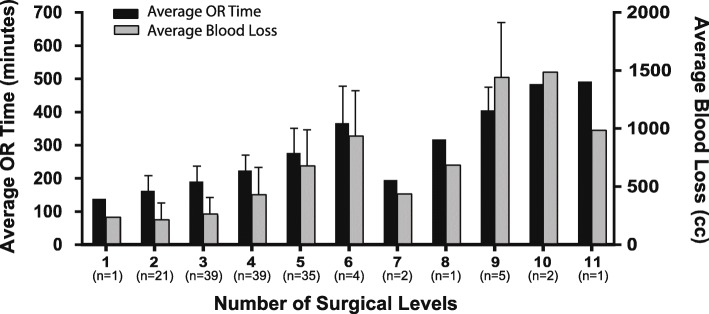
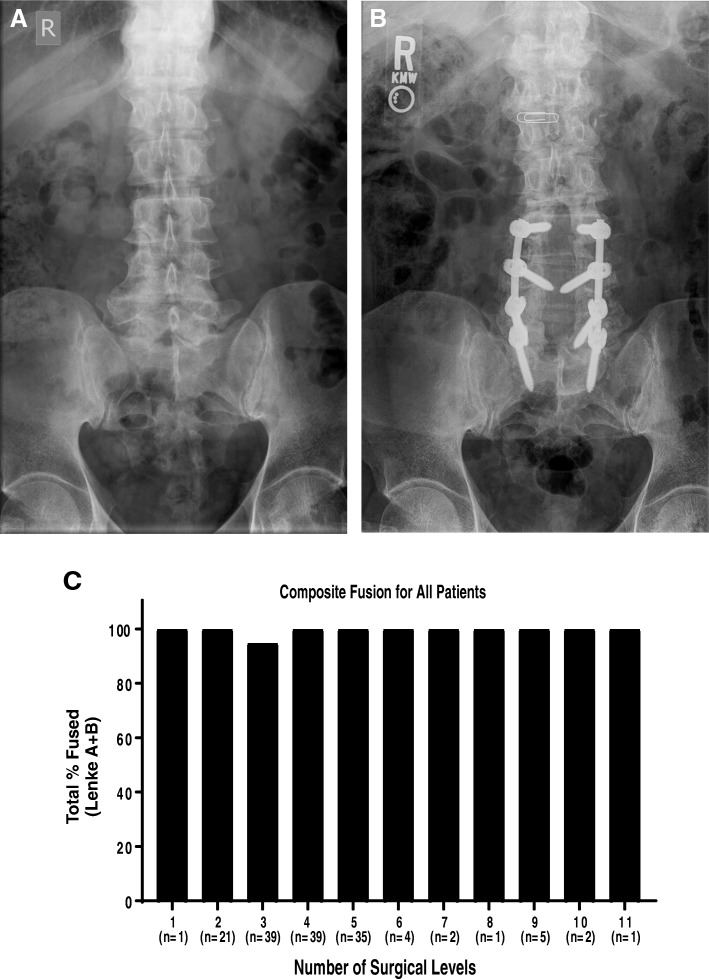
Eighty-seven male and 63 female patients (613 levels total) underwent IPLF in which V-CBA was implanted. An average of 4.1 levels was treated, with 59.3% of patients having undergone treatment for more than 3 levels. Twenty-nine percent of patients had diabetes. Fifty-two percent of patients had previously used nicotine products, and 12% were current smokers. Sixteen serious adverse events were recorded and included lumbar seroma, cerebrospinal fluid leak, wound dehiscence, pneumonia, urinary tract infection, and myocardial infarction. Successful fusion (Lenke scale "A" or "B") was recorded in 148 out of 150 patients (98.7%), or 608 out of 613 levels. The total pseudarthrosis rate was 0.8%.
The use of V-CBA combined with local autograft in multilevel IPLF resulted in successful fusions in 98.7% of patients. These results are particularly robust given the complex nature of many of these cases: 89 patients had 4 or more surgical levels, and many patients had multiple comorbidities.
IV.
腰痛(LBP)是导致工作缺勤、残疾和生活质量受损的主要原因。当非手术治疗未能缓解症状时,可能需要进行融合手术。手术可能包括使用促进融合的植入物,如多孔骨同种异体移植物(CBA)。本回顾性研究的目的是评估一种CBA(V-CBA)在接受器械辅助后外侧融合术(IPLF)患者中的疗效和安全性。
收集2015年1月1日至2018年3月31日期间连续150例接受IPLF手术并使用V-CBA的患者的回顾性数据。所有手术均由一名外科医生进行。V-CBA与局部自体骨混合。患者诊断包括退行性椎间盘疾病、脊柱病、脊椎滑脱或伴有或不伴有狭窄的椎弓峡部裂。术前和术后6至33个月的末次随访时采集站立位前后位(AP)和侧位影像。对去识别化的影像进行放射学评估。记录不良事件。融合状态的主要复合终点取决于两个主要标准:根据Lenke分级的桥接骨(分为“A”肯定牢固或“B”可能牢固)和后方内固定装置状态(完整)。Lenke分级为C或D被归类为假关节。
87例男性和63例女性患者(共613个节段)接受了植入V-CBA的IPLF手术。平均治疗4.1个节段,59.3%的患者接受了超过3个节段的治疗。29%的患者患有糖尿病。52%的患者既往使用过尼古丁产品,12%为当前吸烟者。记录了16例严重不良事件,包括腰椎血清肿、脑脊液漏、伤口裂开、肺炎、尿路感染和心肌梗死。150例患者中有148例(98.7%)或613个节段中有608个节段实现了成功融合(Lenke分级“A”或“B”)。总的假关节率为0.8%。
在多级IPLF中使用V-CBA联合局部自体骨,98.7%的患者实现了成功融合。鉴于许多病例的复杂性,这些结果尤其显著:89例患者有4个或更多手术节段,许多患者有多种合并症。
IV级。