Department of Biomedical Engineering, Johns Hopkins University School of Medicine, Baltimore, MD, USA; The Russell H. Morgan Department of Radiology, Johns Hopkins University School of Medicine, Baltimore, MD, USA.
The Russell H. Morgan Department of Radiology, Johns Hopkins University School of Medicine, Baltimore, MD, USA; F.M. Kirby Research Center for Functional Brain Imaging, Kennedy Krieger Institute, Baltimore, MD, USA.
Neuroimage. 2020 Feb 15;207:116365. doi: 10.1016/j.neuroimage.2019.116365. Epub 2019 Nov 14.
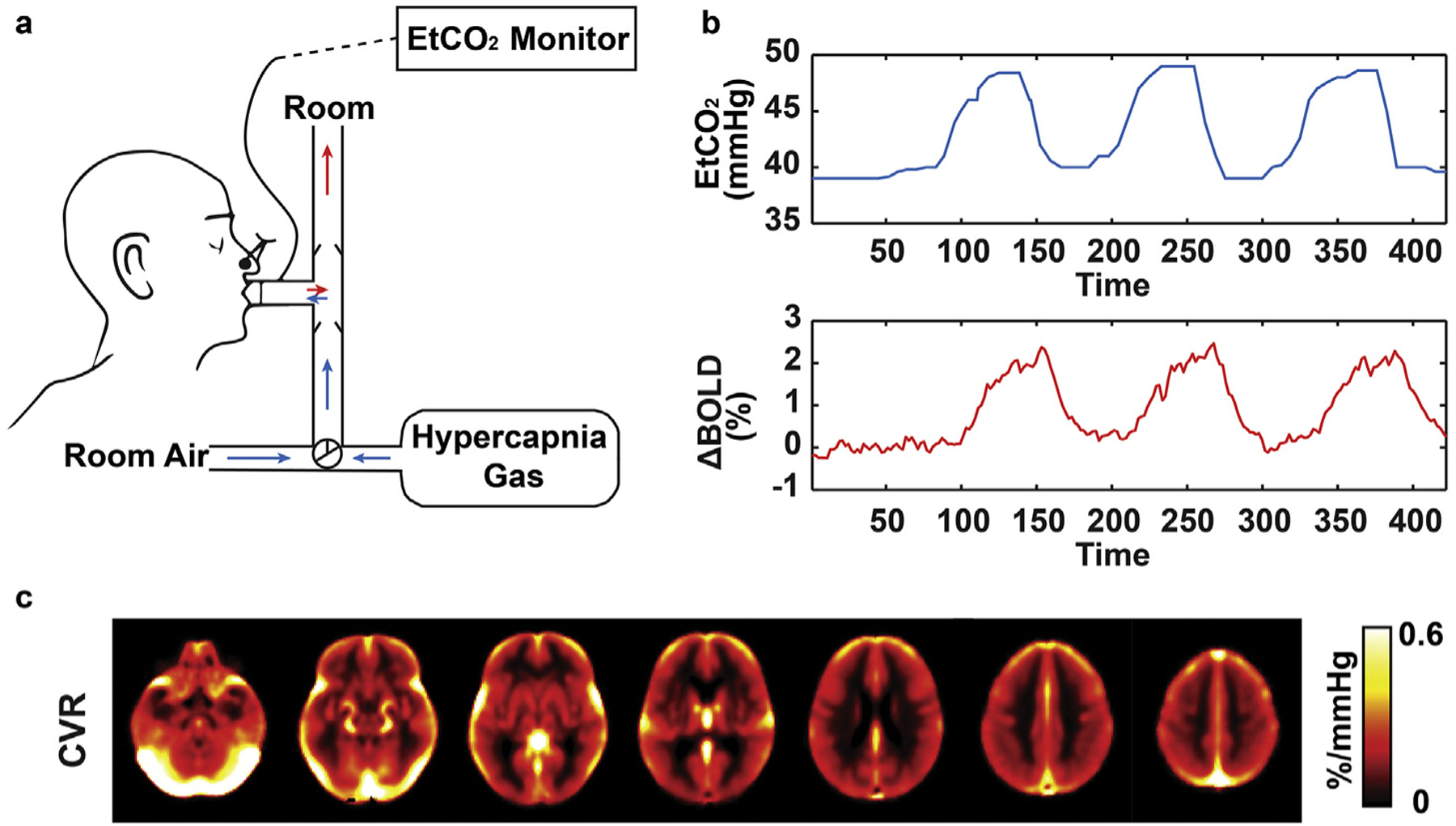
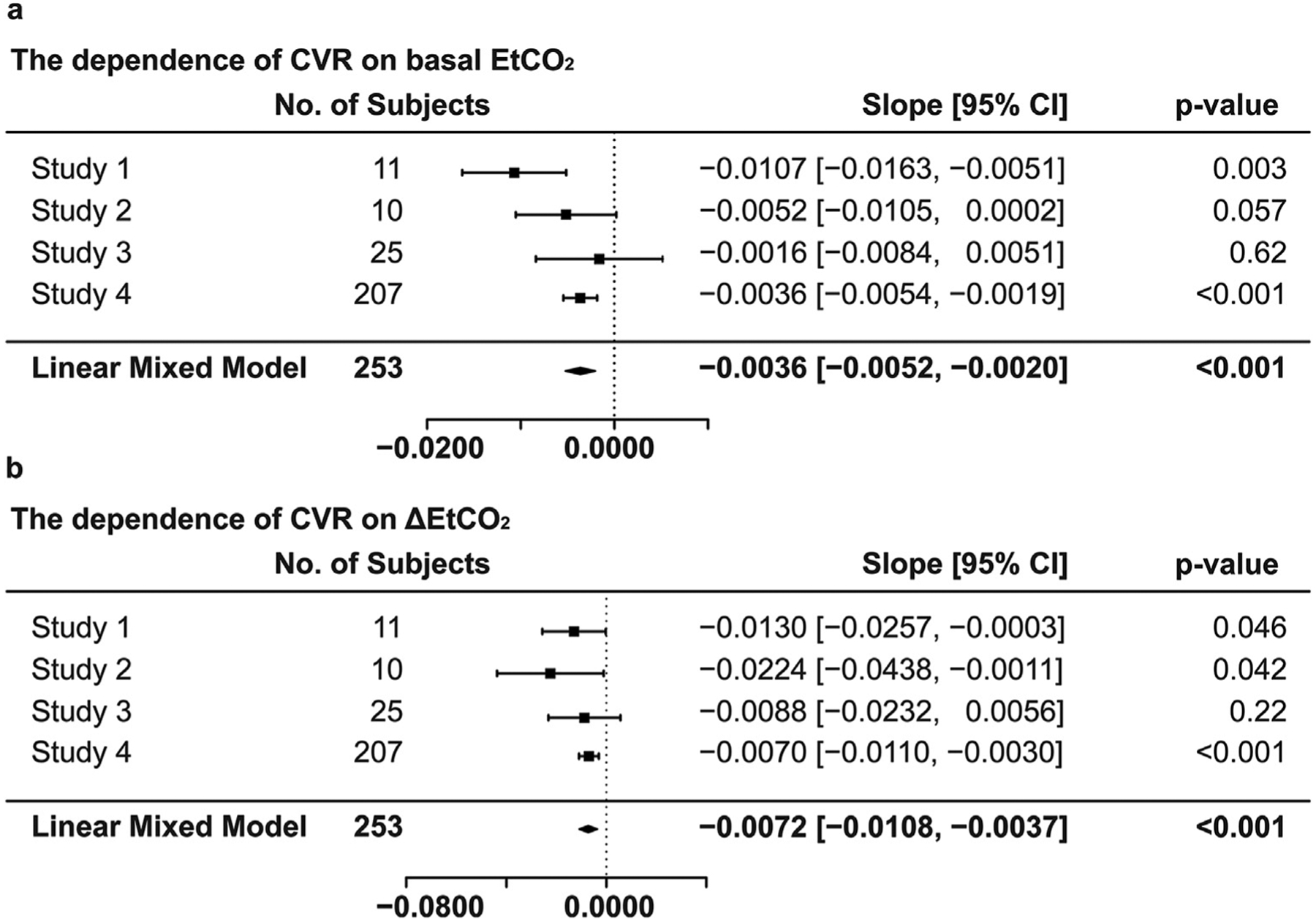
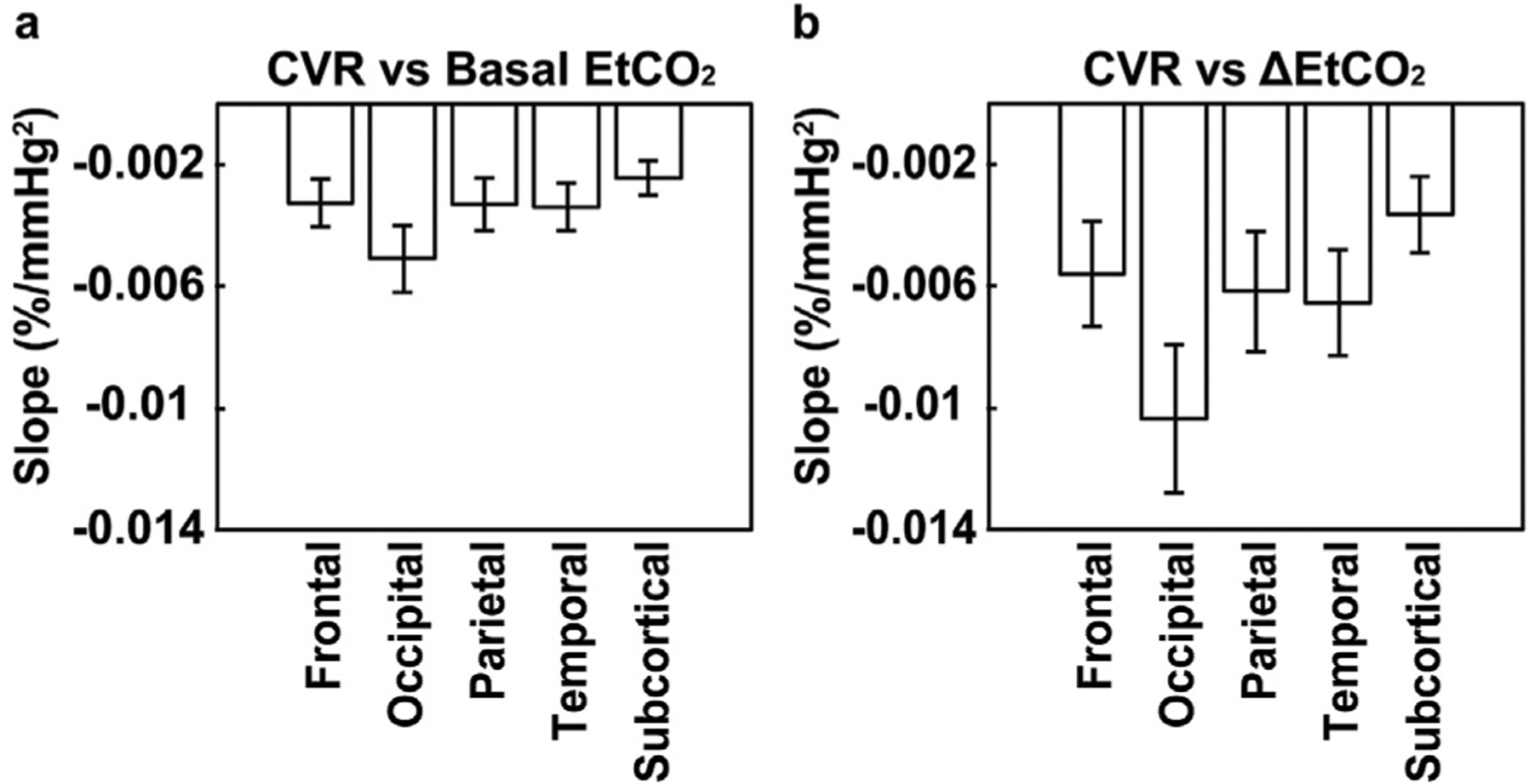
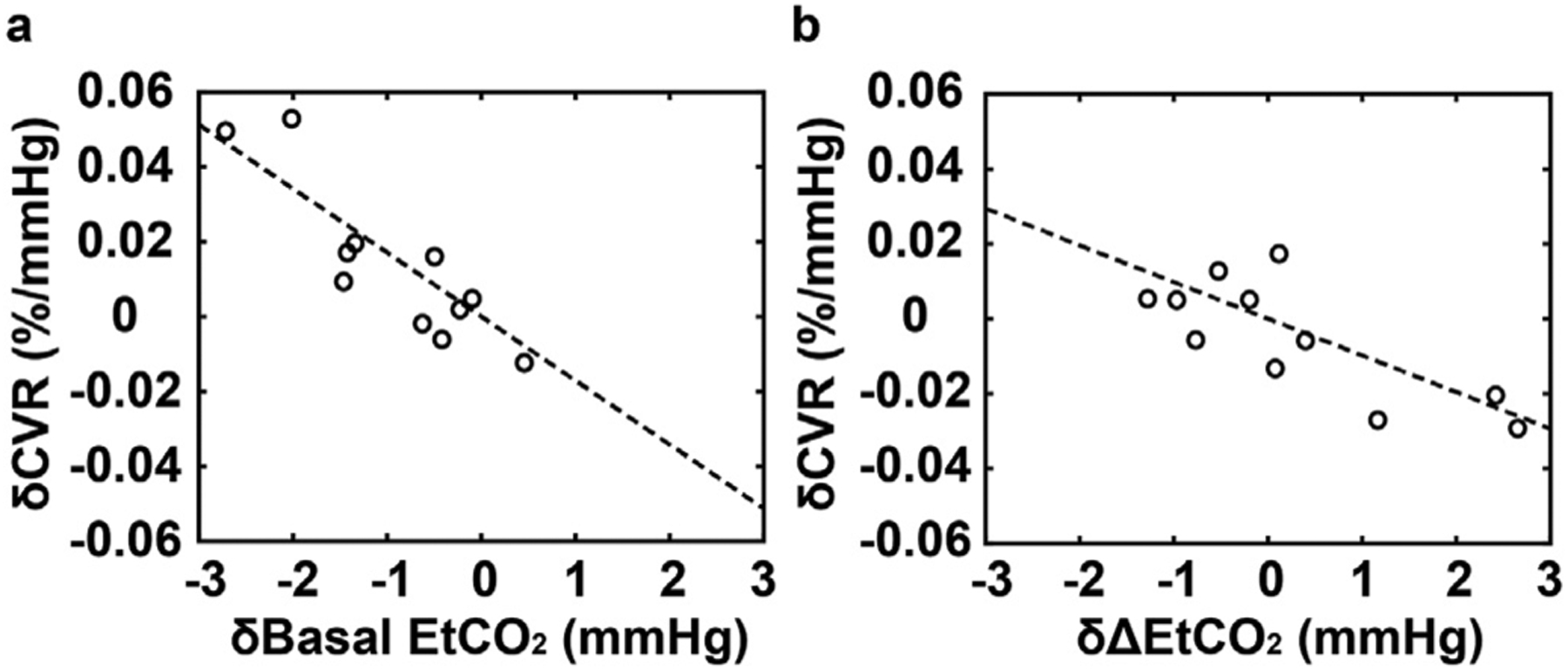
Cerebrovascular reactivity (CVR) mapping using CO-inhalation can provide important insight into vascular health. At present, blood-oxygenation-level-dependent (BOLD) MRI acquisition is the most commonly used CVR method due to its high sensitivity, high spatial resolution, and relatively straightforward processing. However, large variations in CVR across subjects and across different sessions of the same subject are often observed, which can cloud the ability of this promising measure in detecting diseases or monitoring treatment responses. The present work aims to identify the physiological components underlying the observed variability in CVR data. When studying the association between CVR value and the subject's CO levels in a total of N = 253 healthy participants, we found that CVR was lower in individuals with a higher basal end-tidal CO, EtCO (slope = -0.0036 ± 0.0008%/mmHg, p < 0.001), or with a greater EtCO change (ΔEtCO) with hypercapnic condition (slope = -0.0072 ± 0.0018%/mmHg, p < 0.001). In a within-subject setting, when studying the CVR difference between two repeated scans (with repositioning) in relation to the corresponding differences in basal EtCO and ΔEtCO (n = 11), it was found that CVR values were lower if the basal EtCO or ΔEtCO during that particular scan session was greater. The present work suggests that basal physiological state and the level of hypercapnic stimulus intensity should be considered in application studies of CVR in order to reduce inter-subject and intra-subject variations in the data. Potential approaches to use these findings to reduce noise and augment sensitivity are proposed.
使用 CO 吸入法进行脑血管反应性 (CVR) 映射可以提供有关血管健康的重要信息。目前,由于其高灵敏度、高空间分辨率和相对简单的处理,血氧水平依赖 (BOLD) MRI 采集是最常用的 CVR 方法。然而,经常观察到受试者之间和同一受试者不同会话之间的 CVR 变化很大,这可能会影响这种有前途的测量方法在检测疾病或监测治疗反应方面的能力。本研究旨在确定 CVR 数据中观察到的可变性的生理基础。在总共 253 名健康参与者中,当研究 CVR 值与个体 CO 水平之间的关联时,我们发现 CVR 在基础呼气末 CO 水平(EtCO)较高的个体中较低(斜率=-0.0036±0.0008%/mmHg,p<0.001),或者在高碳酸血症条件下 EtCO 变化(ΔEtCO)较大的个体中较低(斜率=-0.0072±0.0018%/mmHg,p<0.001)。在个体内研究中,当研究两次重复扫描(重新定位)之间的 CVR 差异与相应的基础 EtCO 和 ΔEtCO 差异(n=11)时,发现如果特定扫描期间的基础 EtCO 或 ΔEtCO 较大,则 CVR 值较低。本研究表明,在 CVR 应用研究中,应考虑基础生理状态和高碳酸刺激强度水平,以减少数据中的个体间和个体内差异。提出了利用这些发现减少噪声和提高灵敏度的潜在方法。