Center for Sustainable Development, Earth Institute, Columbia University, New York, NY, United States of America.
Department of Epidemiology, Mailman School of Public Health, Columbia University, New York, NY, United States of America.
PLoS One. 2019 Nov 21;14(11):e0224749. doi: 10.1371/journal.pone.0224749. eCollection 2019.
In most parts of the world, men access health services less frequently than women, and this trend is unrelated to differences in need for services. While male involvement in healthcare as partners or fathers has been extensively studied, less is known about the health-seeking behavior of men as clients themselves. This interventional research study aimed to determine how the introduction of male-friendly clinics impacted male care-seeking behavior and to describe the reasons for accessing services among men in rural Kenya.
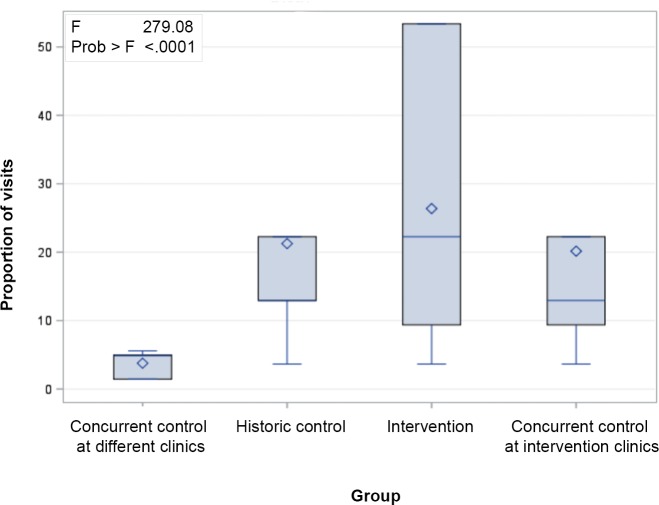
We questioned men to assess utilization and perceptions of existing health clinics, then designed and evaluated a "male clinics" intervention where dedicated male health workers were hired for one year to offer routine, free services exclusively to men within existing healthcare facilities. Results were compared between data from Male Clinics in specific health facilities, the same facilities concurrently, nearby control facilities concurrently, and intervention facilities historically. Costs of services, distance to facilities, and quality of care were the main barriers to healthcare access reported. The number of total visits was significantly higher than control groups (p<0·0001). In the intervention group, 18·6% of visits were for a checkup compared to almost none in control groups. The most common diagnoses overall were upper respiratory tract infections, malaria and injury. A major limitation of this study is the non-comparability in information captured using the Male Clinic registers compared to control registers.
Costs and quality of services deter men from seeking healthcare. The introduction of male-friendly health services could encourage men to seek preventive care and increase service uptake.
在世界上大多数地区,男性就诊频率低于女性,且这种趋势与对服务的需求差异无关。尽管男性作为伴侣或父亲参与医疗保健已得到广泛研究,但对于男性作为客户本身的就医行为却知之甚少。本干预研究旨在确定引入男性友好诊所如何影响男性的求诊行为,并描述肯尼亚农村男性寻求服务的原因。
我们询问了男性,以评估现有诊所的使用情况和认知,然后设计并评估了“男性诊所”干预措施,即在现有医疗保健设施内聘请专门的男性卫生工作者,为男性提供一年的常规、免费服务。结果在特定卫生设施、同期同一设施、同期附近对照设施以及历史上干预设施的男性诊所数据中进行了比较。服务费用、到设施的距离和护理质量是报告的主要医疗保健障碍。就诊总人数明显高于对照组(p<0·0001)。在干预组中,18·6%的就诊是为了体检,而对照组中几乎没有。总体上最常见的诊断是上呼吸道感染、疟疾和损伤。本研究的主要局限性在于,男性诊所登记册中获取的信息与对照组登记册中获取的信息无法进行比较。
费用和服务质量阻碍了男性寻求医疗保健。引入男性友好型卫生服务可以鼓励男性寻求预防保健并增加服务利用率。