Wojtasik Wioleta, Boba Aleksandra, Preisner Marta, Kostyn Kamil, Szopa Jan, Kulma Anna
Department of Genetic Biochemistry, Faculty of Biotechnology, University of Wroclaw, Przybyszewskiego 63, 51-148 Wroclaw, Poland.
Department of Genetics, Plant Breeding and Seed Production, Faculty of Life Sciences and Technology, Wroclaw University of Environmental and Plant Sciences, pl. Grunwaldzki 24A, 50-363 Wroclaw, Poland.
Microorganisms. 2019 Nov 20;7(12):589. doi: 10.3390/microorganisms7120589.
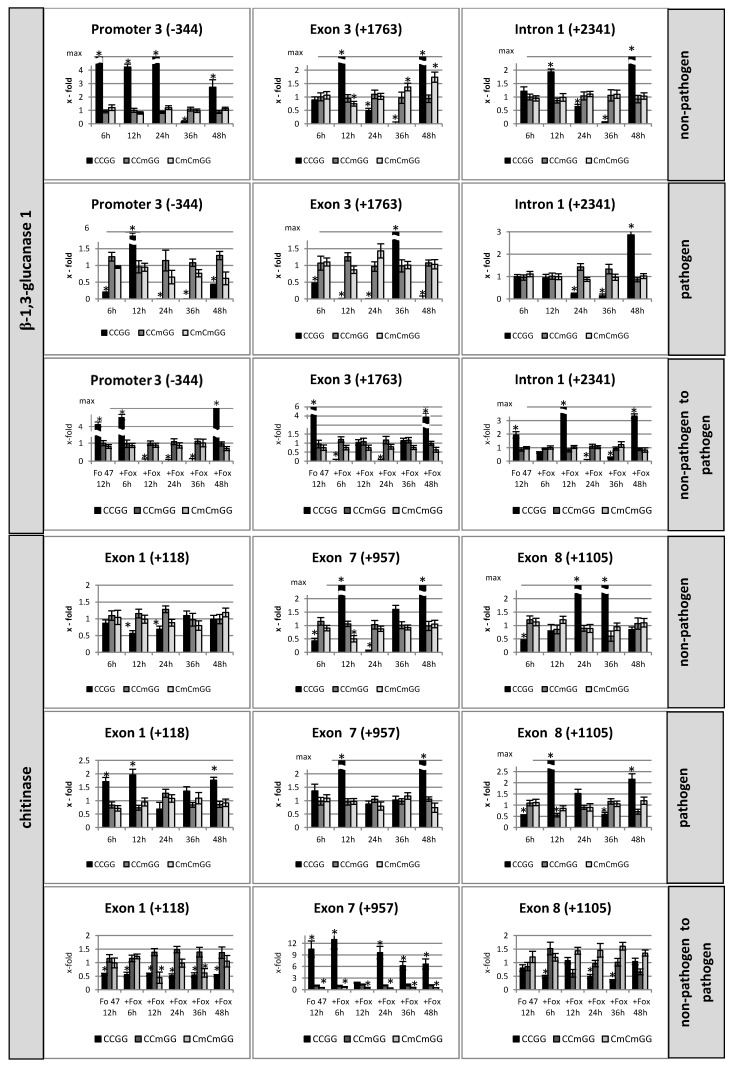
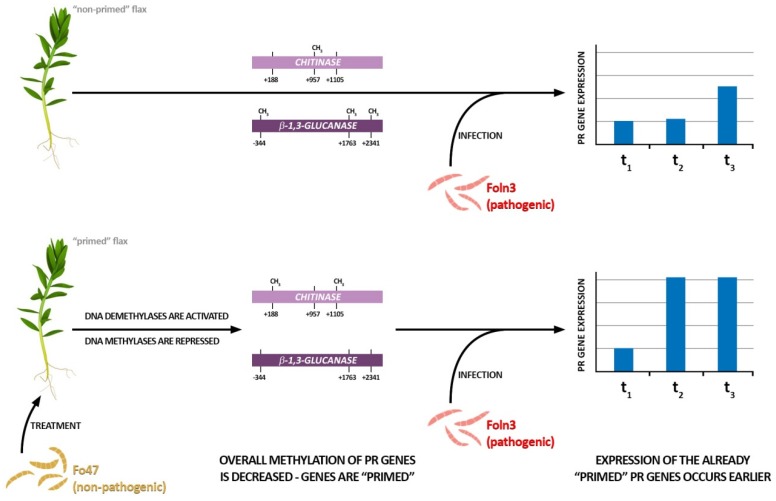
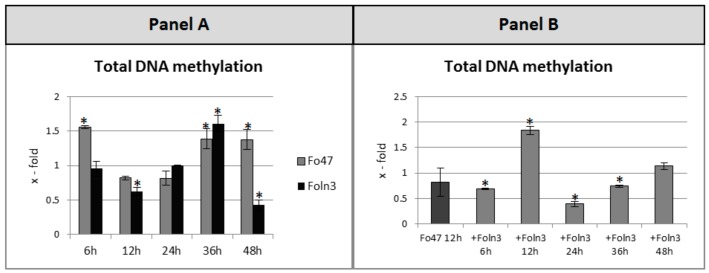
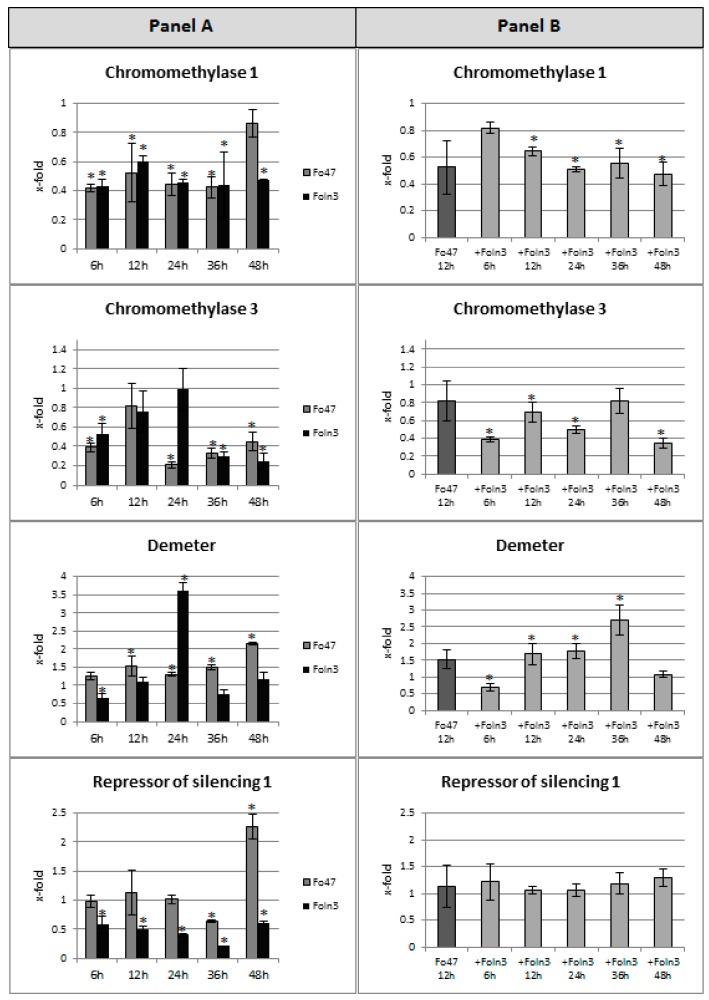
Most losses in flax ( L.) crops are caused by fungal infections. The new epigenetic approach to improve plant resistance requires broadening the knowledge about the influence of pathogenic and non-pathogenic strains on changes in the profile of DNA methylation. Two contrasting effects on the levels of methylation in flax have been detected for both types of strain infection: Genome-wide hypermethylation and hypomethylation of resistance-related genes ( and ). Despite the differences in methylation profile, the expression of these genes increased. Plants pretreated with the non-pathogenic strain memorize the hypomethylation pattern and then react more efficiently upon pathogen infection. The peak of demethylation correlates with the alteration in gene expression induced by the non-pathogenic strain. In the case of pathogen infection, the expression peak lags behind the gene demethylation. Dynamic changes in tetramer methylation induced by both pathogenic and non-pathogenic strains are dependent on the ratio between the level of methyltransferase and demethylase gene expression. Infection with both strains suppressed methyltransferase expression and increased the demethylase () transcript level. The obtained results provide important new information about changes in methylation profile and thus expression regulation of pathogenesis-related genes in the flax plant response to stressors.
亚麻(L.)作物的大多数损失是由真菌感染引起的。改善植物抗性的新表观遗传方法需要拓宽对致病和非致病菌株对DNA甲基化谱变化影响的认识。对于两种类型的菌株感染,在亚麻中均检测到对甲基化水平的两种相反影响:全基因组高甲基化和抗性相关基因(和)的低甲基化。尽管甲基化谱存在差异,但这些基因的表达却增加了。用非致病菌株预处理的植物记住了低甲基化模式,然后在病原体感染时反应更有效。去甲基化峰值与非致病菌株诱导的基因表达改变相关。在病原体感染的情况下,表达峰值落后于基因去甲基化。致病和非致病菌株诱导的四聚体甲基化的动态变化取决于甲基转移酶和去甲基化酶基因表达水平之间的比率。两种菌株的感染均抑制了甲基转移酶表达并增加了去甲基化酶()转录水平。获得的结果提供了有关甲基化谱变化以及亚麻植物对压力源反应中发病相关基因表达调控的重要新信息。