Lemos Ana Emília Goulart, Matos Aline da Rocha, Ferreira Luciana Bueno, Gimba Etel Rodrigues Pereira
Departamento de Epidemiologia e Métodos Quantitativos em Saúde, Escola Nacional de Saúde Pública/Fundação Oswaldo Cruz (FIOCRUZ), Rio de Janeiro, Brazil.
Programa de Pós-Graduação em Ciências Biomédicas - Fisiologia e Farmacologia, Universidade Federal Fluminense, Rio de Janeiro, Brazil.
Oncotarget. 2019 Nov 12;10(61):6589-6603. doi: 10.18632/oncotarget.27284.
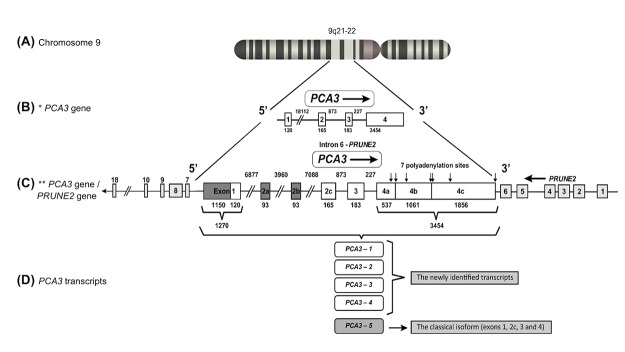
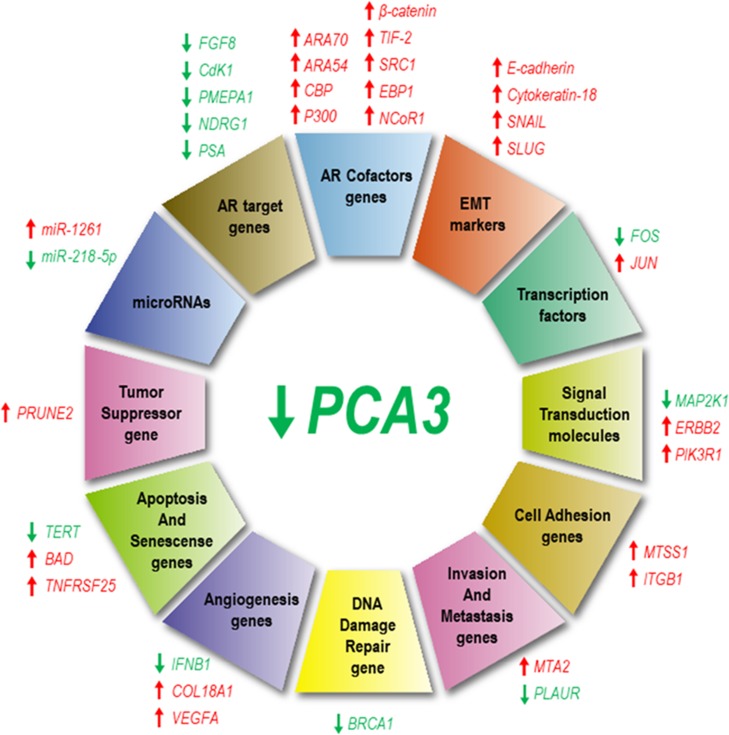
Prostate cancer antigen 3 () is an overexpressed prostate long non-coding RNA (lncRNA), transcribed from an intronic region at the long arm of human chromosome 9q21-22. It has been described that modulates prostate cancer (PCa) cell survival through modulating androgen receptor (AR) signaling, besides controlling the expression of several androgen responsive and cancer-related genes, including epithelial-mesenchymal transition (EMT) markers and those regulating gene expression and cell signaling. Also, urine levels have been successfully used as a PCa diagnostic biomarker. In this review, we have highlighted recent findings regarding , addressing its gene structure, putative applications as a biomarker, a proposed origin of this lncRNA, roles in PCa biology and expression patterns. We also updated data regarding interactions with cancer-related miRNAs and expression in other tissues and diseases beyond the prostate. Altogether, literature data indicate aberrant expression and dysregulated activity of , suggesting as a promising relevant target that should be even further evaluated on its applicability for PCa detection and management.
前列腺癌抗原3()是一种过度表达的前列腺长链非编码RNA(lncRNA),由人类染色体9q21 - 22长臂上的一个内含子区域转录而来。据描述,除了控制包括上皮-间质转化(EMT)标志物以及那些调节基因表达和细胞信号传导的雄激素反应性和癌症相关基因的表达外,还通过调节雄激素受体(AR)信号传导来调节前列腺癌细胞的存活。此外,尿液水平已成功用作前列腺癌的诊断生物标志物。在本综述中,我们重点介绍了关于的最新发现,阐述了其基因结构、作为生物标志物的潜在应用、这种lncRNA的推测起源、在前列腺癌生物学中的作用以及表达模式。我们还更新了关于与癌症相关miRNA相互作用以及在前列腺以外的其他组织和疾病中的表达的数据。总之,文献数据表明表达异常和活性失调,提示作为一个有前景的相关靶点,应进一步评估其在前列腺癌检测和管理中的适用性。