Scotland's Rural College, Edinburgh, Easter Bush, Midlothian, Scotland, United Kingdom.
The Roslin Institute, University of Edinburgh, Easter Bush, Midlothian, Scotland, United Kingdom.
PLoS One. 2019 Nov 25;14(11):e0214346. doi: 10.1371/journal.pone.0214346. eCollection 2019.
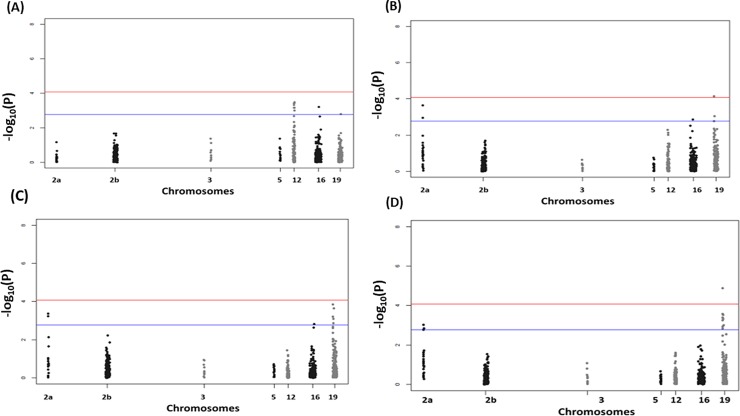
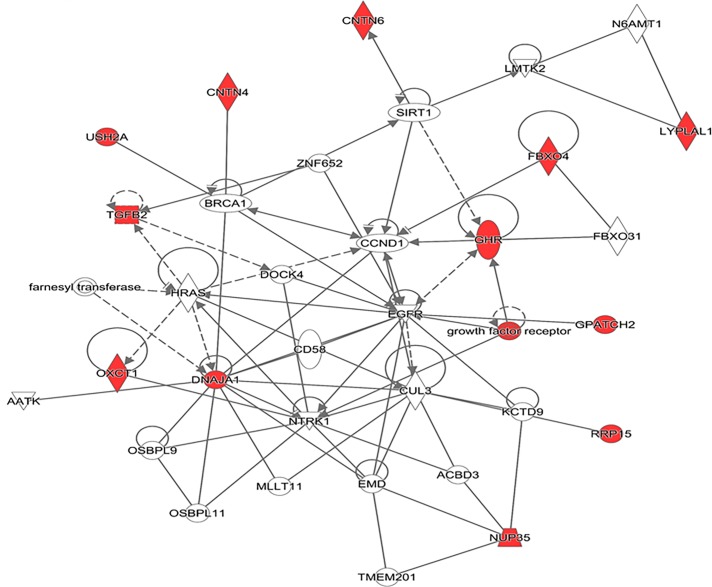
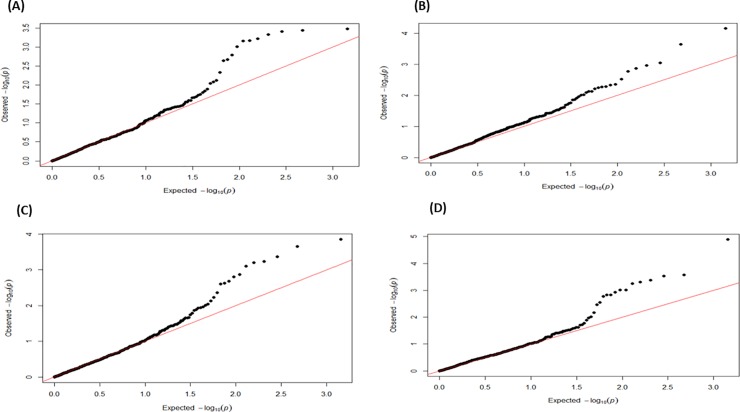
Milk yield is the most important dairy sheep trait and constitutes the key genetic improvement goal via selective breeding. Mastitis is one of the most prevalent diseases, significantly impacting on animal welfare, milk yield and quality, while incurring substantial costs. Our objectives were to determine the feasibility of a concomitant genetic improvement programme for enhanced milk production and resistance to mastitis. Individual records for milk yield, and four mastitis-related traits (milk somatic cell count, California Mastitis Test score, total viable bacterial count in milk and clinical mastitis presence) were collected monthly throughout lactation for 609 ewes of the Chios breed. All ewes were genotyped with a mastitis specific custom-made 960 single nucleotide polymorphism (SNP) array. We performed targeted genomic association studies, (co)variance component estimation and pathway enrichment analysis, and characterised gene expression levels and the extent of allelic expression imbalance. Presence of heritable variation for milk yield was confirmed. There was no significant genetic correlation between milk yield and mastitis traits. Environmental factors appeared to favour both milk production and udder health. There were no overlapping of SNPs associated with mastitis resistance and milk yield in Chios sheep. Furthermore, four distinct Quantitative Trait Loci (QTLs) affecting milk yield were detected on chromosomes 2, 12, 16 and 19, in locations other than those previously identified to affect mastitis resistance. Five genes (DNAJA1, GHR, LYPLA1, NUP35 and OXCT1) located within the QTL regions were highly expressed in both the mammary gland and milk transcriptome, suggesting involvement in milk synthesis and production. Furthermore, the expression of two of these genes (NUP35 and OXCT1) was enriched in immune tissues implying a potentially pleiotropic effect or likely role in milk production during udder infection, which needs to be further elucidated in future studies. In conclusion, the absence of genetic antagonism between milk yield and mastitis resistance suggests that simultaneous genetic improvement of both traits be achievable.
产奶量是最重要的绵羊奶业性状,是通过选择性育种进行关键遗传改良的目标。乳腺炎是最常见的疾病之一,严重影响动物福利、产奶量和奶质,同时也带来巨大的经济损失。我们的目标是确定同时进行提高产奶量和抗乳腺炎遗传改良计划的可行性。我们收集了 609 只 Chios 品种母羊的产奶量记录,以及 4 个与乳腺炎相关的性状(牛奶体细胞计数、加利福尼亚乳腺炎测试评分、牛奶中总活菌计数和临床乳腺炎存在),这些记录是在哺乳期内每月收集的。所有母羊均使用乳腺炎特异性定制的 960 个单核苷酸多态性(SNP)芯片进行基因分型。我们进行了靶向基因组关联研究、(共)方差分量估计和途径富集分析,并对基因表达水平和等位基因表达失衡程度进行了特征描述。确认了产奶量存在可遗传变异。产奶量与乳腺炎性状之间没有显著的遗传相关性。环境因素似乎有利于产奶量和乳房健康。Chios 绵羊中与乳腺炎抗性和产奶量相关的 SNP 没有重叠。此外,还在染色体 2、12、16 和 19 上检测到了影响产奶量的四个不同的数量性状位点(QTL),这些位置与先前确定的影响乳腺炎抗性的位置不同。位于 QTL 区域内的 5 个基因(DNAJA1、GHR、LYPLA1、NUP35 和 OXCT1)在乳腺和奶转录组中均高度表达,表明它们参与了奶的合成和生产。此外,其中两个基因(NUP35 和 OXCT1)的表达在免疫组织中富集,这暗示了它们在乳房感染期间在产奶过程中可能具有多效性或潜在作用,这需要在未来的研究中进一步阐明。总之,产奶量和乳腺炎抗性之间不存在遗传拮抗作用,这表明可以同时进行这两个性状的遗传改良。