School of Nursing, Midwifery and Health Systems, University College Dublin, Dublin, Ireland.
School of Social Policy, Social Work and Social Justice, University College Dublin, Dublin, Ireland.
BMC Health Serv Res. 2019 Dec 12;19(1):960. doi: 10.1186/s12913-019-4802-x.
The United Nations Convention on the Rights of Persons with Disabilities (UNCRPD) establishes a right to legal capacity for all people, including those with support needs. People with disabilities have a legal right to be given the appropriate supports to make informed decisions in all aspects of their lives, including health. In Ireland, the Assisted Decision-Making (Capacity) Act (2015) ratifies the Convention and has established a legal framework for Assisted Decision Making (ADM). The main provisions of the Act are not yet implemented. Codes of Practice to guide health and social care professionals are currently being developed. Internationally, concerns are expressed that ADM implementation is poorly understood. Using realist synthesis, this study aims to identify Programme Theory (PT) that will inform ADM implementation in healthcare.
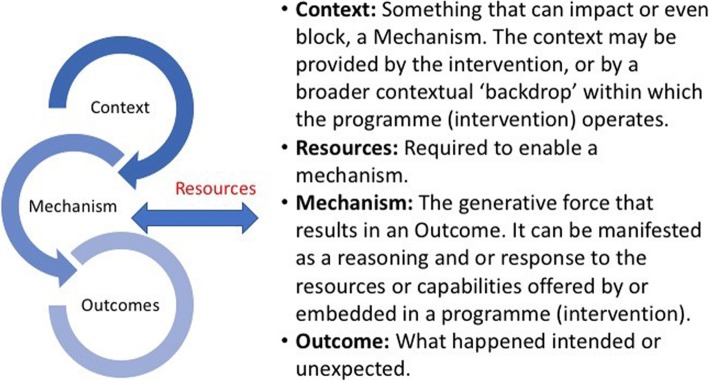
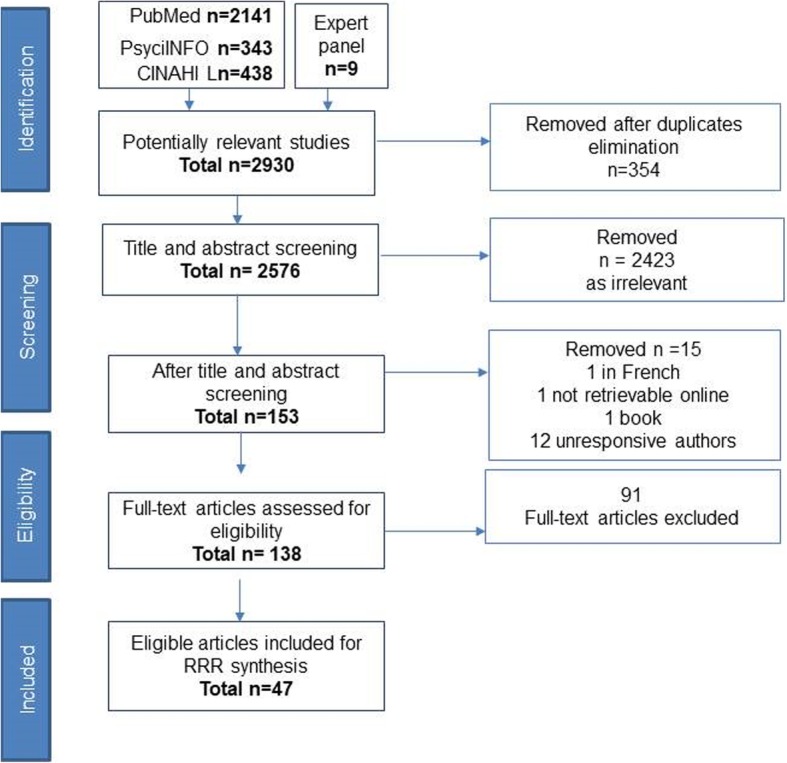
A Rapid Realist Review using collaborative methods was chosen to appraise relevant literature and engage knowledge users from Irish health and social care. The review was led by an expert panel of relevant stakeholders that developed the research question which asks, 'what mechanisms enable healthcare professionals to adopt ADM into practice?' To ensure the PT was inclusive of local contextual influences, five reference panels were conducted with healthcare professionals, family carers and people with dementia. PT was refined and tested iteratively through knowledge synthesis informed by forty-seven primary studies, reference panel discussions and expert panel refinement and consensus.
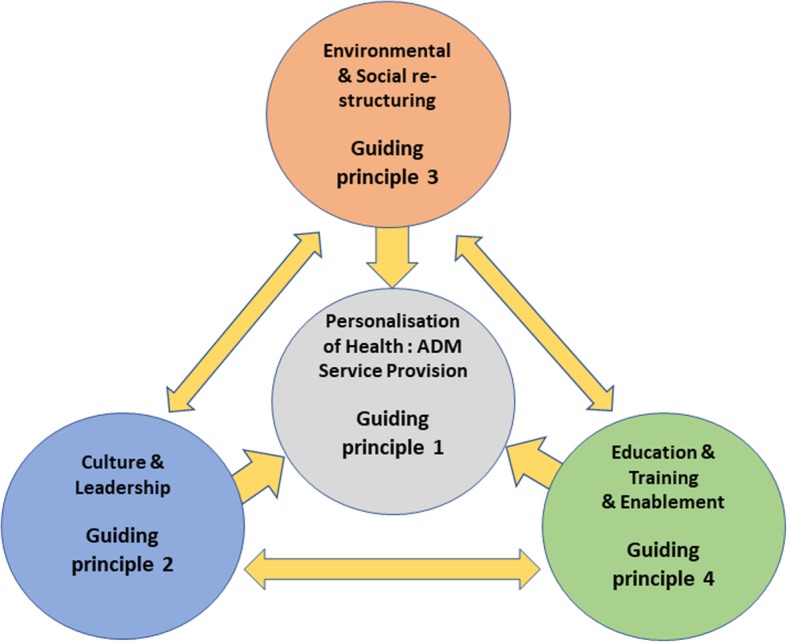
The review has developed an explanatory PT on ADM implementation in healthcare practice. The review identified four implementation domains as significant. These are Personalisation of Health & ADM Service Provision, Culture & Leadership, Environmental & Social Re-structuring and Education, Training & Enablement. Each domain is presented as an explanatory PT statement using realist convention that identifies context, mechanism and outcome configurations.
This realist review makes a unique contribution to this field. The PT can be applied by policymakers to inform intervention development and implementation strategy. It informs the imminent policy and practice developments in Ireland and has relevance for other worldwide healthcare systems dealing with similar legislative changes in line with UNCRPD.
《联合国残疾人权利公约》(UNCRPD)为所有人确立了法律行为能力的权利,包括有支持需求的人。残疾人在生活的各个方面,包括健康,都有合法权利获得适当支持以做出明智决策。在爱尔兰,《辅助决策(能力)法》(2015 年)批准了该公约,并为辅助决策制定了法律框架。该法案的主要条款尚未实施。目前正在制定指导卫生和社会保健专业人员的行为守则。在国际上,人们对辅助决策的实施缺乏了解表示关切。本研究采用现实主义综合方法,旨在确定计划理论(PT),以告知医疗保健中的辅助决策实施。
选择使用协作方法的快速现实主义审查来评估相关文献并让来自爱尔兰卫生和社会保健部门的知识使用者参与。该审查由一个由相关利益攸关方组成的专家小组领导,该小组制定了研究问题,即“哪些机制使医疗保健专业人员能够将辅助决策付诸实践?”为了确保该理论全面涵盖当地的背景影响,与医疗保健专业人员、家庭照顾者和痴呆症患者进行了五次参考小组讨论。通过对 47 项原始研究、参考小组讨论以及专家小组的改进和共识进行知识综合,对该理论进行了反复的改进和测试。
该审查为医疗保健实践中的辅助决策实施制定了一个解释性的计划理论。该审查确定了四个重要的实施领域。这些是个性化健康和辅助决策服务提供、文化和领导力、环境和社会结构调整以及教育、培训和授权。每个领域都使用现实主义惯例呈现为解释性的计划理论陈述,其中包括背景、机制和结果配置。
本次审查为该领域做出了独特贡献。该理论可由政策制定者用于为干预措施的制定和实施战略提供信息。它为爱尔兰即将出台的政策和实践发展提供了信息,并为其他全球医疗保健系统提供了相关信息,这些系统正在根据《联合国残疾人权利公约》进行类似的立法改革。