IEEE Trans Biomed Eng. 2020 Aug;67(8):2309-2316. doi: 10.1109/TBME.2019.2958843. Epub 2019 Dec 10.
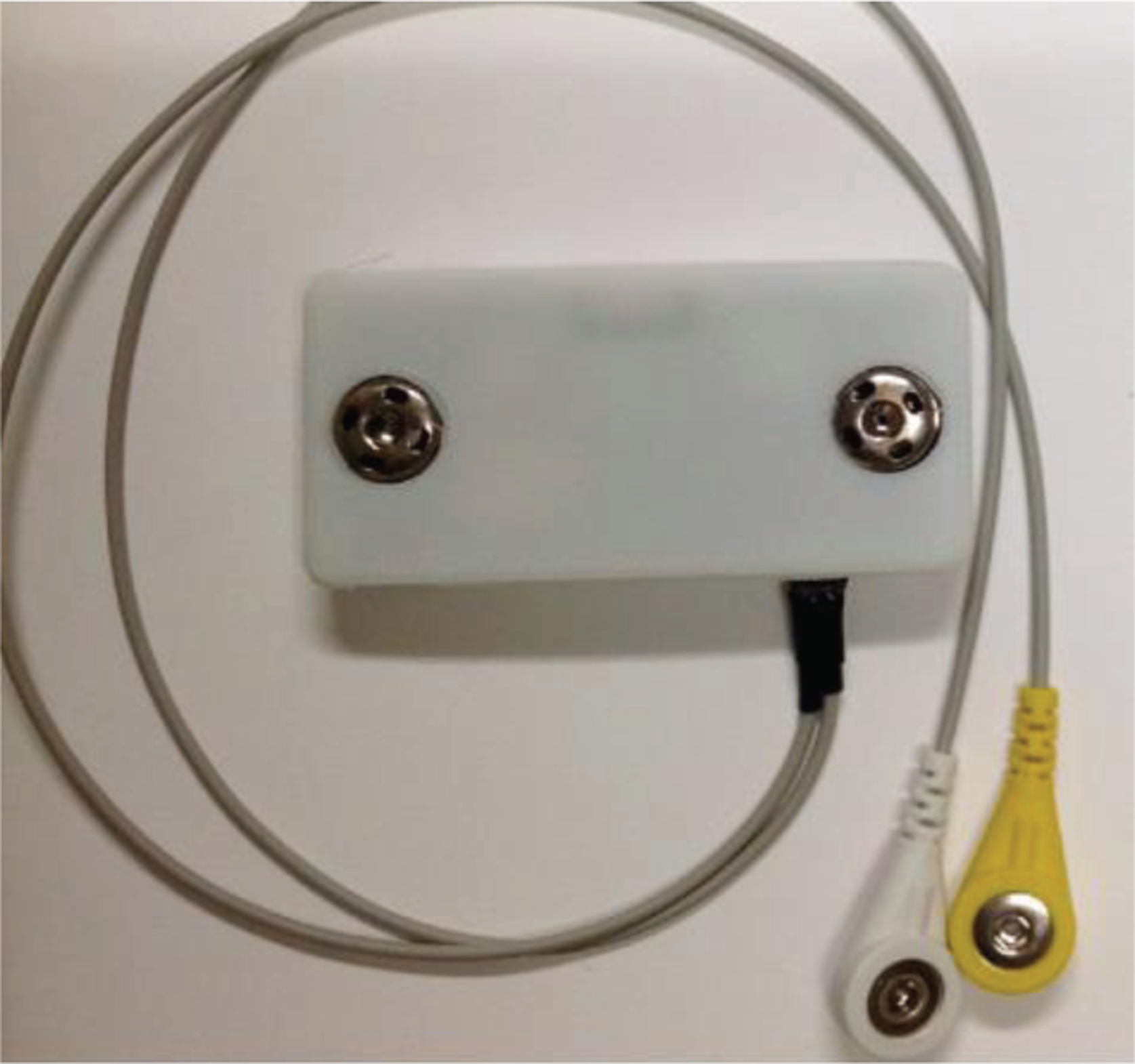
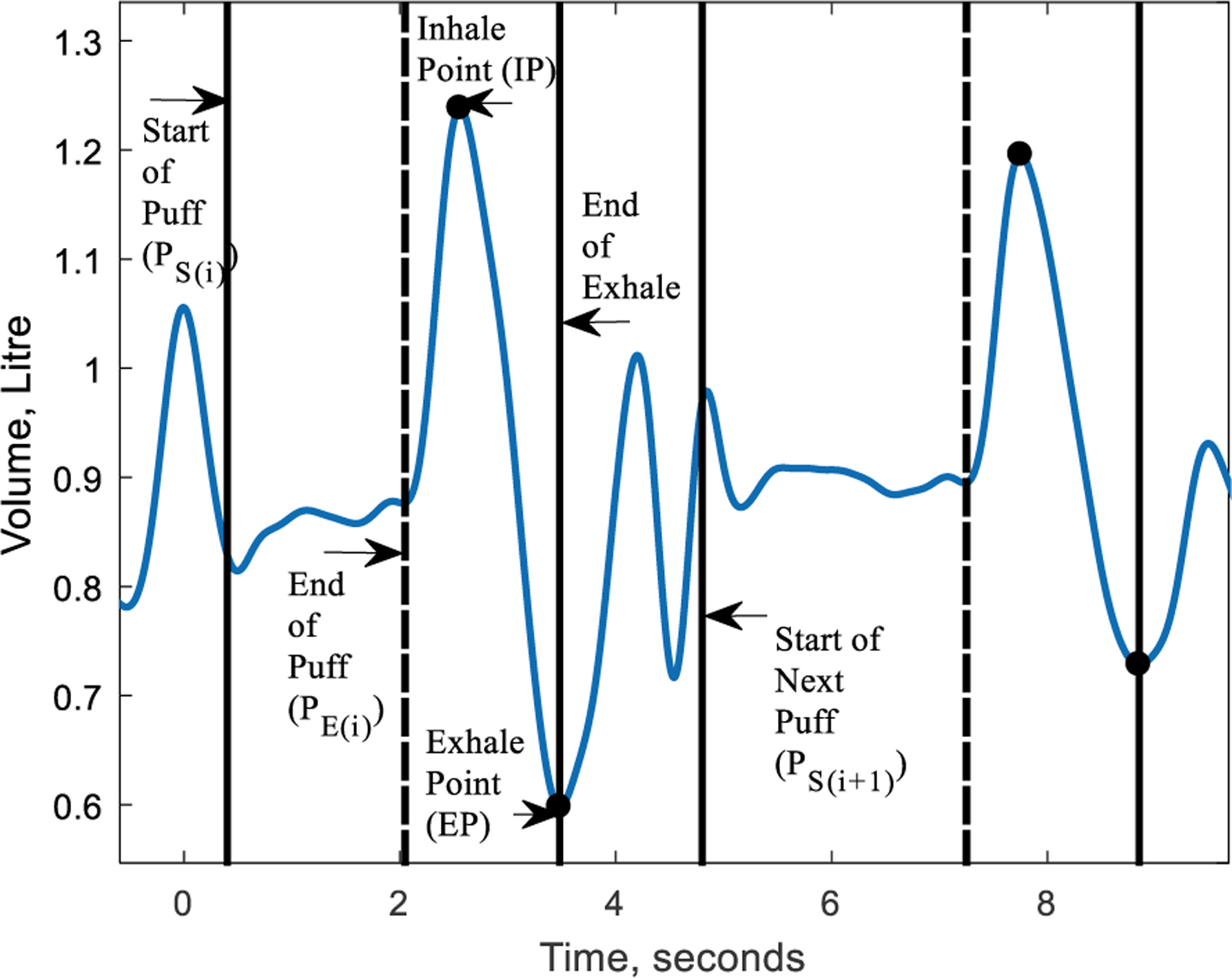
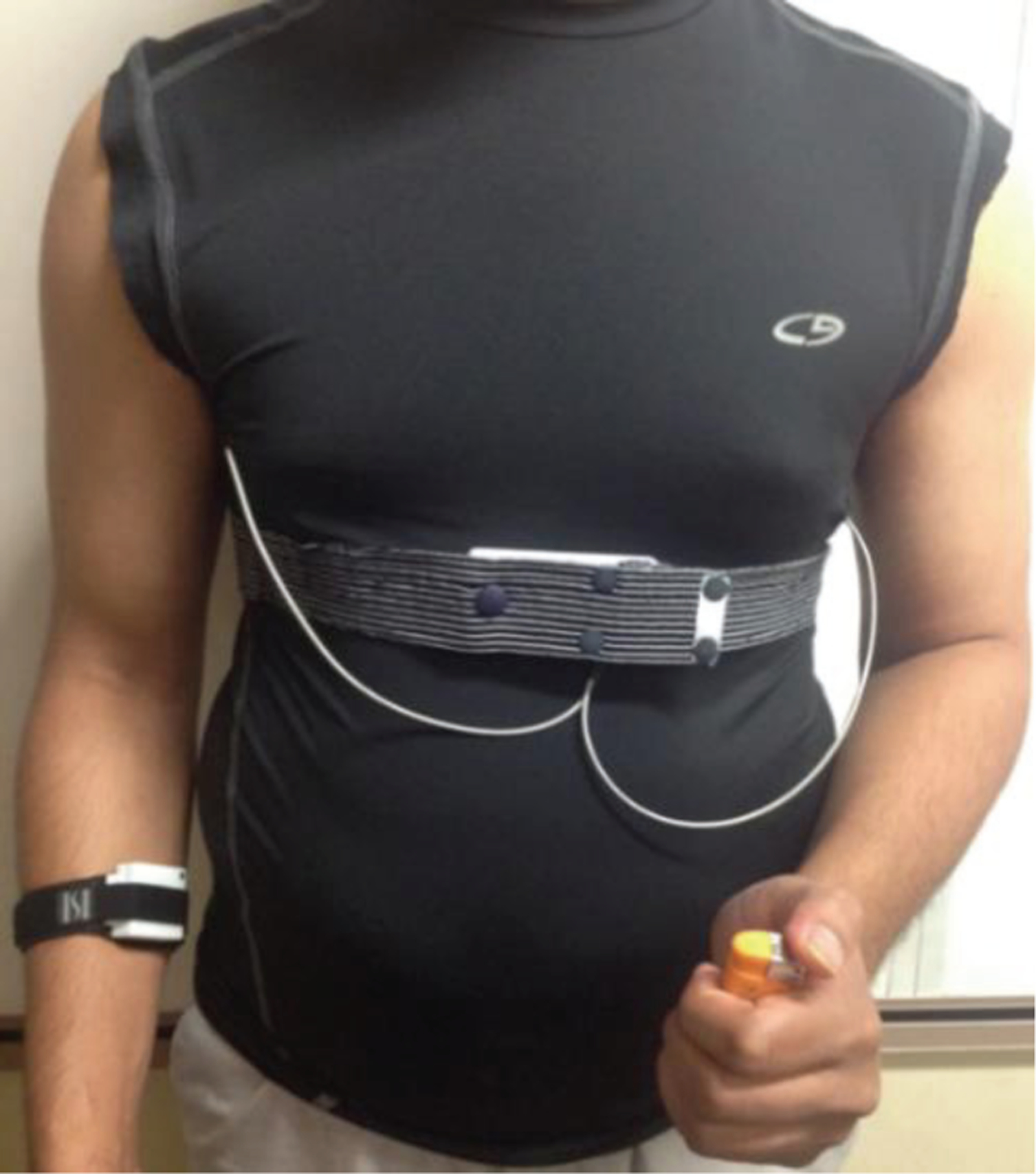
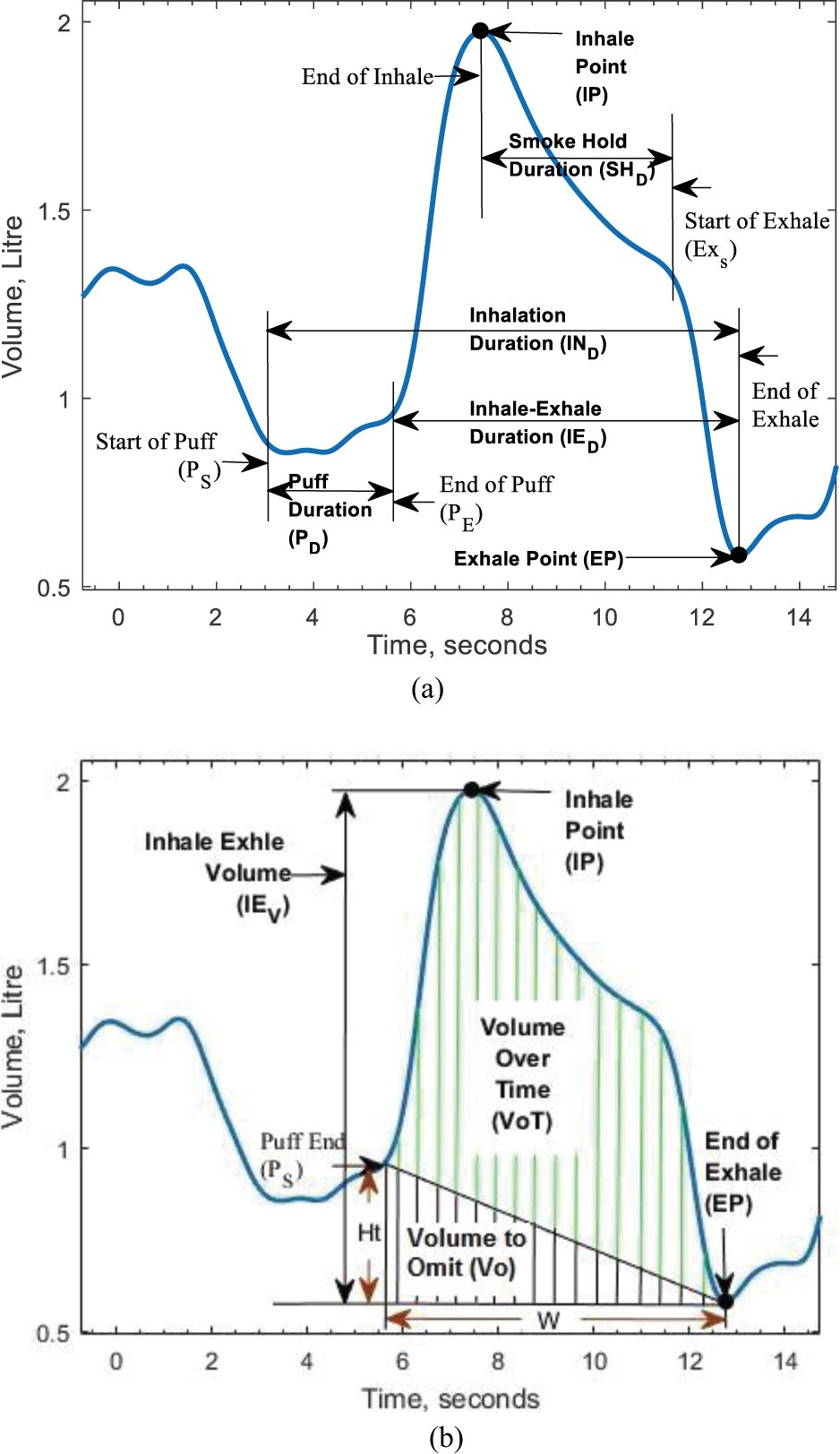
Traditional metrics of smoke exposure in cigarette smokers are derived either from self-report, biomarkers, or puff topography. Methods involving biomarkers measure concentrations of nicotine, nicotine metabolites, or carbon monoxide. Puff-topography methods employ portable instruments to measure puff count, puff volume, puff duration, and inter-puff interval. In this article, we propose smoke exposure metrics calculated from the breathing signal and describe a novel algorithm for the computation of these metrics. The Personal Automatic Cigarette Tracker v2 (PACT-2) sensors, puff topography devices (CReSS), and video observation were used in a study of 38 moderate to heavy smokers in a controlled environment. Parameters of smoke inhalation including the start and end of each puff, inhale and exhale cycle, and smoke holding were computed from the breathing signal. From these, the traditional metrics of puff duration, inhale-exhale cycle duration, smoke holding duration, inter-puff interval, and novel Respiratory Smoke Exposure Metrics (RSEMs) such as inhale-exhale cycle volume, and inhale-exhale volume over time were calculated. The proposed RSEM algorithm to extract smoke exposure metrics named generated interclass correlations (ICCs) of 0.85 and 0.87 and Pearson's correlations of 0.97 and 0.77 with video observation and CReSS, respectively, for puff duration. Similarly, for the inhale-exhale duration, an ICC of 0.84 and Pearson's correlation of 0.81 was obtained with video observation. The RSEMs provided measures previously unavailable in research that are proportional to the depth and duration of smoke inhalation. The results suggest that the breathing signal may be used to compute smoke exposure metrics.
传统的吸烟人群的吸烟暴露度量指标来源于自我报告、生物标志物或吸烟模式。涉及生物标志物的方法测量尼古丁、尼古丁代谢物或一氧化碳的浓度。吸烟模式方法使用便携式仪器测量吸烟量、吸烟量、吸烟持续时间和吸烟间隔。在本文中,我们提出了从呼吸信号中计算吸烟暴露度量的方法,并描述了一种计算这些度量的新算法。个人自动香烟追踪器 v2(PACT-2)传感器、吸烟模式设备(CReSS)和视频观察被用于在受控环境中对 38 名中度至重度吸烟者进行的研究。从呼吸信号中计算了包括每个吸烟的开始和结束、吸气和呼气周期以及吸烟保持在内的吸烟吸入参数。从这些参数中,计算了传统的吸烟持续时间、吸气-呼气周期持续时间、吸烟保持持续时间、吸烟间隔以及新型呼吸吸烟暴露度量(RSEM),例如吸气-呼气周期体积和随时间变化的吸气-呼气体积。用于提取吸烟暴露度量的提议的 RSEM 算法生成了 0.85 和 0.87 的组内相关系数(ICC)和 0.97 和 0.77 的 Pearson 相关系数,分别与视频观察和 CReSS 对吸烟持续时间进行比较。同样,对于吸气-呼气持续时间,与视频观察相比,ICC 为 0.84,Pearson 相关系数为 0.81。RSEM 提供了以前在研究中无法获得的与吸烟深度和持续时间成比例的度量。结果表明,呼吸信号可用于计算吸烟暴露度量。