Webster Kelly, Ro Tony
Program in Psychology.
Program in Psychology
eNeuro. 2020 Jan 3;7(1). doi: 10.1523/ENEURO.0268-19.2019. Print 2020 Jan/Feb.
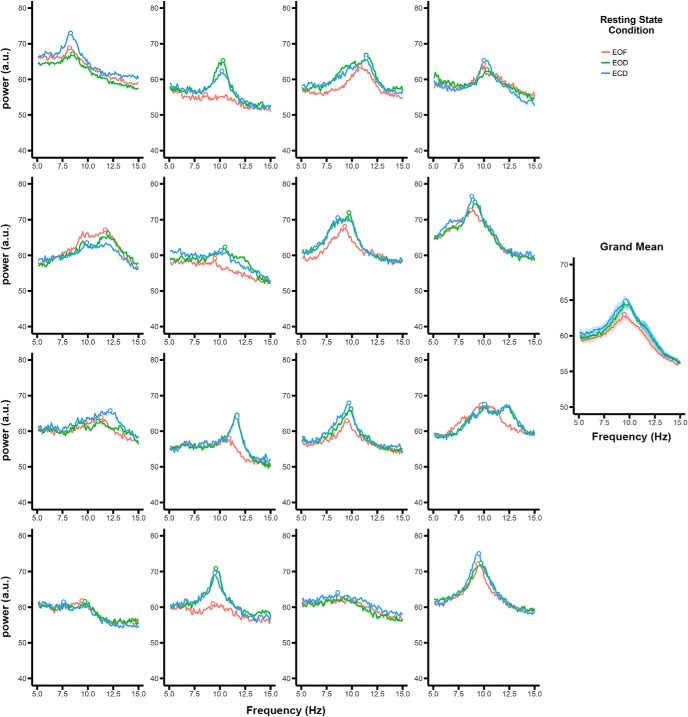
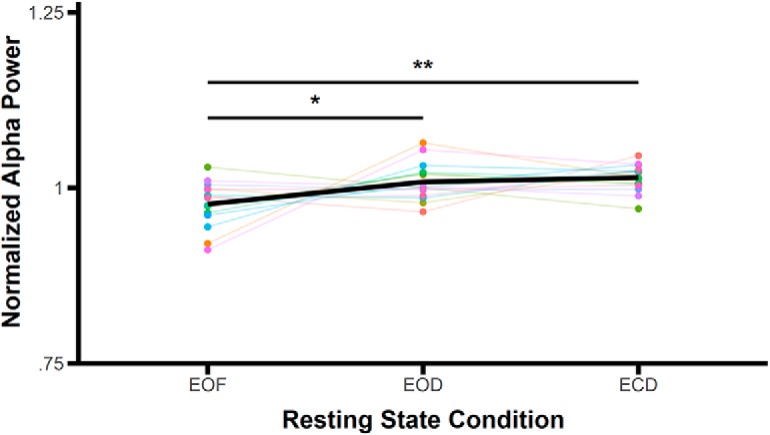
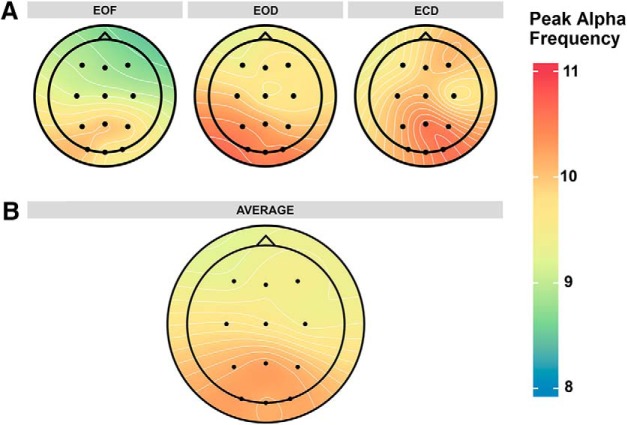
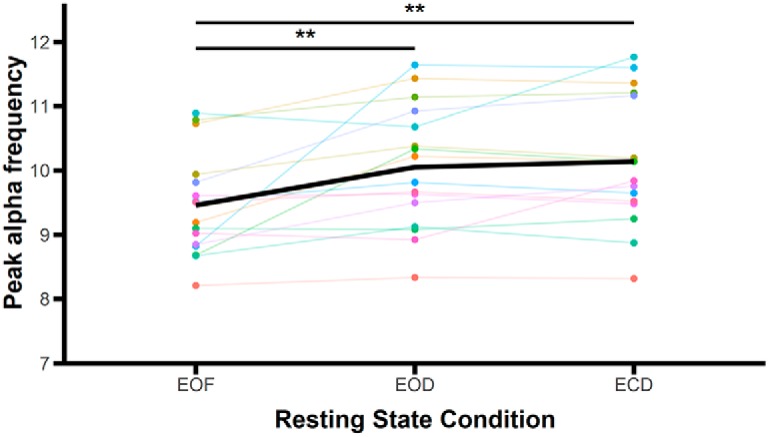
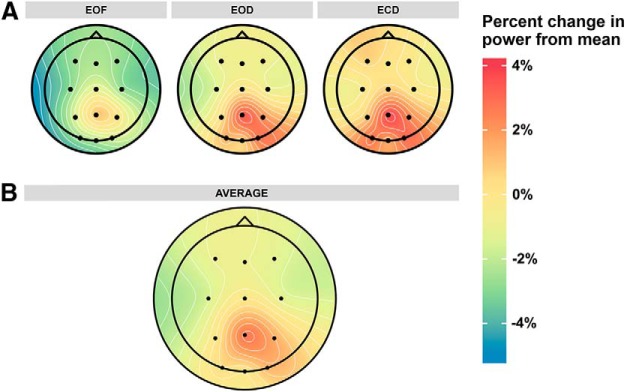
Once thought to simply reflect passive cortical idling, recent studies have demonstrated that α oscillations play a causal role in cognition and perception. However, whether and how cognitive or sensory processes modulate various components of the α rhythm is poorly understood. Sensory input and resting states were manipulated in human subjects while electroencephalography (EEG) activity was recorded in three conditions: eyes-open fixating on a visual stimulus, eyes-open without visual input (darkness), and eyes-closed without visual input (darkness). We show that α power and peak frequency increase when visual input is reduced compared to the eyes open, fixating condition. These results suggest that increases in α power reflect a shift from an exteroceptive to interoceptive state and that increases in peak frequency following restricted visual input (darkness) may reflect increased sampling of the external environment in order to detect stimuli. They further demonstrate how sensory information modulates α and the importance of selecting an appropriate resting condition in studies of α.
曾经被认为只是简单地反映被动的皮质闲置状态,最近的研究表明,α振荡在认知和感知中起着因果作用。然而,认知或感觉过程是否以及如何调节α节律的各个成分,目前还知之甚少。在人类受试者中,通过操纵感觉输入和静息状态,同时在三种条件下记录脑电图(EEG)活动:睁眼注视视觉刺激、无视觉输入的睁眼(黑暗环境)和无视觉输入的闭眼(黑暗环境)。我们发现,与睁眼注视条件相比,当视觉输入减少时,α功率和峰值频率会增加。这些结果表明,α功率的增加反映了从外感受状态到内感受状态的转变,而在受限视觉输入(黑暗环境)后峰值频率的增加可能反映了为检测刺激而增加的对外部环境的采样。它们进一步证明了感觉信息如何调节α节律,以及在α节律研究中选择合适静息条件的重要性。