Department of Breast Surgery, Xiangya Hospital, Clinical Research Center For Breast Cancer Control and Prevention in Hunan Province, Central South University, Changsha, China.
Department of Oncology, Changsha Central Hospital, China.
Mol Oncol. 2020 Feb;14(2):309-328. doi: 10.1002/1878-0261.12622. Epub 2020 Jan 10.
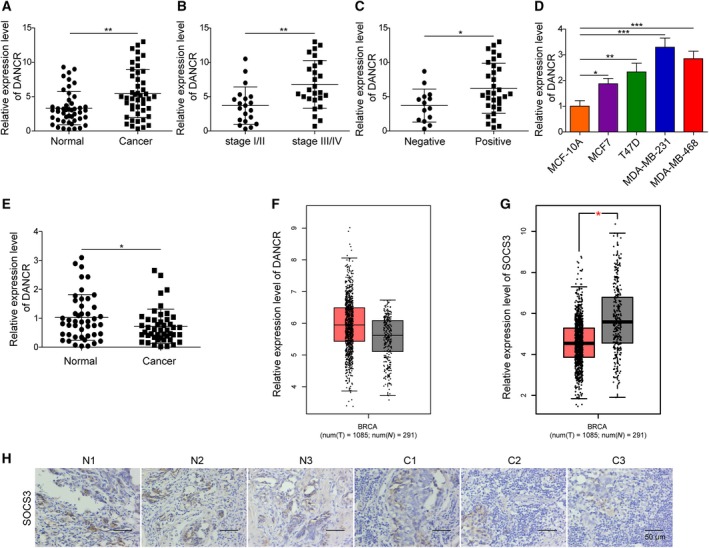
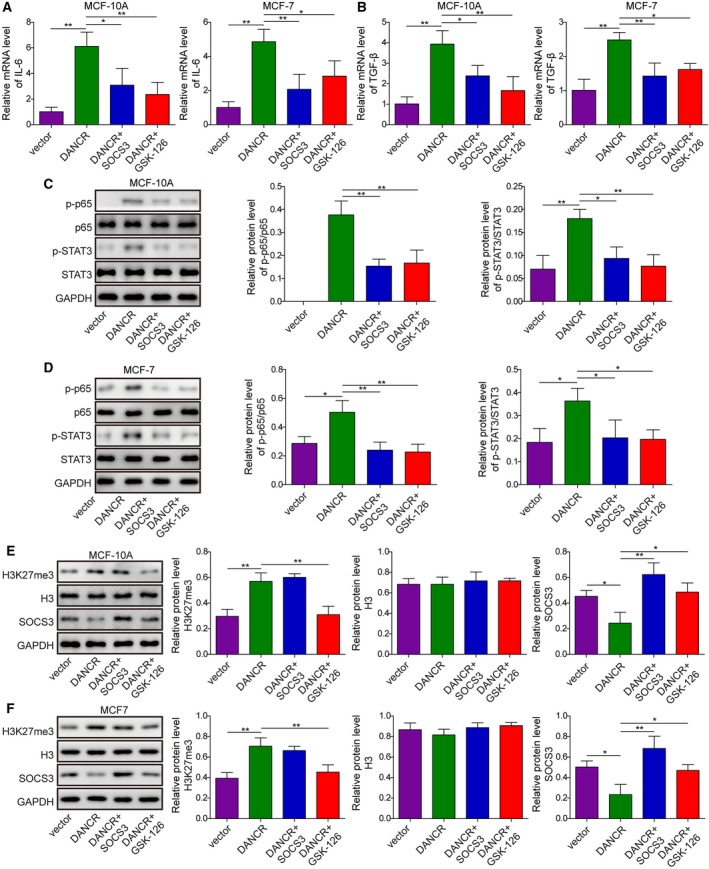
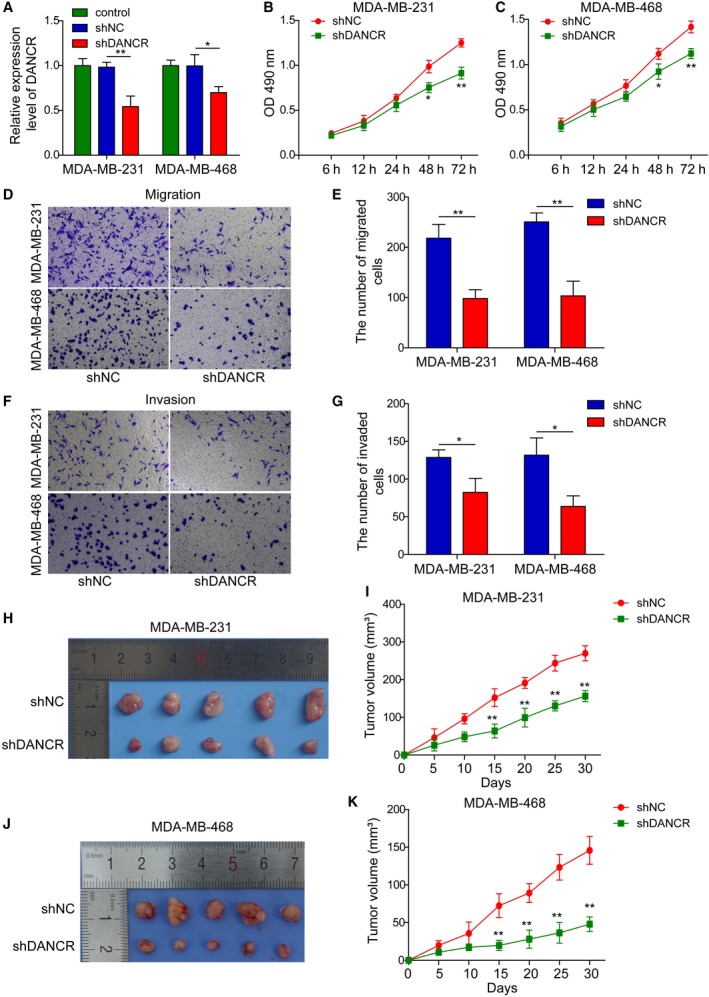
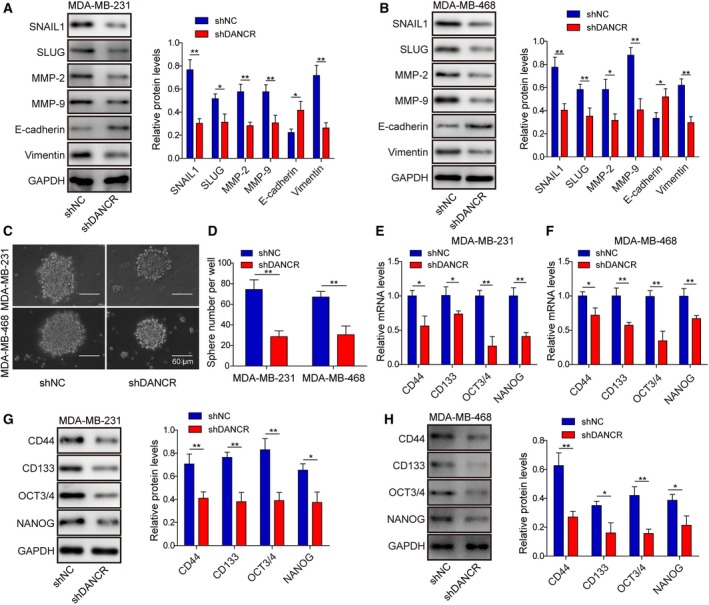
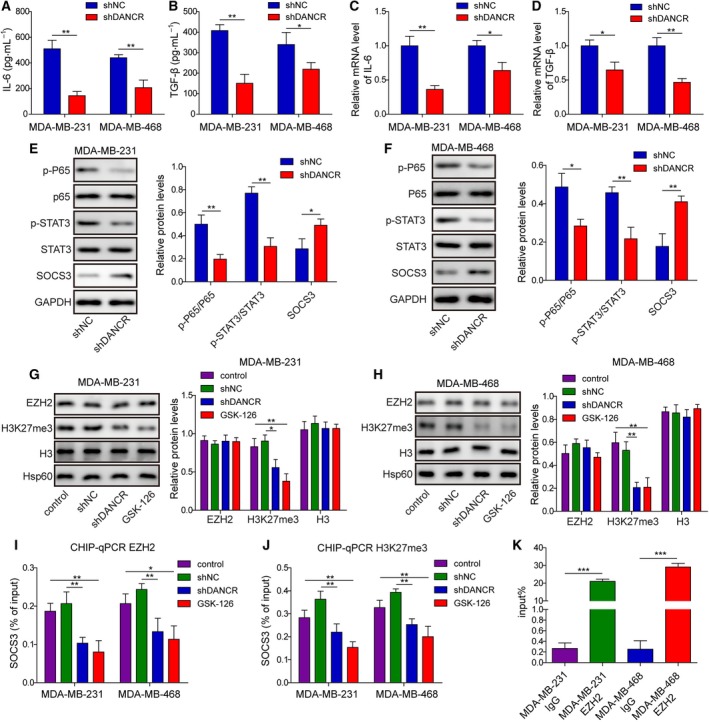
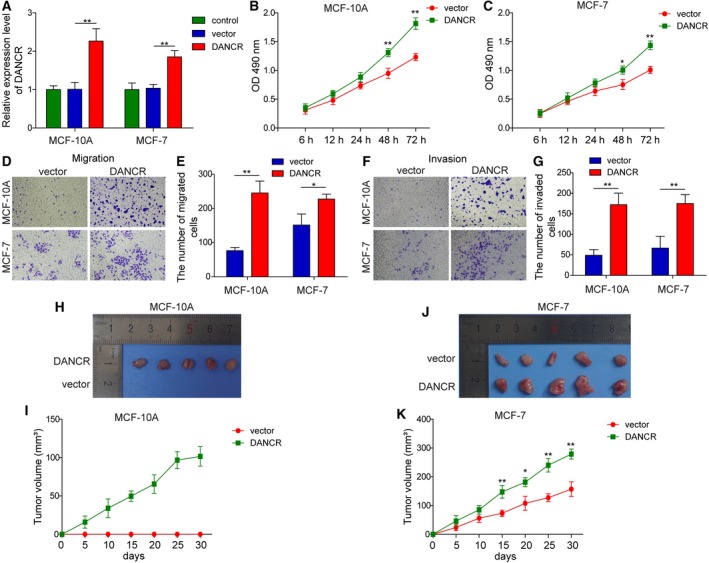
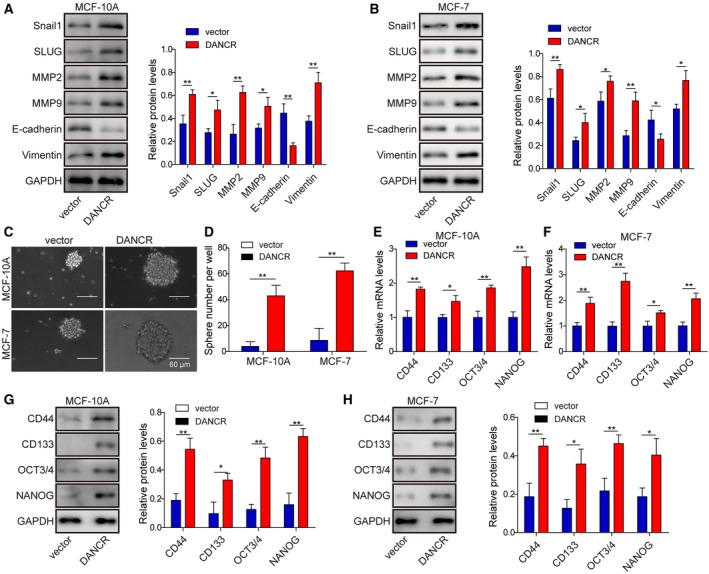
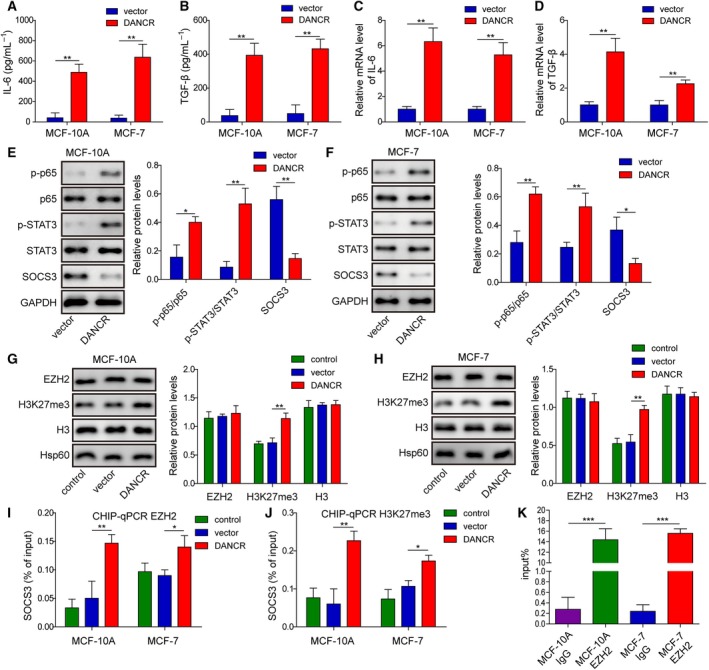
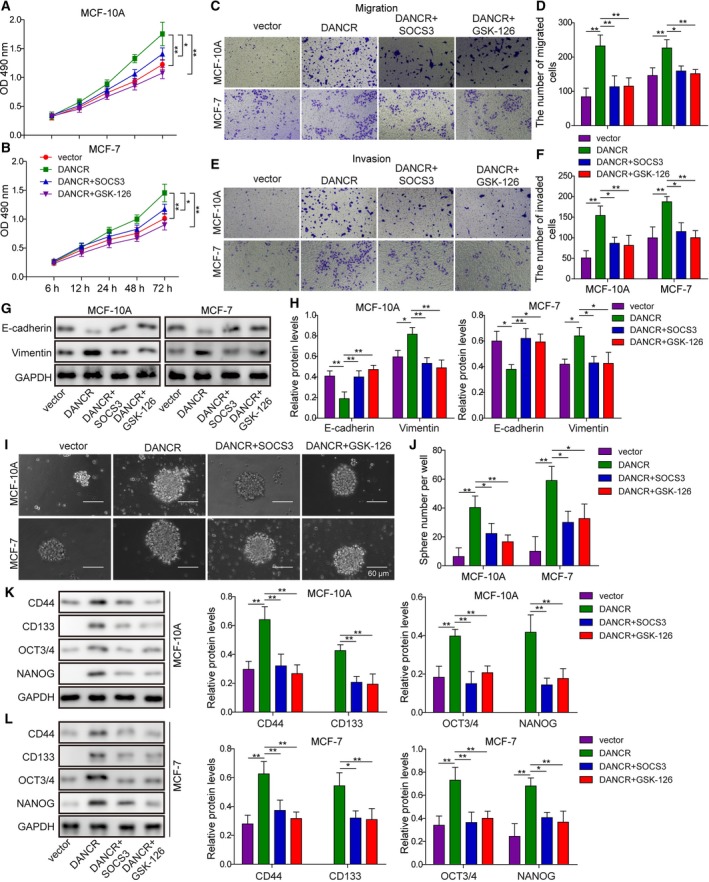
Long non-coding RNA (lncRNA) is involved in the regulation of tumorigenesis and metastasis. In this study, we focused on the clinical relevance, biological effects, and molecular mechanisms of the lncRNA differentiation antagonizing non-protein coding RNA (DANCR) in breast cancer. We compared the expression of DANCR between breast cancer and normal tissues, and between breast cancer cell lines and normal breast epithelial cells using quantitative real-time PCR (qRT-PCR) analysis. By knocking down and overexpressing DANCR, we assessed its significance in regulating viability (MTT assay), migration/invasion (Transwell assay), epithelial-mesenchymal transition (western blot), stemness (mammosphere formation assay and western blot), and production of inflammatory cytokines (qRT-PCR and ELISA) of breast cancer cells in vitro, as well as xenograft growth in vivo. Furthermore, using ChIP and RNA immunoprecipitation, we examined the reciprocal regulation between DANCR and suppressor of cytokine signaling 3 (SOCS3) in breast cancer. DANCR was significantly up-regulated in tissue samples from patients with breast cancer, as well as in breast cancer cell lines, as compared with normal tissues and breast epithelial cells, respectively. The highest DANCR expression levels were associated with advanced tumor grades or lymph node metastasis. DANCR was necessary and sufficient to control multiple malignant phenotypes of breast cancer cells in vitro and xenograft growth in vivo. Mechanistically, DANCR promoted the binding of enhancer of zeste homolog 2 (EZH2) to the promoter of SOCS3, thereby epigenetically inhibiting SOCS3 expression. Functionally, SOCS3 up-regulation or EZH2 inhibition could rescue multiple malignant phenotypes induced by DANCR. Our data indicate that DANCR is a pleiotropic oncogenic lncRNA in breast cancer. Boosting SOCS3 expression may reverse the oncogenic activities of DANCR and thus provide a therapeutic strategy for breast cancer treatment.
长链非编码 RNA(lncRNA)参与肿瘤发生和转移的调控。在这项研究中,我们专注于 lncRNA 分化拮抗非蛋白编码 RNA(DANCR)在乳腺癌中的临床相关性、生物学效应和分子机制。我们使用定量实时 PCR(qRT-PCR)分析比较了乳腺癌和正常组织、乳腺癌细胞系和正常乳腺上皮细胞之间 DANCR 的表达。通过敲低和过表达 DANCR,我们评估了它在调节乳腺癌细胞活力(MTT 测定)、迁移/侵袭(Transwell 测定)、上皮-间充质转化(western blot)、干性(类器官形成测定和 western blot)和炎症细胞因子产生(qRT-PCR 和 ELISA)方面的意义。在体内,还评估了 DANCR 对乳腺癌细胞中 SOCS3 的相互调控作用。与正常组织和乳腺上皮细胞相比,乳腺癌患者组织样本以及乳腺癌细胞系中 DANCR 的表达显著上调。DANCR 表达水平最高与肿瘤分级较高或淋巴结转移有关。DANCR 是控制乳腺癌细胞多种恶性表型的必要和充分条件,无论是在体外还是在体内。从机制上讲,DANCR 促进了增强子结合蛋白 2(EZH2)与 SOCS3 启动子的结合,从而表观遗传抑制 SOCS3 的表达。功能上,SOCS3 的上调或 EZH2 的抑制可以挽救 DANCR 诱导的多种恶性表型。我们的数据表明,DANCR 是乳腺癌中一种多效致癌 lncRNA。增强 SOCS3 的表达可能逆转 DANCR 的致癌活性,从而为乳腺癌的治疗提供一种治疗策略。