Department of Biostatistics, Harvard T.H. Chan School of Public Health, Boston, Massachusetts.
Department of Epidemiology and Department of Immunology and Infectious Diseases, Center for Communicable Disease Dynamics, Harvard T.H. Chan School of Public Health, Boston, Massachusetts.
Stat Med. 2020 Mar 30;39(7):815-844. doi: 10.1002/sim.8451. Epub 2019 Dec 26.
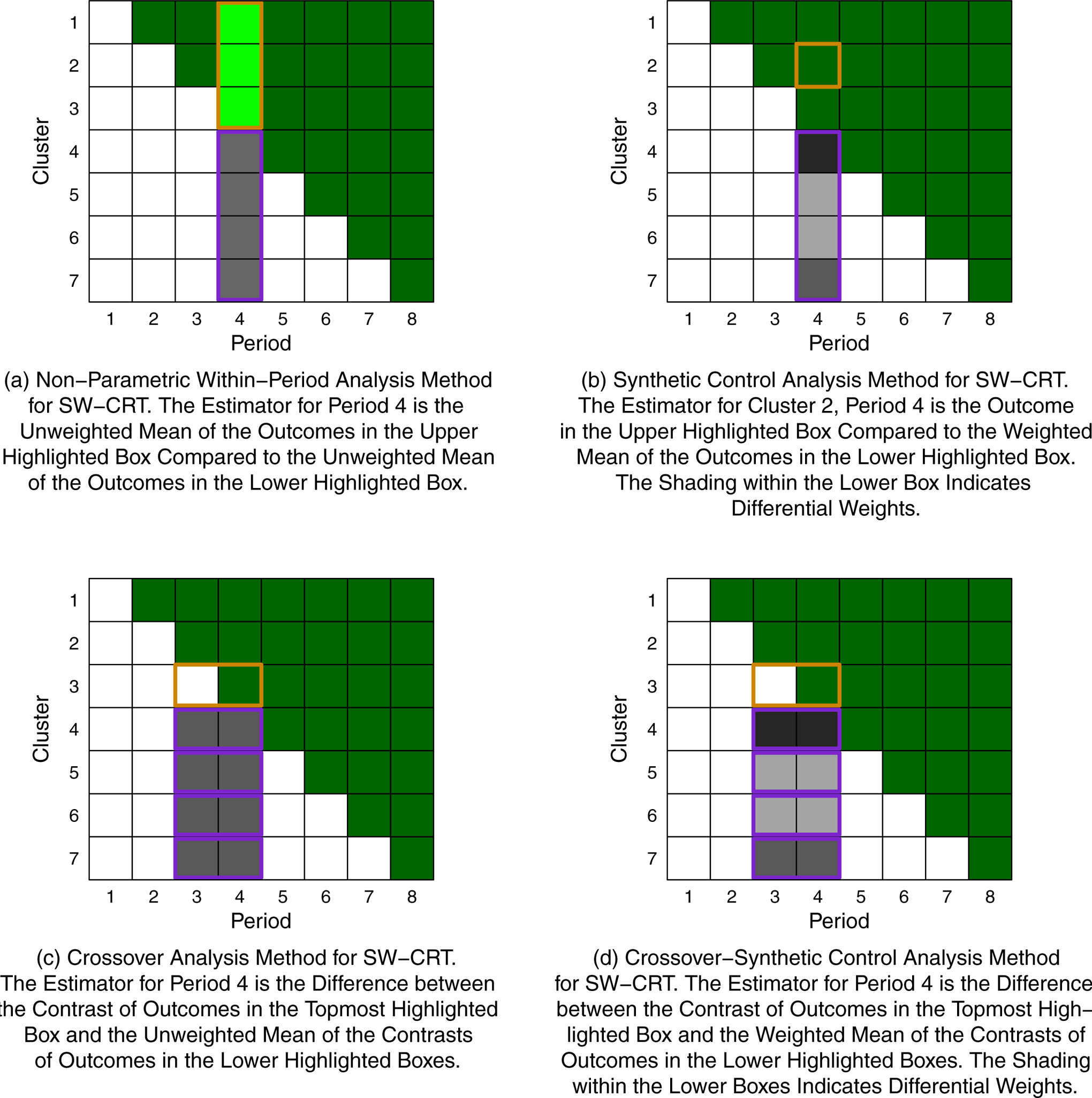
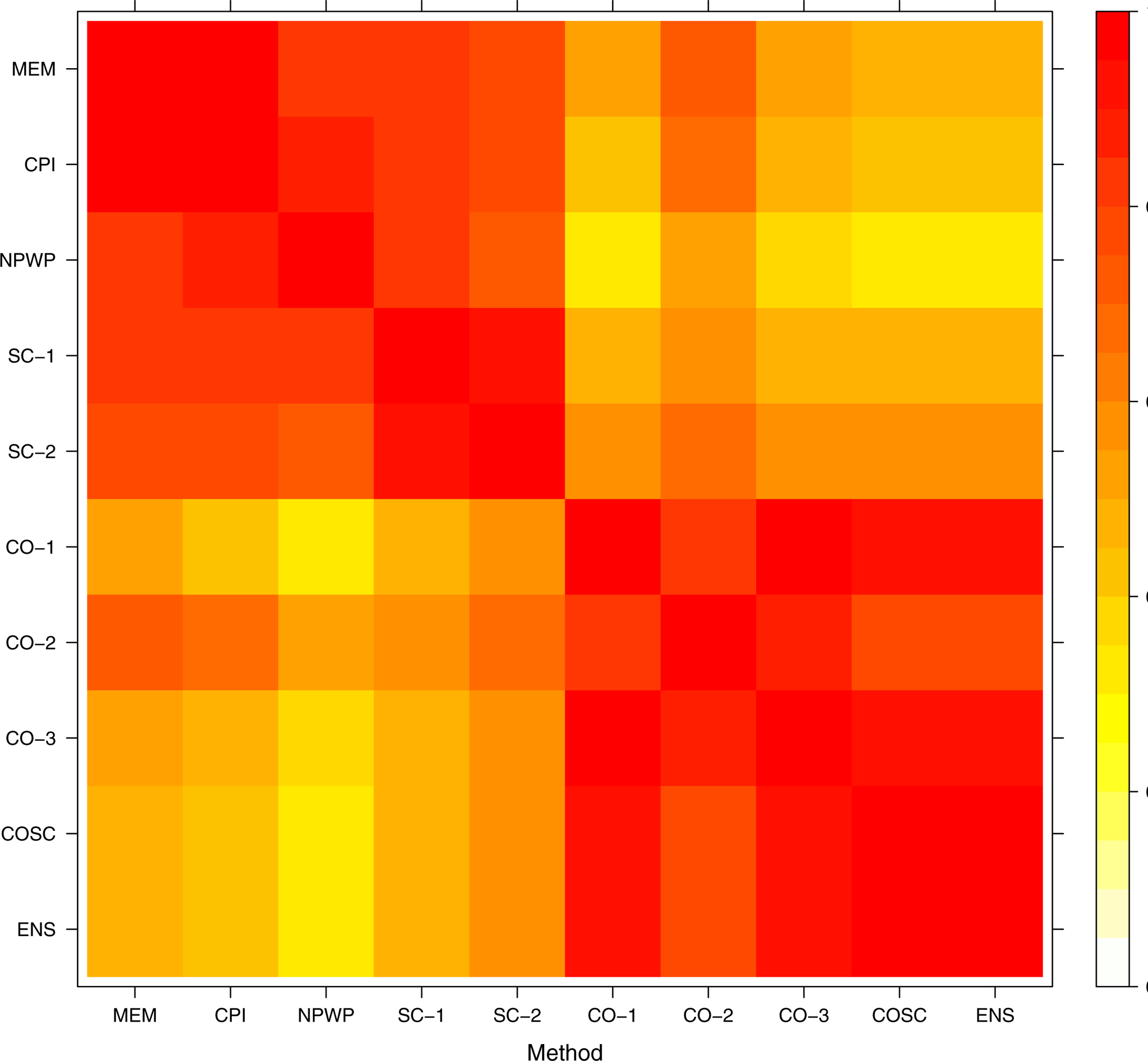
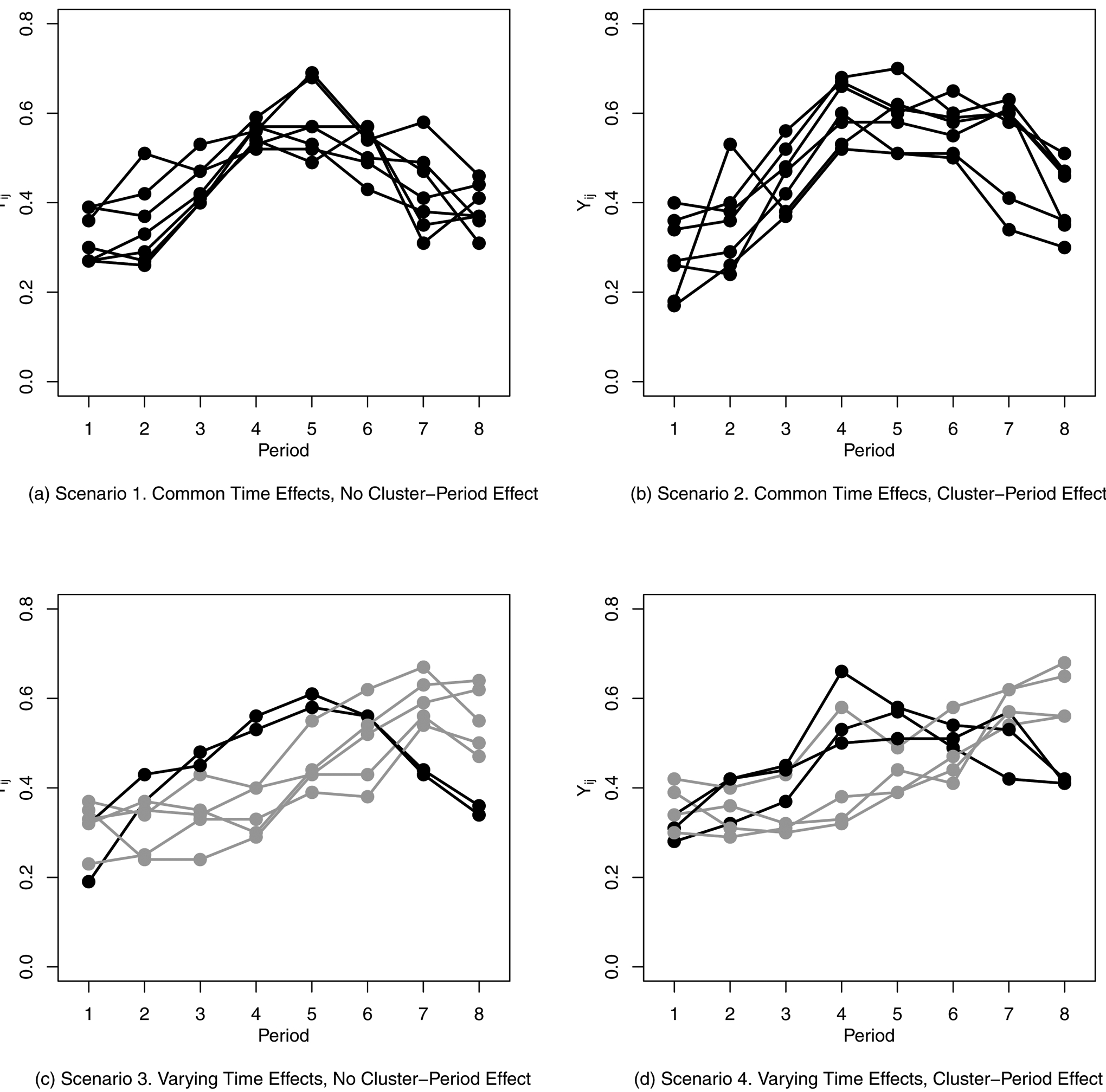
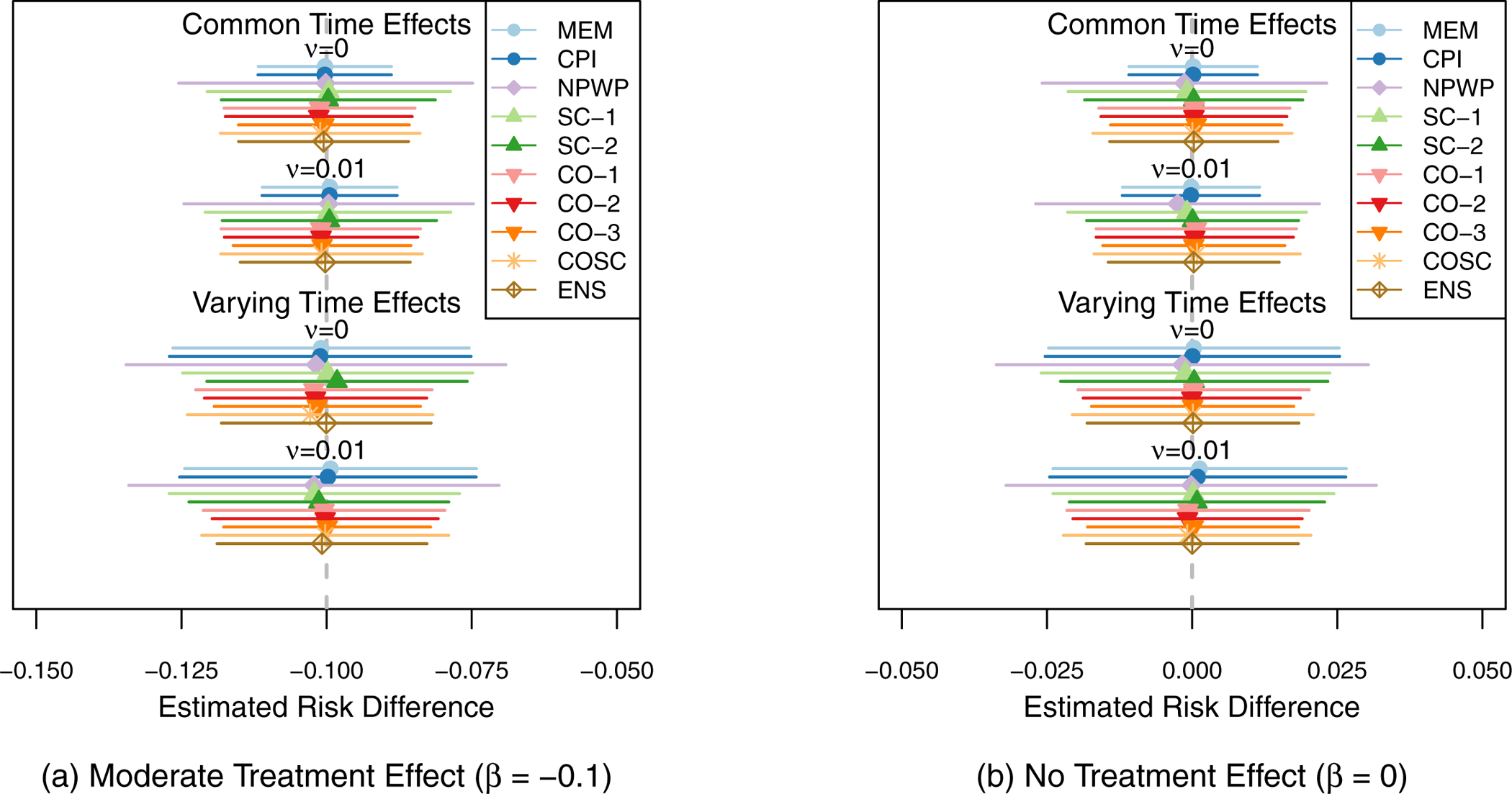
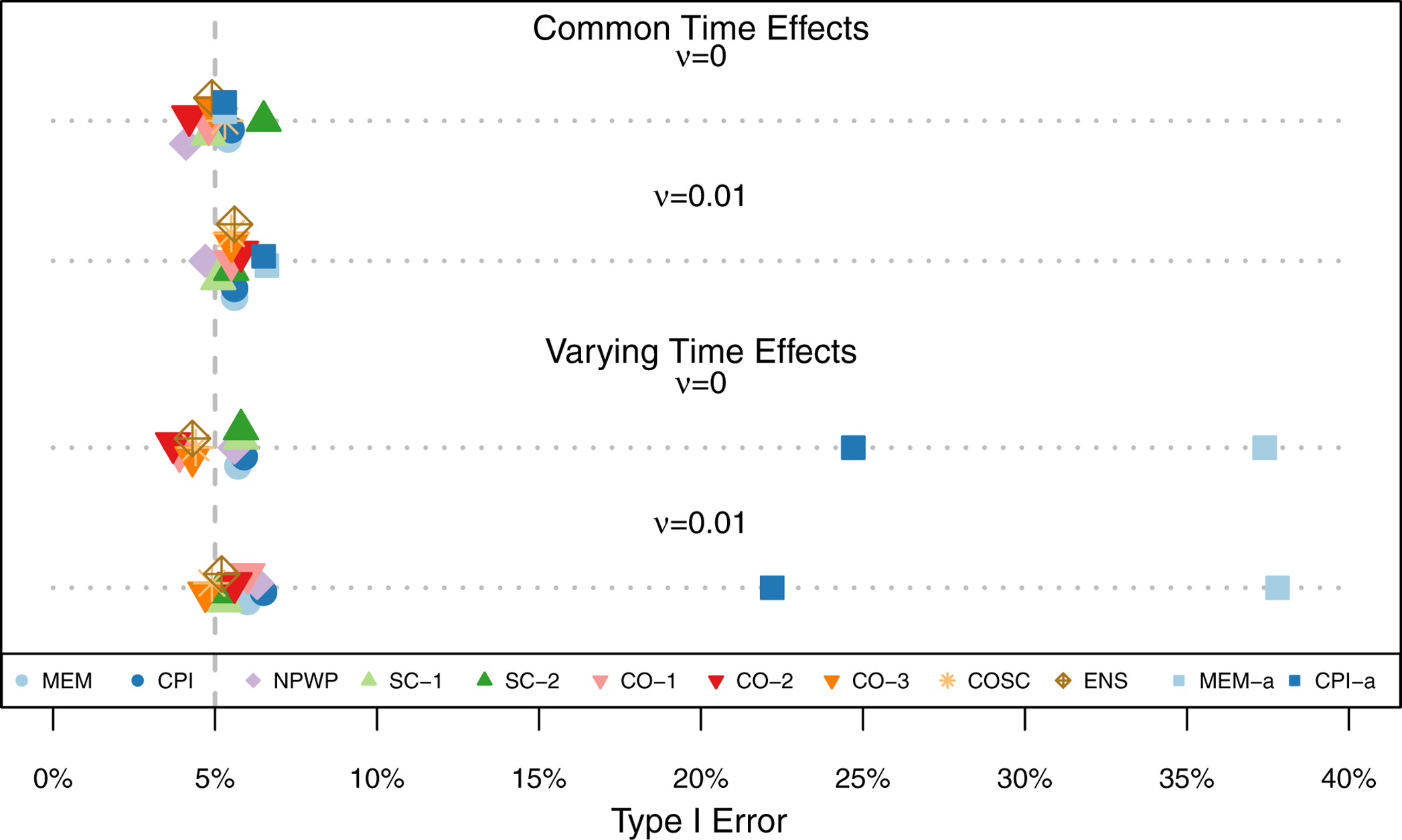
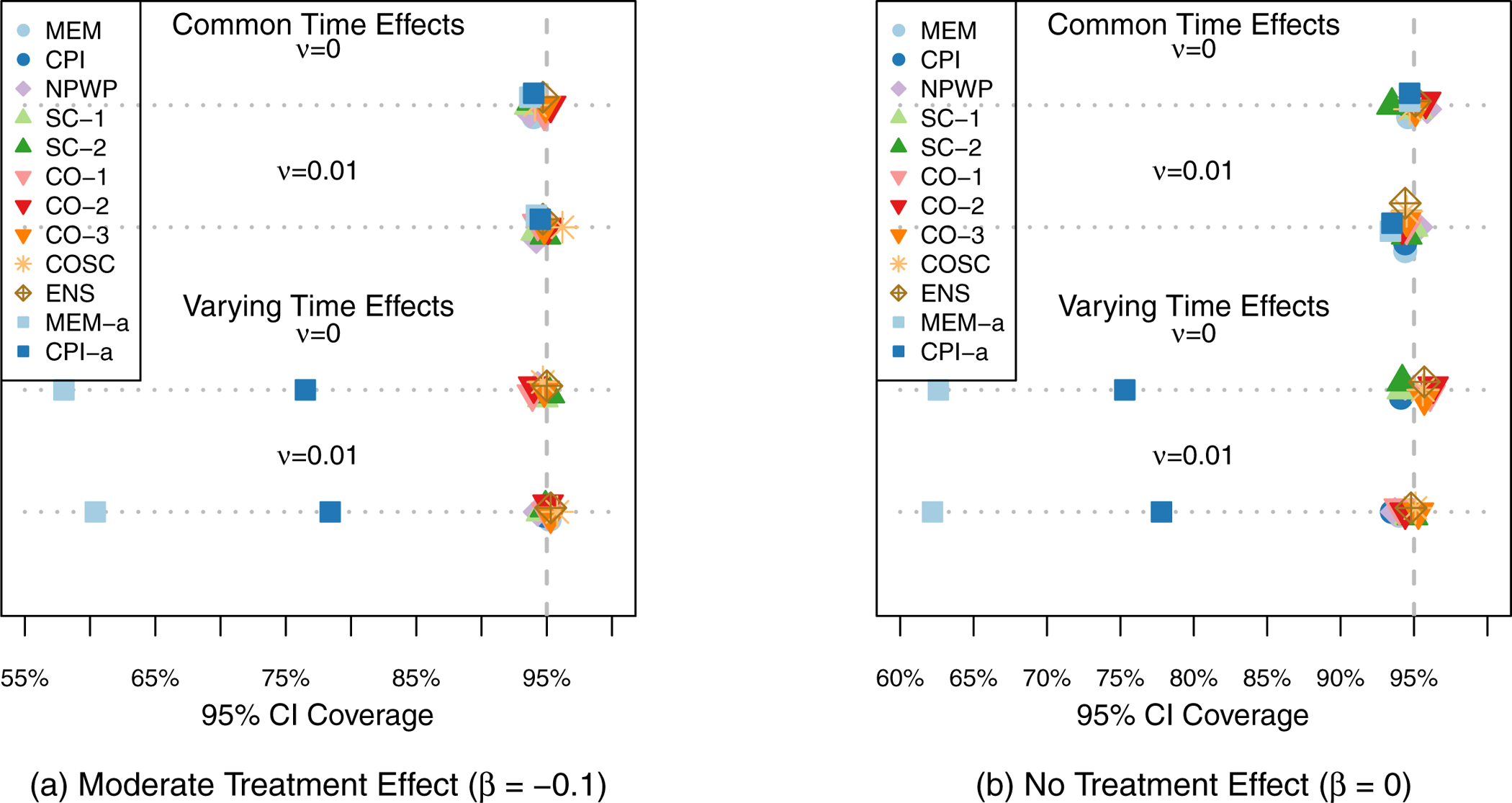
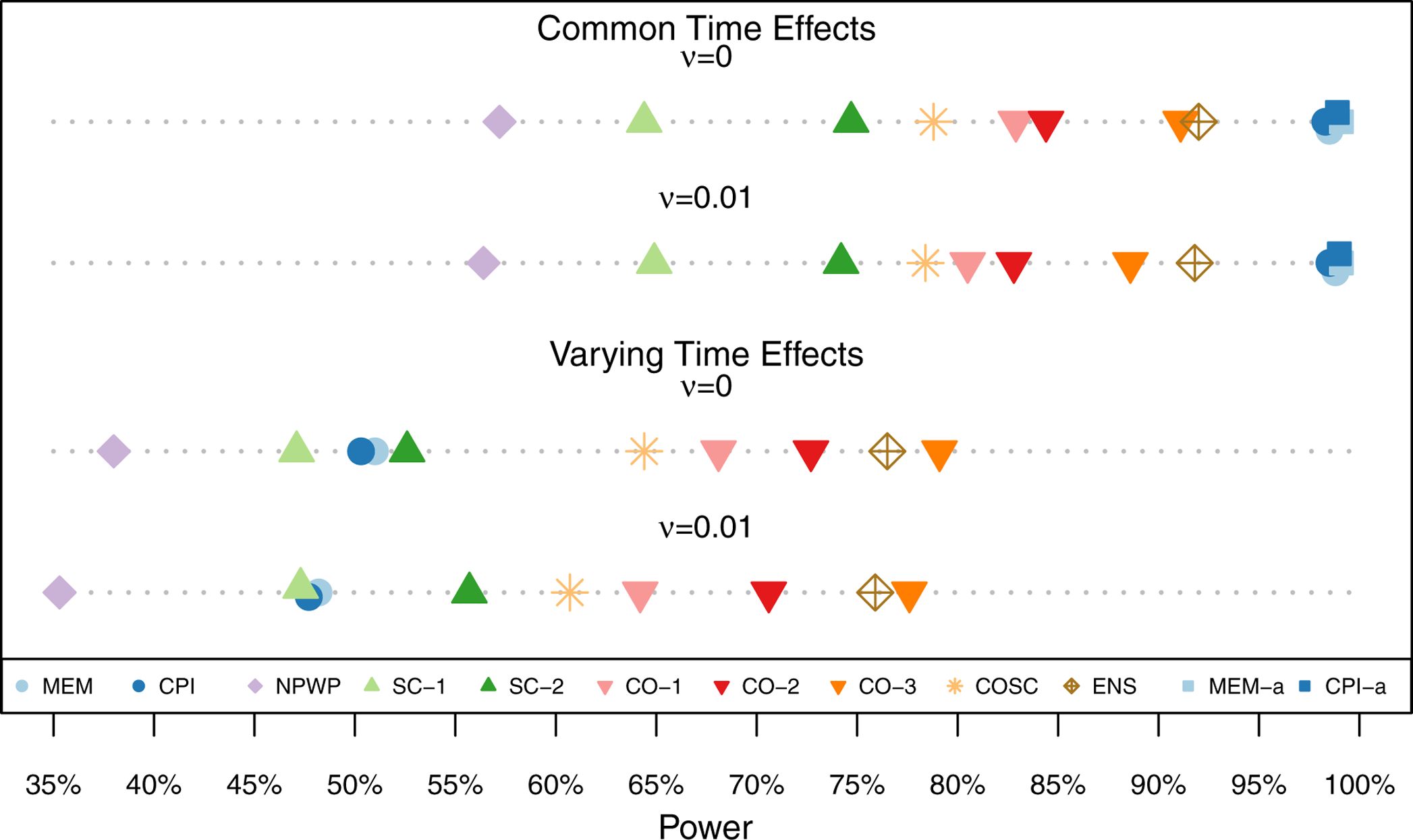
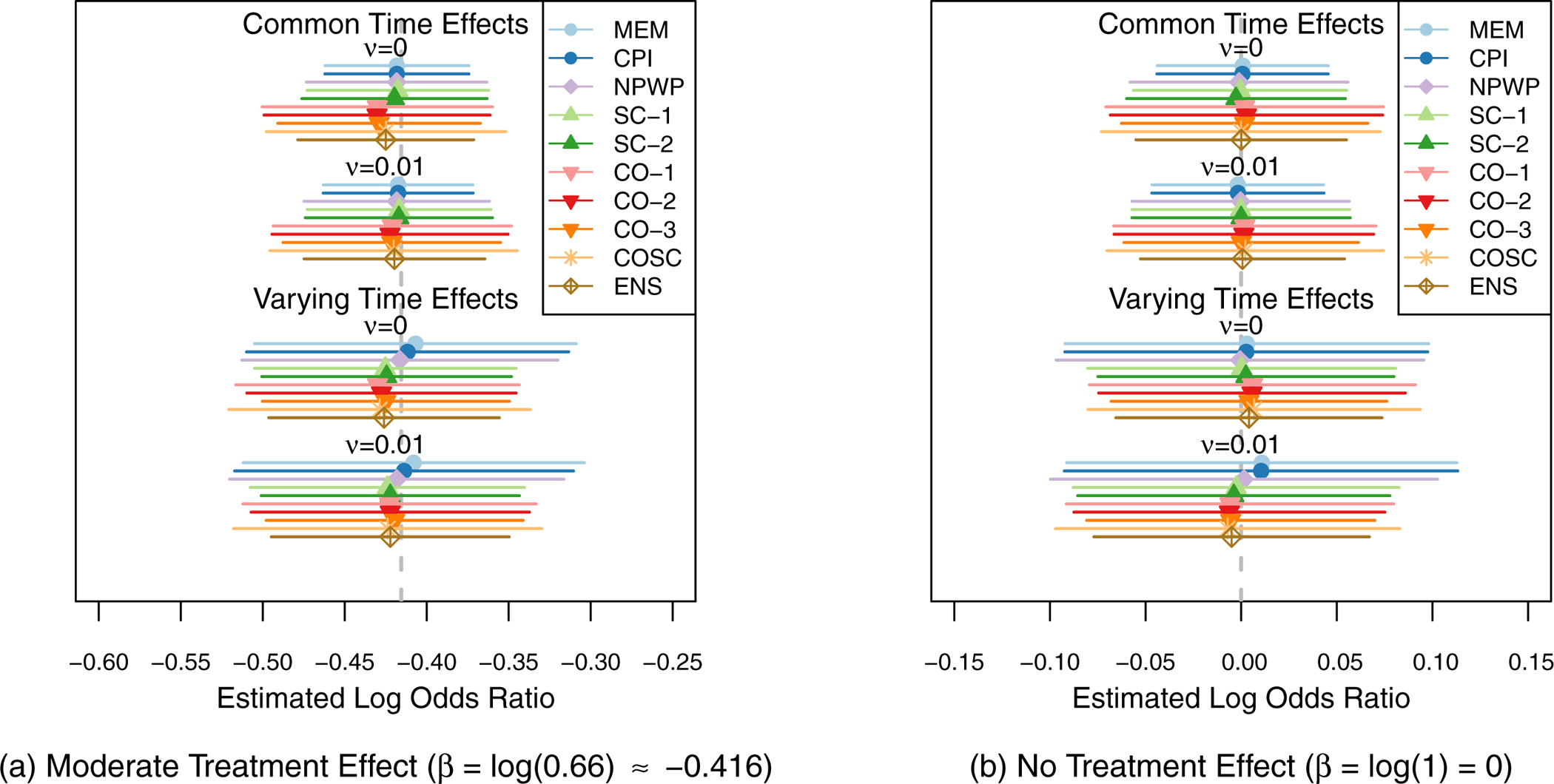
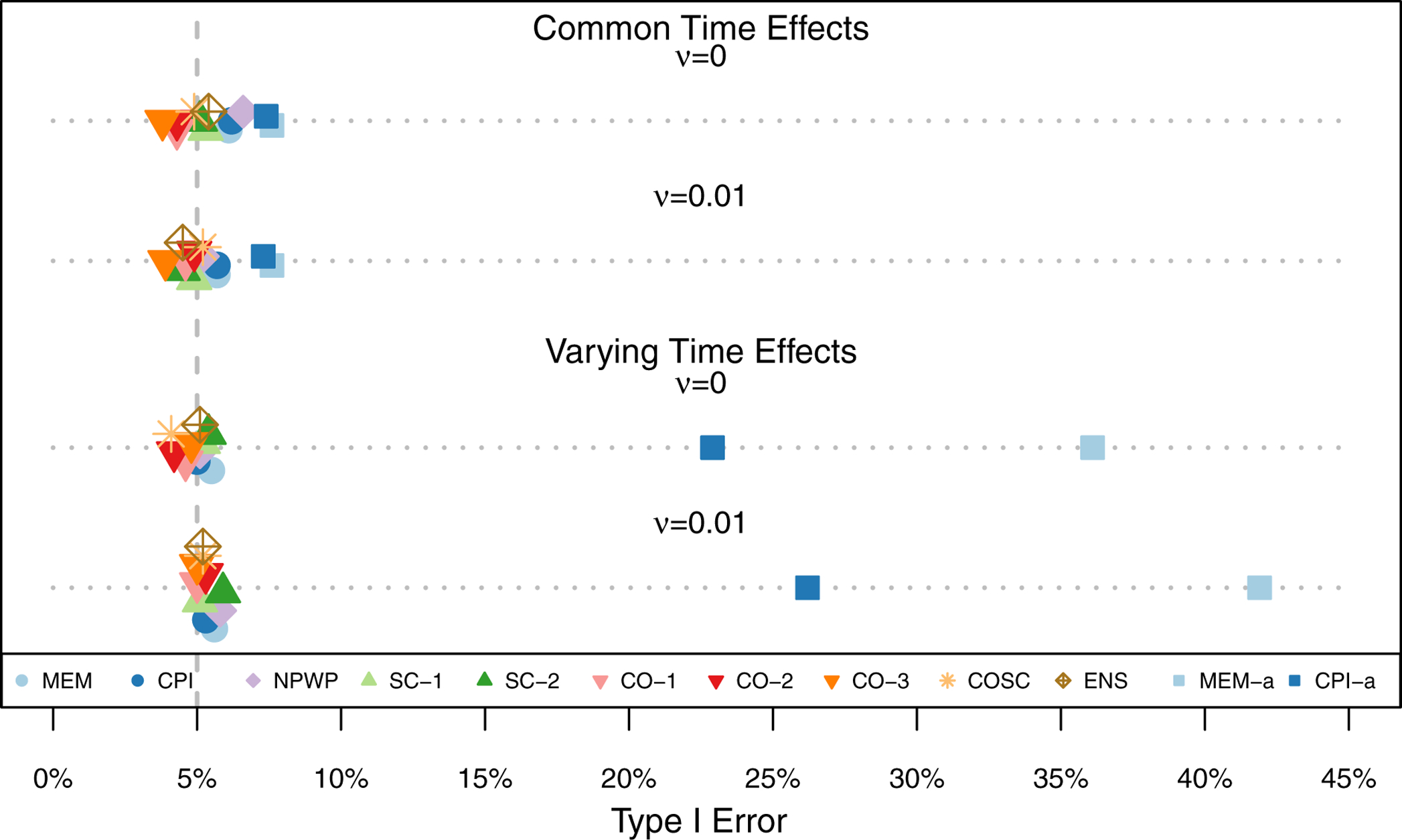
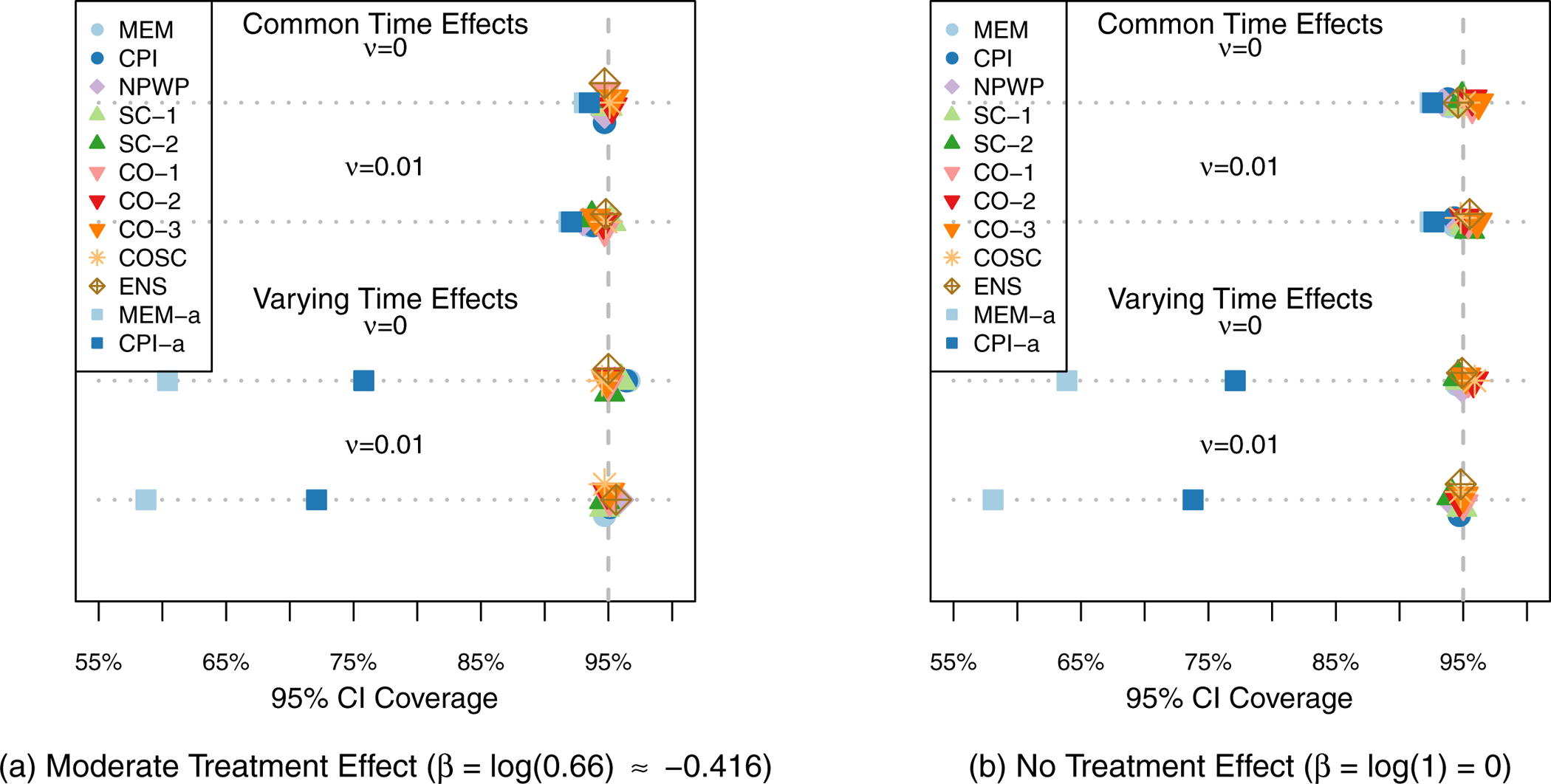
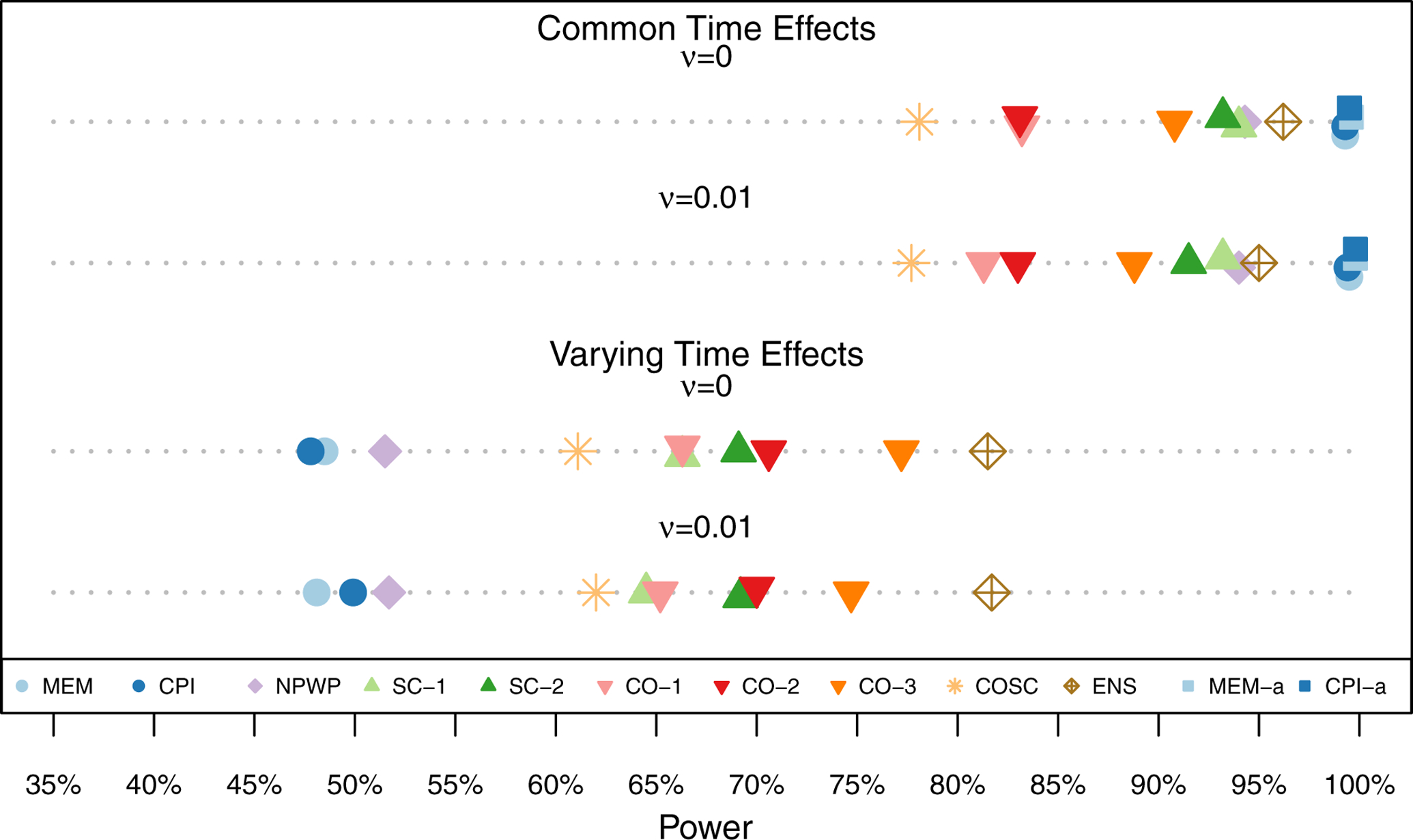
Stepped wedge cluster randomized trials (SW-CRTs) have become increasingly popular and are used for a variety of interventions and outcomes, often chosen for their feasibility advantages. SW-CRTs must account for time trends in the outcome because of the staggered rollout of the intervention. Robust inference procedures and nonparametric analysis methods have recently been proposed to handle such trends without requiring strong parametric modeling assumptions, but these are less powerful than model-based approaches. We propose several novel analysis methods that reduce reliance on modeling assumptions while preserving some of the increased power provided by the use of mixed effects models. In one method, we use the synthetic control approach to find the best matching clusters for a given intervention cluster. Another method makes use of within-cluster crossover information to construct an overall estimator. We also consider methods that combine these approaches to further improve power. We test these methods on simulated SW-CRTs, describing scenarios in which these methods have increased power compared with existing nonparametric methods while preserving nominal validity when mixed effects models are misspecified. We also demonstrate theoretical properties of these estimators with less restrictive assumptions than mixed effects models. Finally, we propose avenues for future research on the use of these methods; motivation for such research arises from their flexibility, which allows the identification of specific causal contrasts of interest, their robustness, and the potential for incorporating covariates to further increase power. Investigators conducting SW-CRTs might well consider such methods when common modeling assumptions may not hold.
阶梯式楔形群随机试验 (SW-CRTs) 已越来越受欢迎,并被用于各种干预措施和结果,通常因其可行性优势而被选择。由于干预措施的交错推出,SW-CRTs 必须考虑结果中的时间趋势。最近提出了稳健的推理程序和非参数分析方法来处理这些趋势,而无需进行强参数建模假设,但这些方法的功效不如基于模型的方法。我们提出了几种新的分析方法,这些方法减少了对建模假设的依赖,同时保留了使用混合效应模型提供的一些增加的功效。在一种方法中,我们使用合成控制方法为给定的干预群集找到最佳匹配的群集。另一种方法利用群内交叉信息来构建总体估计量。我们还考虑了组合这些方法的方法,以进一步提高功效。我们在模拟的 SW-CRT 上测试了这些方法,描述了与现有非参数方法相比,这些方法在提高功效的同时,当混合效应模型指定不正确时,仍能保持名义有效性的情况。我们还提出了这些估计器的理论性质,这些性质比混合效应模型的假设限制更少。最后,我们提出了未来研究这些方法的途径;这种研究的动机源于它们的灵活性,这允许识别特定的感兴趣的因果对比,它们的稳健性以及纳入协变量以进一步提高功效的潜力。当常见的建模假设可能不成立时,进行 SW-CRT 的研究人员可能会考虑这些方法。