Fehr Anthony R
Department of Molecular Biosciences, University of Kansas, Lawrence, KS, USA.
Methods Mol Biol. 2020;2099:53-68. doi: 10.1007/978-1-0716-0211-9_5.
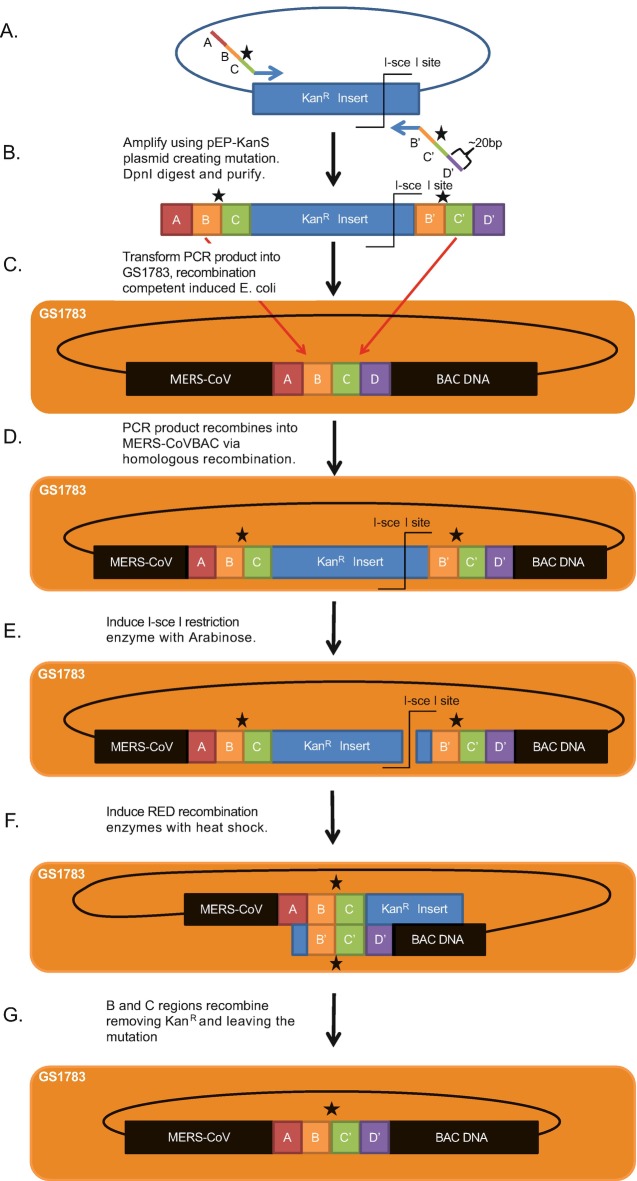
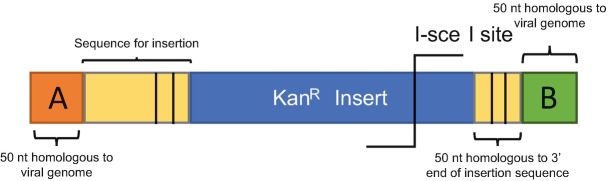
Over the past two decades, several coronavirus (CoV) infectious clones have been engineered, allowing for the manipulation of their large viral genomes (~30 kb) using unique reverse genetic systems. These reverse genetic systems include targeted recombination, in vitro ligation, vaccinia virus vectors, and bacterial artificial chromosomes (BACs). Quickly after the identification of Middle East respiratory syndrome-CoV (MERS-CoV), both in vitro ligation and BAC-based reverse genetic technologies were engineered for MERS-CoV to study its basic biological properties, develop live-attenuated vaccines, and test antiviral drugs. Here, I will describe how lambda red recombination can be used with the MERS-CoV BAC to quickly and efficiently introduce virtually any type of genetic modification (point mutations, insertions, deletions) into the MERS-CoV genome and recover recombinant virus.
在过去二十年中,已构建了多个冠状病毒(CoV)感染性克隆,这使得利用独特的反向遗传系统对其庞大的病毒基因组(约30 kb)进行操作成为可能。这些反向遗传系统包括靶向重组、体外连接、痘苗病毒载体和细菌人工染色体(BAC)。在中东呼吸综合征冠状病毒(MERS-CoV)被鉴定出来后不久,体外连接和基于BAC的反向遗传技术就被应用于MERS-CoV,以研究其基本生物学特性、开发减毒活疫苗和测试抗病毒药物。在此,我将描述如何将λ红重组与MERS-CoV BAC结合使用,以快速、高效地将几乎任何类型的基因修饰(点突变、插入、缺失)引入MERS-CoV基因组并获得重组病毒。