Sayed Samy, Ahmed Mohamed, El-Shehawi Ahmed, Alkafafy Mohamed, Al-Otaibi Saqer, El-Sawy Hanan, Farouk Samy, El-Shazly Samir
Department of Biotechnology, Faculty of Science, Taif University, Taif 21974, Saudi Arabia.
Faculty of Agriculture, Cairo University, Giza 12613, Egypt.
Foods. 2020 Jan 2;9(1):38. doi: 10.3390/foods9010038.
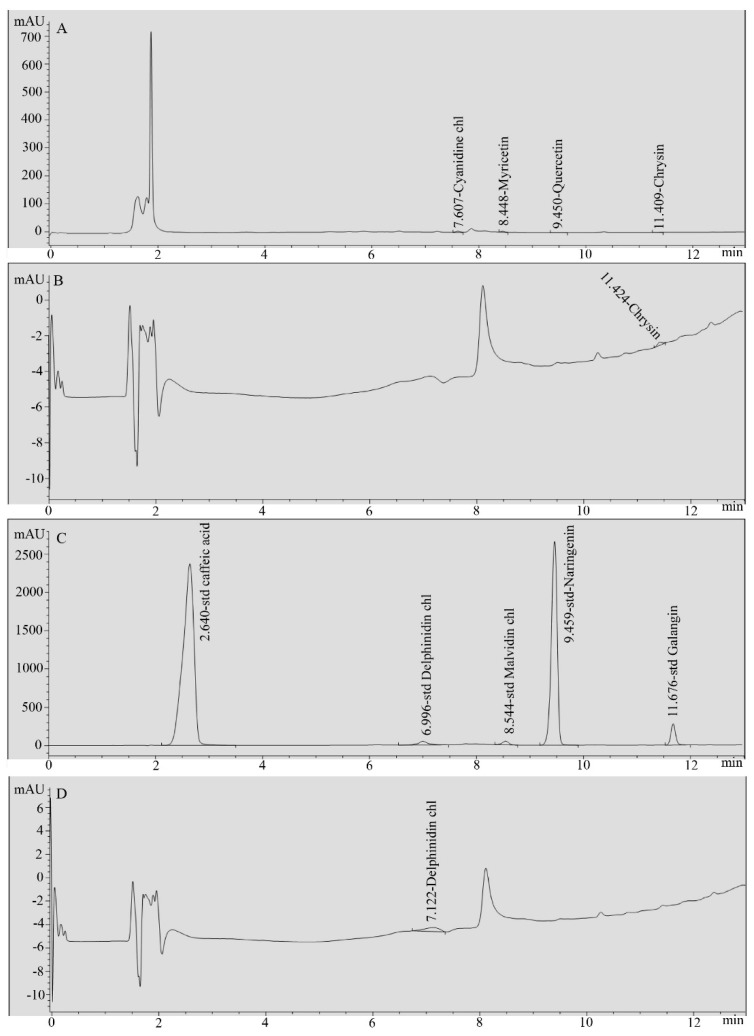
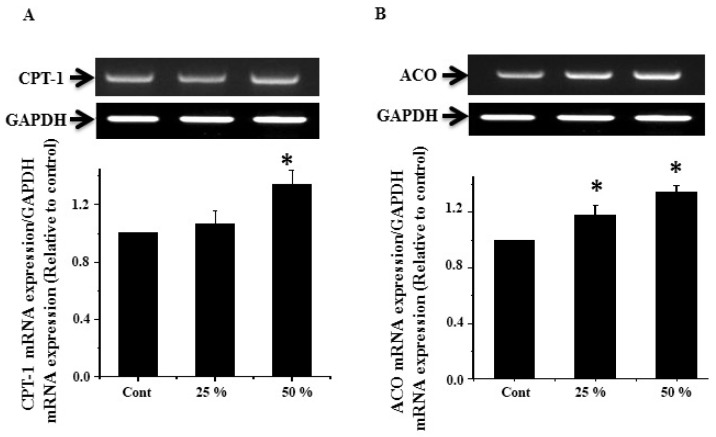
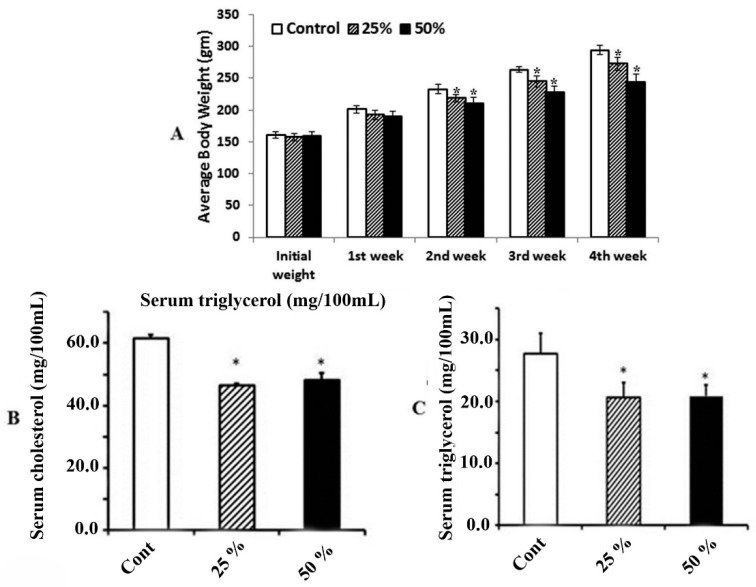
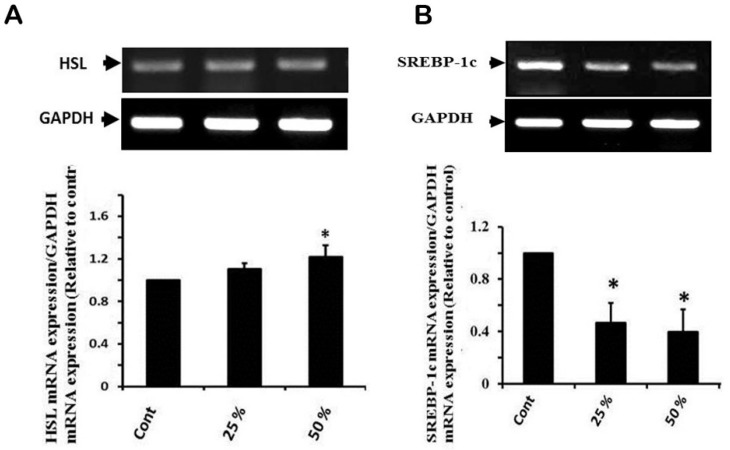
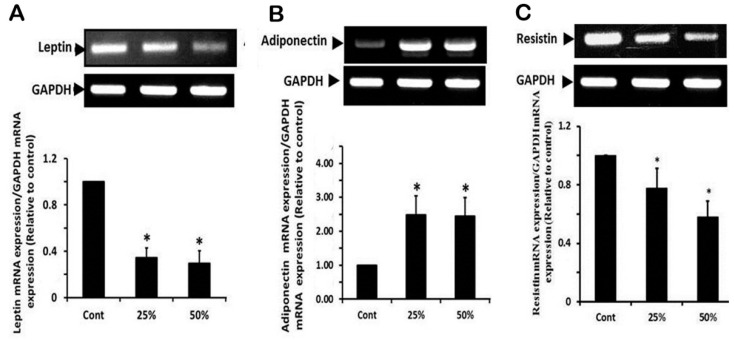
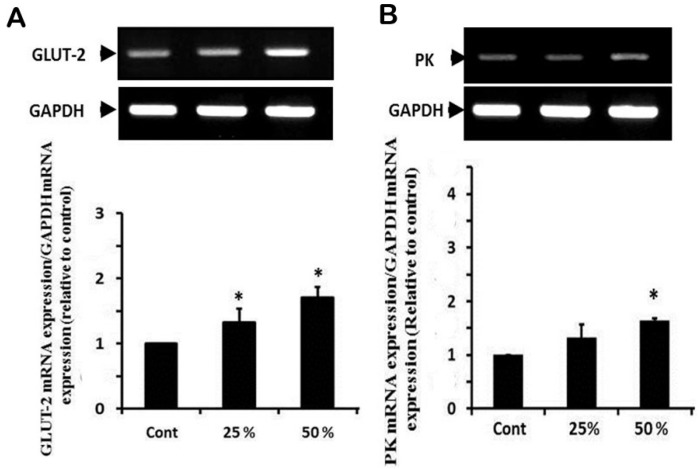
Obesity is a serious global problem that causes predisposition to numerous serious diseases. The current study aims to investigate the effect of ginger water on body weight and energy expenditure through modulation of mRNA expression of carbohydrate and lipid metabolism. A white colored liquid obtained during freeze-drying of fresh rhizomes of was collected and named ginger water. It was used to treat rats, then blood and tissue samples were collected from the liver and white adipose at the end of the experiment. The serum was prepared and used for biochemical assays, while tissue samples were used for RNA isolation and gene expression analysis via Reverse transcription polymerase chain reaction (RT-PCR). Results of High Performance Liquid Chromatography (HPLC) analysis of ginger water revealed the presence of chrysin and galangin at concentrations of 0.24 µg/mL and 0.53 µg/mL, respectively. Average body weight gain decreased significantly in groups that received ginger water. In addition, both total cholesterol and serum triacylglycerol were reduced in the groups that received ginger water. Furthermore, mRNA expression of Sterol regulatory element-binding protein 1 (SREBP-1c) in the liver and leptin in adipose tissues were downregulated, while those of adiponectin, hepatic carnitine palmitoyltransferase1 (CPT-1), acyl-coA oxidase (ACO), Glucose transporter 2 (GLUT-2), and pyruvate kinase (PK) were upregulated in ginger water-treated groups. These results clearly revealed the lowering body weight gain effect of ginger water, which most likely occurs at the transcriptional level of energy metabolizing proteins.
肥胖是一个严重的全球性问题,会使人易患多种严重疾病。当前的研究旨在通过调节碳水化合物和脂质代谢的mRNA表达来研究姜水对体重和能量消耗的影响。收集新鲜根茎冻干过程中得到的白色液体并命名为姜水。用其处理大鼠,然后在实验结束时从肝脏和白色脂肪组织采集血液和组织样本。制备血清用于生化分析,而组织样本用于通过逆转录聚合酶链反应(RT-PCR)进行RNA分离和基因表达分析。姜水的高效液相色谱(HPLC)分析结果显示,白杨素和高良姜素的浓度分别为0.24μg/mL和0.53μg/mL。接受姜水的组平均体重增加显著降低。此外,接受姜水的组总胆固醇和血清三酰甘油均降低。此外,肝脏中固醇调节元件结合蛋白1(SREBP-1c)和脂肪组织中瘦素的mRNA表达下调,而在姜水治疗组中脂联素、肝脏肉碱棕榈酰转移酶1(CPT-1)、酰基辅酶A氧化酶(ACO)、葡萄糖转运蛋白2(GLUT-2)和丙酮酸激酶(PK)的mRNA表达上调。这些结果清楚地揭示了姜水降低体重增加的作用,这很可能发生在能量代谢蛋白的转录水平。