Chang Yuxiao, Hou Fengyi, Pan Zhiyuan, Huang Zongyu, Han Ni, Bin Lei, Deng Huimin, Li Zhengchao, Ding Lei, Gao Hong, Zhi Fachao, Yang Ruifu, Bi Yujing
State Key Laboratory of Pathogen and Biosecurity, Beijing Institute of Microbiology and Epidemiology, Beijing, China.
Guangdong Provincial Key Laboratory of Gastroenterology, Institute of Gastroenterology of Guangdong Province, Department of Gastroenterology, Nanfang Hospital, Southern Medical University, Guangzhou, China.
Front Microbiol. 2019 Dec 17;10:2891. doi: 10.3389/fmicb.2019.02891. eCollection 2019.
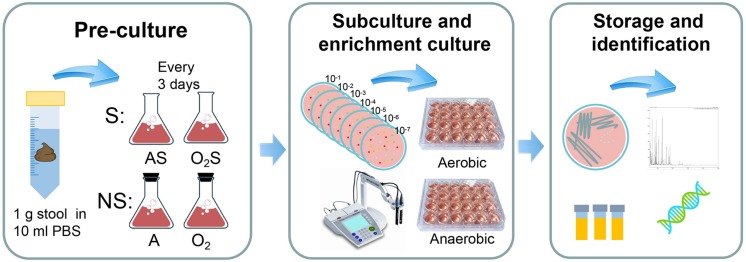
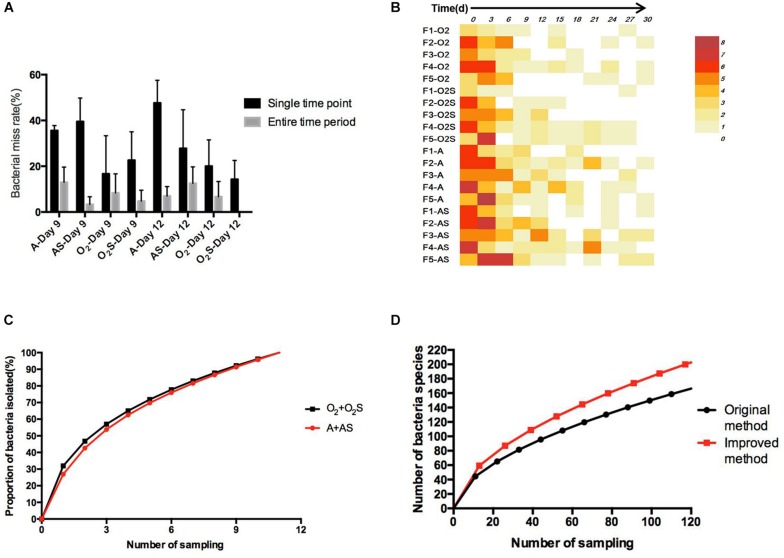
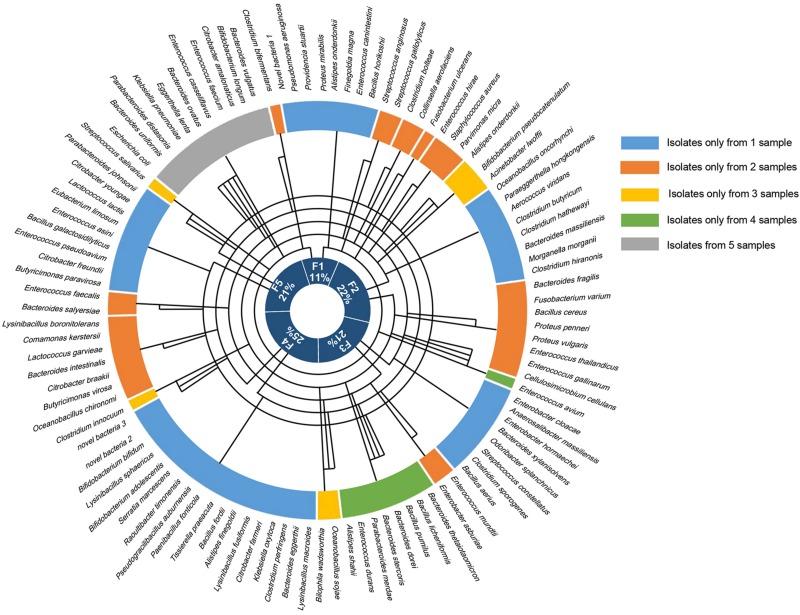
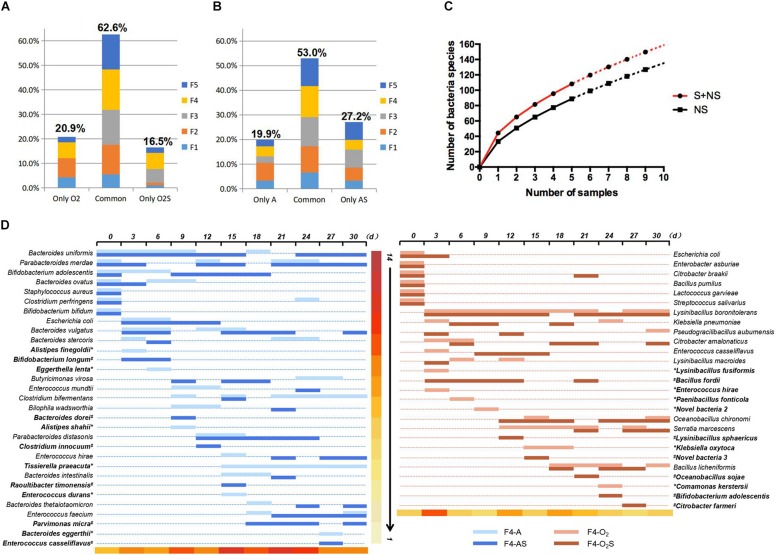
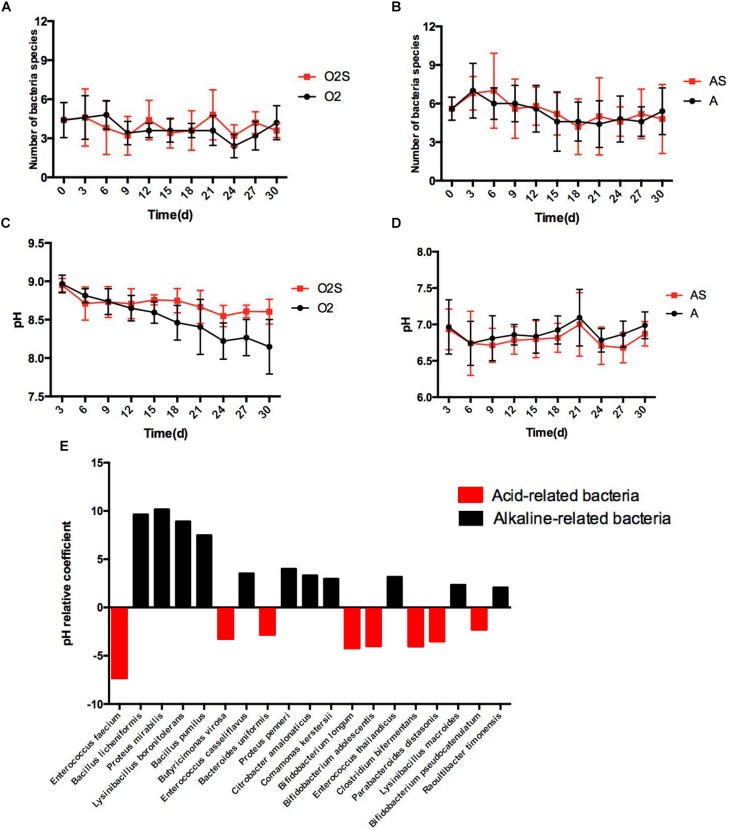
Most bacteria in the human gut are difficult to culture, and culturomics has been designed to overcome this issue. Culturomics makes it possible to obtain living bacteria for further experiments, unlike metagenomics. However, culturomics is work-intensive, which prevents its wide application. In this study, we performed a 30-day continuous enrichment in blood culture bottles and cultured bacterial isolates from pre-cultures removed at different time points. We compared the bacteria isolated from the enriched culture with or without adding fresh medium after each pre-culture was removed. We also compared "experienced" colony picking (i.e., picking two to three colonies for each recognized colony type) and picking all the colonies from each plate. In total, from five fecal samples, 106 species were isolated, including three novel species and six that have not previously been isolated from the human body. Adding fresh medium to the culture increased the rate of bacterial species isolation by 22% compared with the non-supplemented culture. Picking all colonies increased the rate of bacterial isolation by only 8.5% compared with experienced colony picking. After optimization through statistical analysis and simulation, sampling aerobic and anaerobic enrichment cultures at six and seven time-points, respectively, is likely to isolate >90% of bacterial species, reducing the workload by 40%. In conclusion, an extended enrichment step ensures isolation of different bacterial species at different time-points, while adding the same quantity of fresh medium after sampling, the experienced picking and the optimized time-points favor the chance of isolating more bacterial species with less work.
人类肠道中的大多数细菌难以培养,而 culturomics 旨在克服这一问题。与宏基因组学不同,culturomics 能够获取活细菌用于进一步实验。然而,culturomics 工作强度大,这阻碍了其广泛应用。在本研究中,我们在血培养瓶中进行了 30 天的连续富集,并培养了从不同时间点取出的预培养物中的细菌分离株。我们比较了在每次取出预培养物后添加或不添加新鲜培养基的富集培养物中分离出的细菌。我们还比较了“经验性”菌落挑选(即每种识别出的菌落类型挑选两到三个菌落)和从每个平板上挑选所有菌落的情况。总共从五个粪便样本中分离出 106 种细菌,包括三个新物种和六个以前未从人体分离出的物种。与未添加新鲜培养基的培养相比,向培养物中添加新鲜培养基可使细菌物种分离率提高 22%。与经验性菌落挑选相比,挑选所有菌落仅使细菌分离率提高了 8.5%。通过统计分析和模拟进行优化后,分别在六个和七个时间点对需氧和厌氧富集培养物进行采样,有可能分离出>90%的细菌物种,工作量减少 40%。总之,延长富集步骤可确保在不同时间点分离出不同细菌物种,同时在采样后添加相同量的新鲜培养基、采用经验性挑选和优化时间点有利于以更少的工作量分离出更多细菌物种。