Oak Ridge Associated Universities, TN, USA.
San Diego State University-University of California, San Diego Joint Doctoral Program in Public Health, San Diego, CA, USA.
Am J Health Promot. 2020 May;34(4):393-401. doi: 10.1177/0890117119899217. Epub 2020 Jan 13.
Sexual and gender minority (SGM) youth face risks for negative sexual and reproductive health (SRH) outcomes; it is critical to provide these populations with health education that is both inclusive of and specific to their needs. We sought to characterize the strengths and weaknesses of SGM-related messages from web sites that address SRH for young people. We considered who is included, what topics are discussed, and how messages are framed.
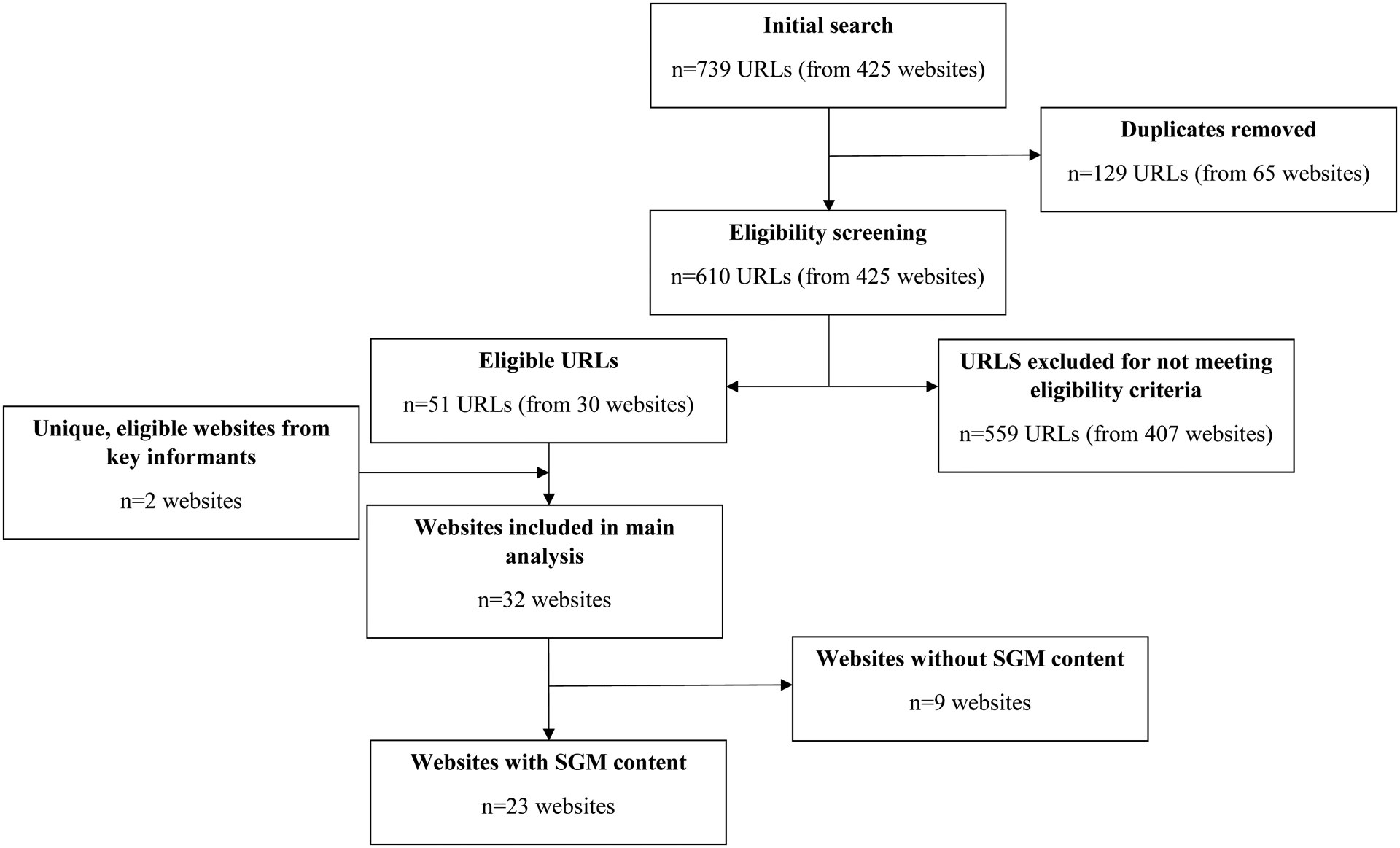
A systematic Google search and screening process was used to identify health promotion web sites with SRH content for adolescents and young adults. Using MAXQDA, we thematically coded and analyzed SGM content qualitatively.
Of 32 SRH web sites identified, 23 (71.9%) contained SGM content. Collectively, the sites included 318 unique SGM codes flagging this content. Approximately two-thirds of codes included messages that discussed SGM youth in aggregate (eg, lesbian, gay, bisexual, and transgender)-specific content about the diverse subpopulations within this umbrella term (eg, transgender youth) was more limited. In addition to SRH topics, most web sites had messages that addressed a broad array of other health issues including violence, mental health, and substance use (n = 17, 73.9%) and SGM-specific topics, for example coming out (n = 21, 91.3%). The former were often risk-framed, yet affirmational messages were common. Most web sites (n = 16; 69.6%) presented information for SGM youth both in stand-alone sections and integrated into broader content. Yet, integrated information was slightly more common (56.6% of all codes) than stand-alone content.
Challenges of developing SRH content related to SGM youth include: (1) aggregate terms, which may not represent the nuances of sexual orientation and gender, (2) balancing risk versus affirmational messages, and (3) balancing stand-alone versus integrated content. However, SGM-related content also offers an opportunity to address diverse topics that can help meet the needs of these populations.
性少数群体(SGM)青年面临负面性健康和生殖健康(SRH)结果的风险;为这些人群提供既包容又符合其需求的健康教育至关重要。我们旨在描述针对年轻人的 SRH 的网站中与 SGM 相关的信息的优缺点。我们考虑了包括哪些人群,讨论了哪些主题以及如何构建信息。
通过系统的 Google 搜索和筛选过程,确定了具有青少年和年轻人 SRH 内容的健康促进网站。使用 MAXQDA,我们对 SGM 内容进行了主题编码和定性分析。
在确定的 32 个 SRH 网站中,有 23 个(71.9%)包含 SGM 内容。这些网站总共包含 318 个独特的 SGM 代码,标记了这些内容。大约三分之二的代码包含了以总体方式讨论 SGM 青年的信息(例如,女同性恋、男同性恋、双性恋和跨性别)-有关该伞形术语内不同亚群的特定内容(例如,跨性别青年)则更为有限。除了 SRH 主题外,大多数网站还有信息涉及广泛的其他健康问题,包括暴力、心理健康和药物使用(n = 17,73.9%)和 SGM 特定主题,例如出柜(n = 21,91.3%)。前者通常是风险框架,但肯定性信息也很常见。大多数网站(n = 16;69.6%)在独立部分和综合内容中为 SGM 青年提供信息。然而,综合信息比独立内容稍微常见(所有代码的 56.6%)。
与 SGM 青年的 SRH 内容相关的挑战包括:(1)概括性术语,可能无法代表性取向和性别差异;(2)平衡风险与肯定性信息;(3)平衡独立内容与综合内容。然而,与 SGM 相关的内容也提供了一个机会,可以解决各种可以帮助满足这些人群需求的主题。