Nicolas-Silvente Ana Isabel, Velasco-Ortega Eugenio, Ortiz-Garcia Ivan, Monsalve-Guil Loreto, Gil Javier, Jimenez-Guerra Alvaro
Associate Professor of Restorative Dentistry, Professor of Master in Mucogingival, Periodontal and Implant Surgery, School of Dentistry, University of Murcia, 30008 Murcia, Spain.
Professor of Comprehensive Dentistry for Adults, Director of Master in Implant Dentistry, Faculty of Dentistry, University of Seville, 41009 Sevilla, Spain.
Materials (Basel). 2020 Jan 9;13(2):314. doi: 10.3390/ma13020314.
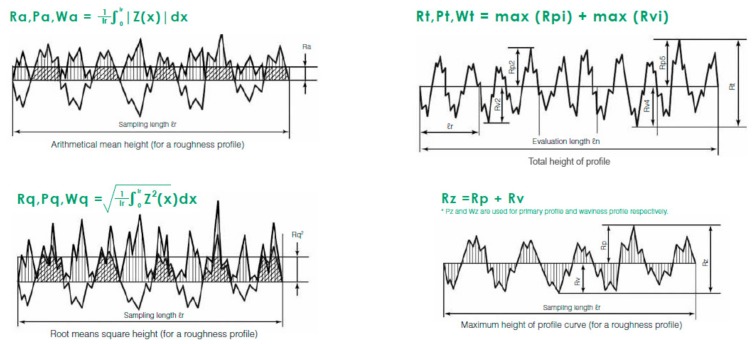
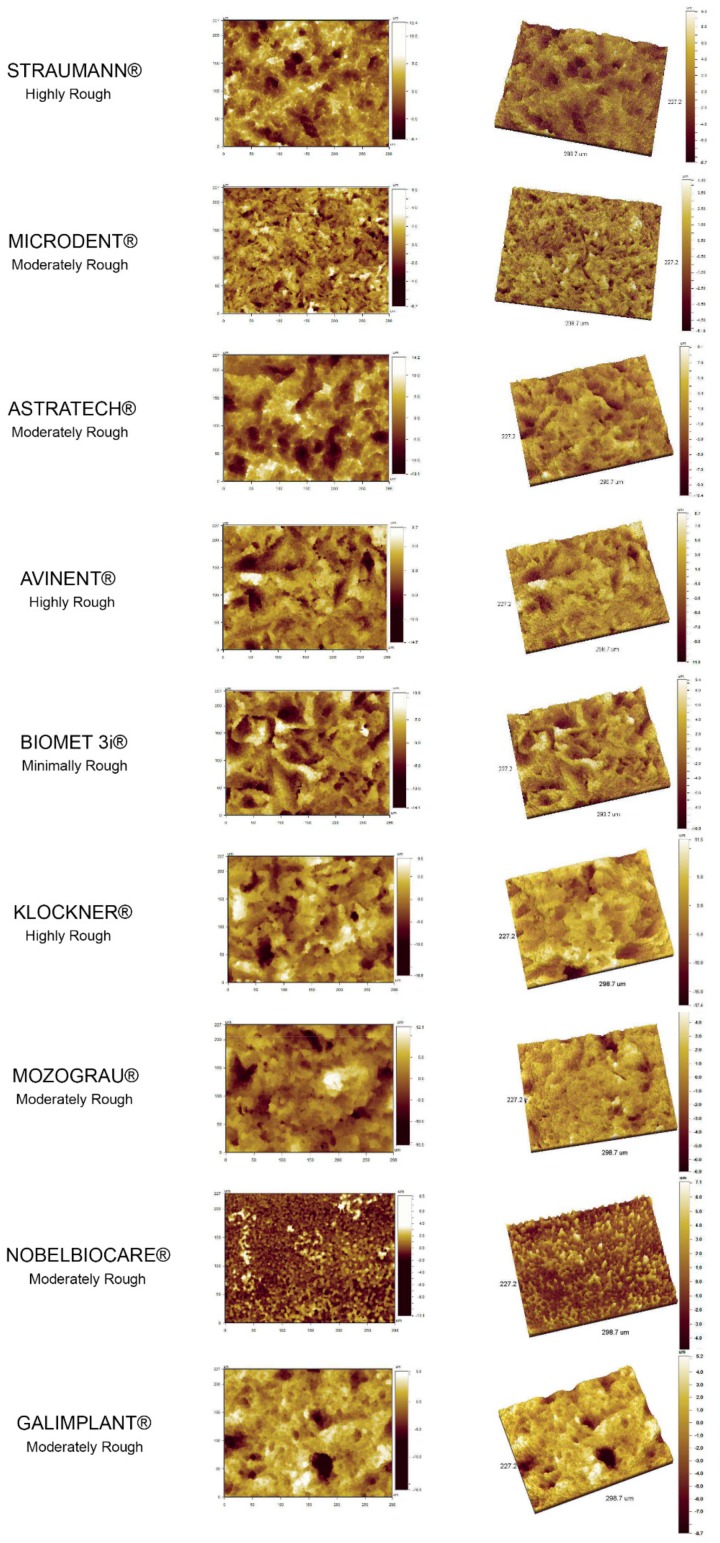
The implant surface features affect the osseointegration process. Different surface treatment methods have been applied to improve the surface topography and properties. Trace of different elements may appear on the implant surface, which can modify surface properties and may affect the body's response. The aim was to evaluate the roughness based on the surface treatment received and the amount and type of trace elements found. Ninety implants (nine different surface treatment) were evaluated. Roughness parameters were measured using white-light-interferometry (WLI). The arithmetical mean for , , , and of each implant system was calculated, and Fisher's exact test was applied, obtaining values between 0.79 and 2.89 µm. Surface chemical composition was evaluated using X-ray photoelectron spectroscopy (XPS) at two times: as received by the manufacturer (AR) and after sputter-cleaning (SC). Traces of several elements were found in all groups, decreasing in favor of the Ti concentration after the sputter-cleaning. Within the limitations of this study, we can conclude that the surface treatment influences the roughness and the average percentage of the trace elements on the implant surface. The cleaning process at the implant surface should be improved by the manufacturer before assembling the implant.
种植体表面特征会影响骨结合过程。已应用不同的表面处理方法来改善表面形貌和性能。种植体表面可能会出现不同元素的痕迹,这会改变表面性能并可能影响机体反应。目的是根据所接受的表面处理以及所发现的微量元素的数量和类型来评估粗糙度。对90枚种植体(9种不同的表面处理)进行了评估。使用白光干涉测量法(WLI)测量粗糙度参数。计算每个种植体系统的 、 、 和 的算术平均值,并应用Fisher精确检验,得到的值在0.79至2.89 µm之间。使用X射线光电子能谱(XPS)在两个时间点评估表面化学成分:制造商收到时(AR)和溅射清洁后(SC)。在所有组中均发现了几种元素的痕迹,溅射清洁后有利于钛浓度的增加。在本研究的局限性范围内,我们可以得出结论,表面处理会影响种植体表面的粗糙度和微量元素的平均百分比。制造商在组装种植体之前应改进种植体表面的清洁过程。