EADE-University of Wales Trinity Saint David, Málaga, Spain.
Human Kinetics and Body Composition Laboratory, University of Málaga, Málaga, Spain.
PLoS One. 2020 Jan 15;15(1):e0227640. doi: 10.1371/journal.pone.0227640. eCollection 2020.
The aim of this study was to compare the concentration of blood lactate [bLa-] and the subjective perception of exertion of trained men in a moderate repetition protocol (MRP) versus a high repetition protocol (HRP) equated for time under tension.
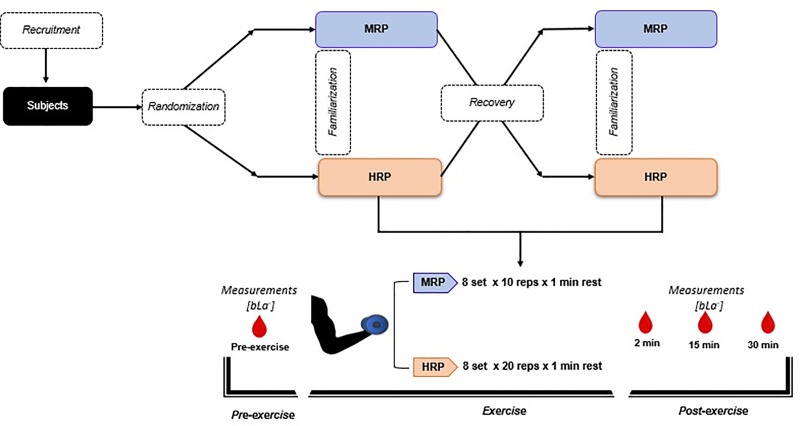
A sample of 40 healthy young men (aged, 23.2 ± 4.0 years; height, 177.3 ± 7.0 cm; BMI, 24.3 ± 2.2) performed two sessions of 8 sets of bicep curls with a one-week recovery interval between the trials. In the HRP protocol, 20 repetitions were performed with a cadence of 2 seconds of eccentric and 1 second of concentric, while in the MRP protocol 10 repetitions were performed with 4 seconds of eccentric and 2 seconds of concentric. Cadences were controlled by a metronome. At the beginning and end of each of the sessions, blood lactate was taken at 2, 15, and 30 minutes, and rating of perceived exertion (OMNI-RES) was assessed immediately after completion of each session.
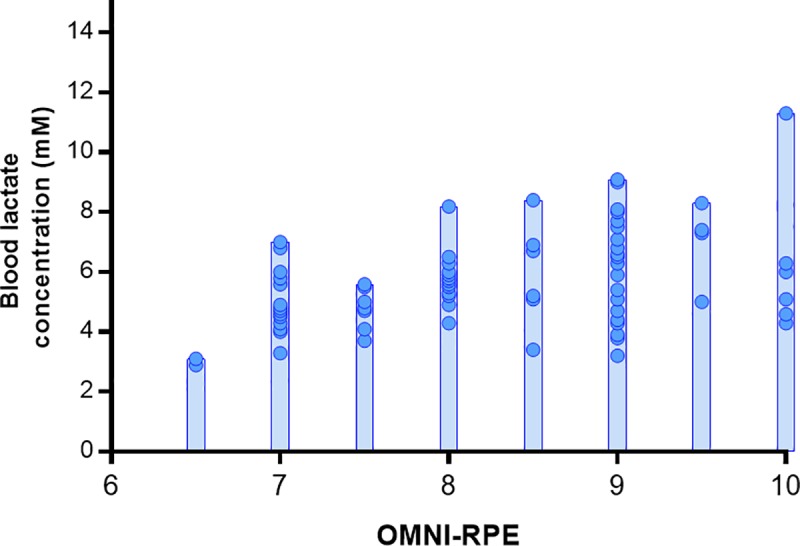
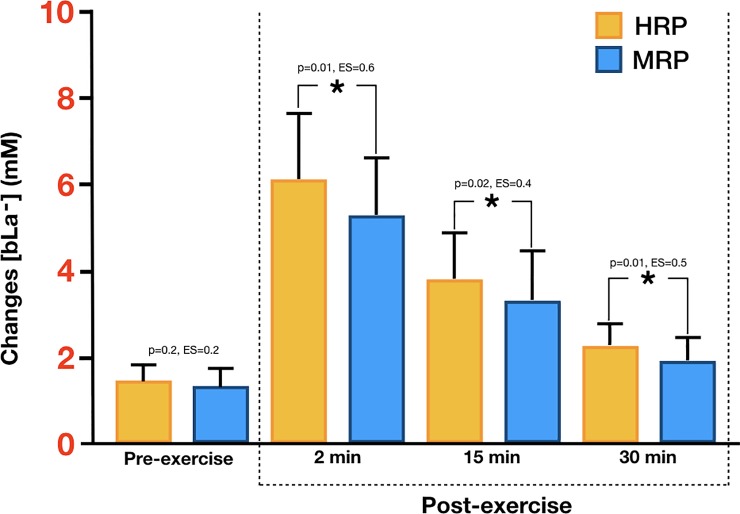
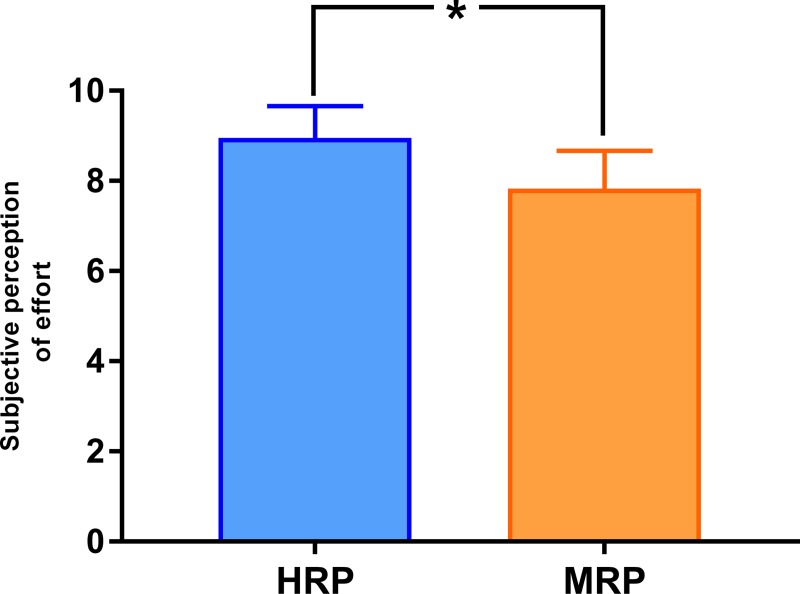
There were [bLa-] differences between protocols in the MRP 2 min, (5.2 ±1.4); 15 min, (3.2 ±1.2); 30 min, (1.9 ±0.6); p< 0.05, and the HRP 2 min, (6.1 ±1.6); 15 min, (3.7 ±1.1); 30 min, (2.2 ±0.6); p<0.01. OMNI-RES was higher in HRP, (8.8 ±0.7) than in MRP, (7.7 ±0.9). Additionally, a correlation was found between the RPE and [bLa-] values in the HRP protocol (rs = 0.35, p < 0.01).
Training protocols with high times under tension promote substantial increases in metabolic stress, however, our findings indicate that HRP generates more [bLa-] than MRP. In addition, there were higher RPE values in the HRP protocol compared to MRP in single-joint exercises.
本研究旨在比较在等张力时间下,中次数重复方案(MRP)和高次数重复方案(HRP)训练的男性的血乳酸浓度 [bLa-] 和主观用力感知。
40 名健康年轻男性(年龄,23.2 ± 4.0 岁;身高,177.3 ± 7.0 cm;BMI,24.3 ± 2.2)在两次试验之间间隔一周进行两次肱二头肌弯举,每组 8 组。在 HRP 方案中,以 2 秒的离心和 1 秒的向心进行 20 次重复,而在 MRP 方案中,以 4 秒的离心和 2 秒的向心进行 10 次重复。节拍由节拍器控制。在每次试验的开始和结束时,在第 2、15 和 30 分钟采集血乳酸,并且在每次试验结束后立即评估感知用力(OMNI-RES)。
MRP 方案中,在第 2 分钟时存在方案间 [bLa-] 的差异,(5.2 ±1.4);15 分钟时,(3.2 ±1.2);30 分钟时,(1.9 ±0.6);p<0.05,HRP 方案中,在第 2 分钟时,(6.1 ±1.6);15 分钟时,(3.7 ±1.1);30 分钟时,(2.2 ±0.6);p<0.01。HRP 方案中的 OMNI-RES 高于 MRP 方案,(8.8 ±0.7)比(7.7 ±0.9)。此外,在 HRP 方案中发现 RPE 与 [bLa-] 值之间存在相关性(rs = 0.35,p < 0.01)。
高张力时间的训练方案会引起代谢应激的显著增加,但是,我们的发现表明 HRP 比 MRP 产生更高的 [bLa-]。此外,在单关节运动中,与 MRP 相比,HRP 方案中的 RPE 值更高。