1School of Health & Society, Brian Blatchford Building, Frederick Road Campus, University of Salford, Salford, M6 6PU UK.
2University of Brighton, Eastbourne, BN20 7UR UK.
J Foot Ankle Res. 2020 Jan 14;13:2. doi: 10.1186/s13047-020-0370-x. eCollection 2020.
Parents increasingly use the internet to seek health information, share information and for purchasing textiles and footwear. This shift in footwear purchasing habits raises concern about how (and if) parents are getting their children's feet measured, and what support strategies are in place to support the fit of footwear. In response to this, some companies and healthcare organisations have developed resources to support home measurement of foot size, and link these measures to footwear selection, measurement and fitting. The aim of this research was to undertake an appraisal of web-based resources about measurement and fit of children's footwear, focussing specifically on readability, usability and quality.
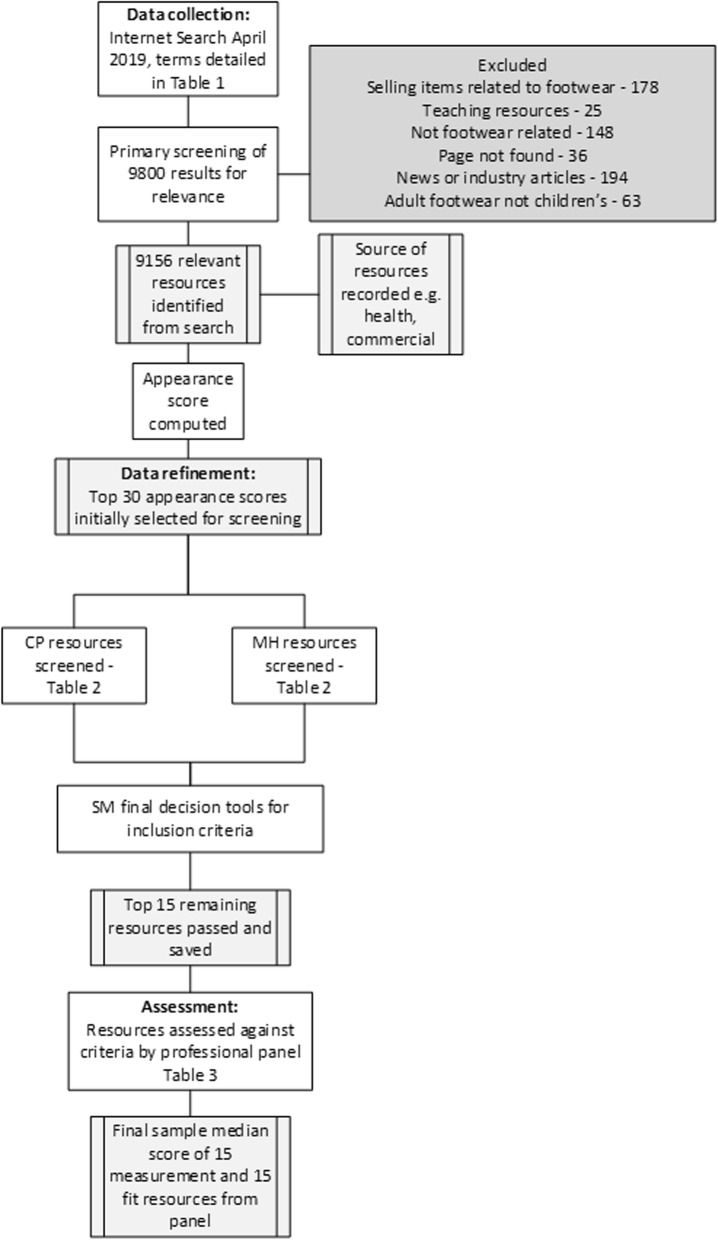
Search terms relating to children's foot measurement were compiled and online searching was undertaken. Search results were saved and screened for relevance. Existing resources were categorised based on their source e.g. a footwear company or a health website. The 15 most commonly identified resources were reviewed by a professional panel for readability, content, usability and validity. One researcher also assessed the accessibility and reading ease of the resources.
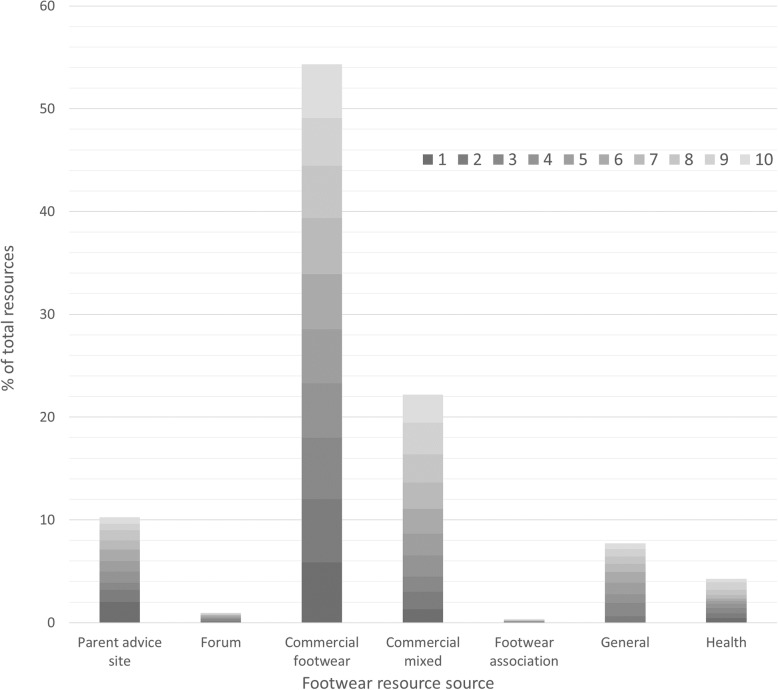
Online resources were predominantly from commercial footwear companies (54%). Health information sources from professional bodies made up 4.2% of the resources identified. The top 15 resources had appropriate reading ease scores for parents (SMOG Index 4.3-8.2). Accessibility scores (the product of the number of times it appeared in search results and its ranking in the results) were highest for commercial footwear companies. The panel scores for readability ranged from 2.7 to 9 out of 10, with a similar range for content, usability and validity.
Information for parents seeking to purchase footwear for their children is readily available online but this was largely dominated by commercial footwear companies. The quality and usability of this information is of a moderate standard; notable improvements could be made to the validity of the task the child is asked to undertake and the measures being taken. Improvements in these resources would improve the data input to the selection of footwear and therefore have a beneficial impact on footwear fit in children.
家长越来越多地使用互联网获取健康信息、分享信息以及购买纺织品和鞋类。这种鞋类购买习惯的转变引发了人们对家长如何(以及是否)为孩子测量脚的担忧,以及有哪些支持策略可以用来支持鞋类的适配。针对这一问题,一些公司和医疗机构已经开发了资源来支持家庭测量脚的尺寸,并将这些测量值与鞋类选择、测量和适配联系起来。本研究旨在评估关于儿童鞋类测量和适配的网络资源,重点关注可读性、可用性和质量。
编制了与儿童足部测量相关的搜索词,并进行了在线搜索。保存搜索结果并进行筛选以确定相关性。根据来源对现有资源进行分类,例如鞋类公司或健康网站。由专业小组对 15 个最常见的资源进行了可读性、内容、可用性和有效性的审查。一名研究人员还评估了资源的可访问性和易读性。
在线资源主要来自商业鞋类公司(54%)。专业机构的健康信息来源占确定资源的 4.2%。前 15 名资源的家长阅读舒适度得分适中(SMOG 指数为 4.3-8.2)。可访问性得分(搜索结果中出现的次数与其在结果中的排名的乘积)最高的是商业鞋类公司。小组对可读性的评分从 2.7 到 10 分不等,内容、可用性和有效性的评分范围相似。
家长在网上寻找为孩子购买鞋类的信息很容易,但这主要是由商业鞋类公司主导的。这些信息的质量和可用性处于中等水平;可以显著提高孩子被要求完成的任务的有效性和所采取的措施的有效性。这些资源的改进将改善鞋类选择的输入数据,从而对儿童鞋类的适配产生有益影响。