Department of Psychology, University of Oregon, Eugene, Oregon, USA.
Department of Microbiology, Oregon State University, Corvallis, Oregon, USA.
mBio. 2020 Jan 21;11(1):e02780-19. doi: 10.1128/mBio.02780-19.
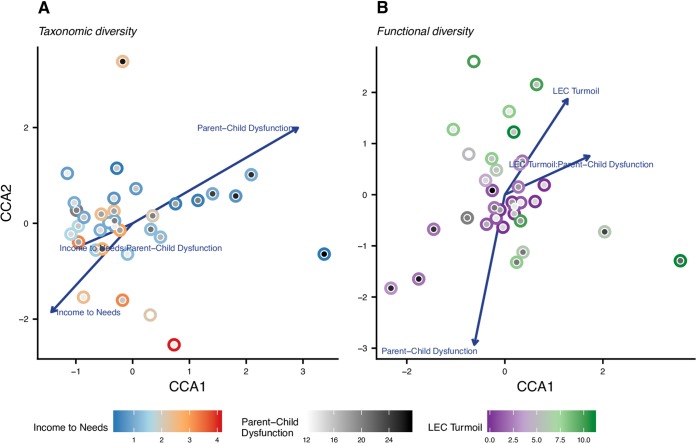
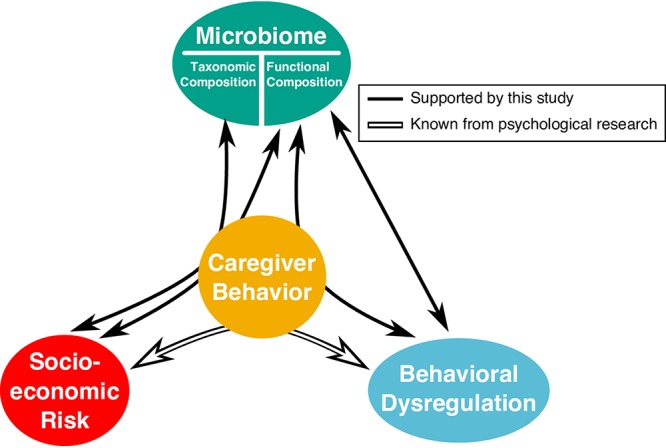
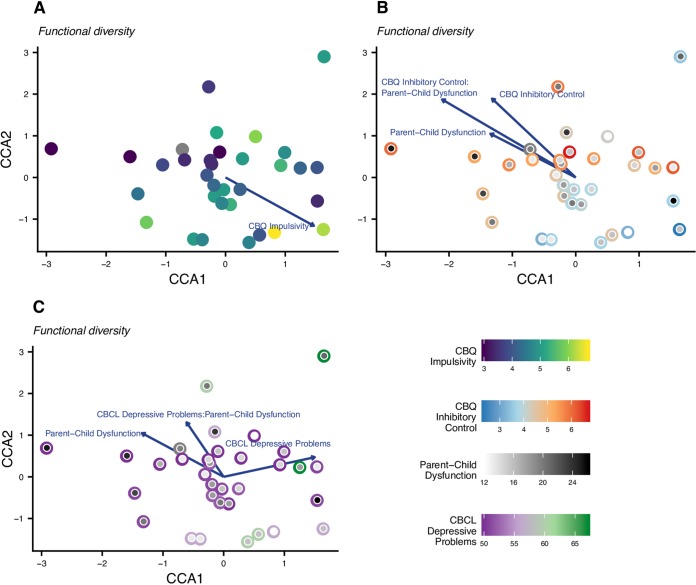
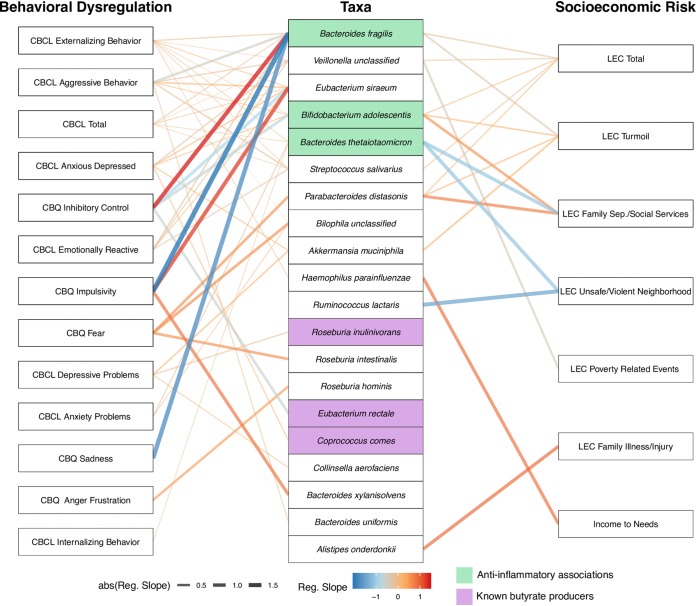
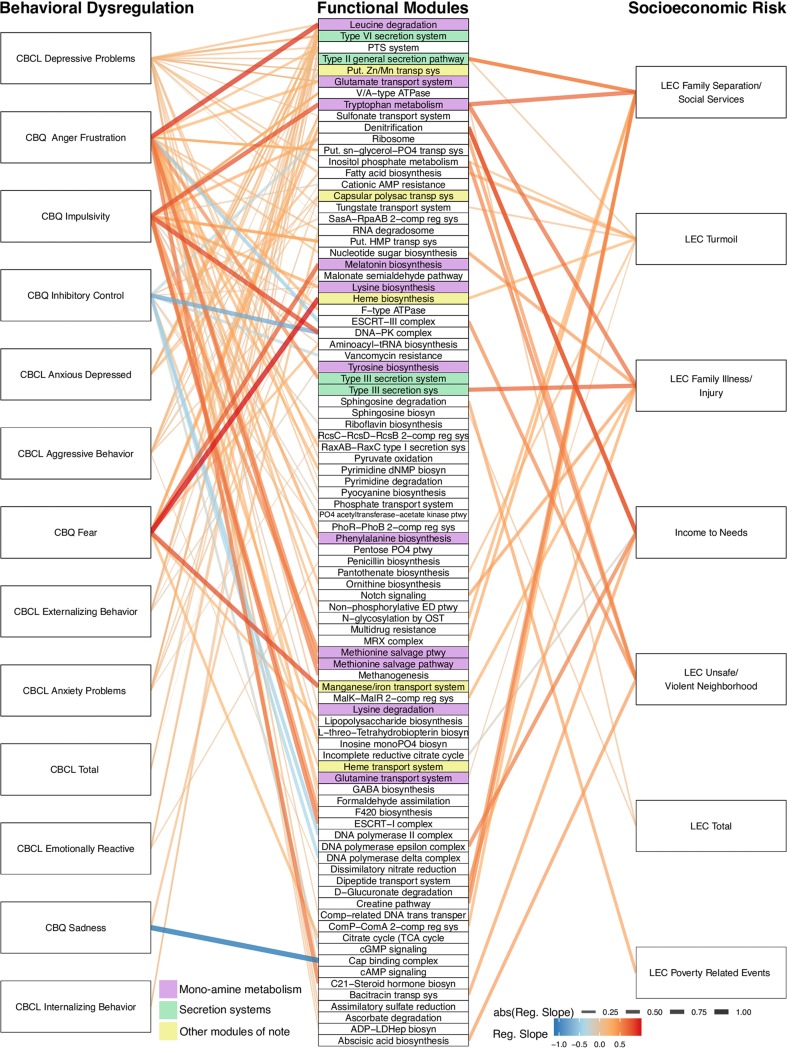
Psychosocial environments impact normative behavioral development in children, increasing the risk of problem behaviors and psychiatric disorders across the life span. Converging evidence demonstrates that early normative development is affected by the gut microbiome, which itself can be altered by early psychosocial environments. However, much of our understanding of the gut microbiome's role in early development stems from nonhuman animal models and predominately focuses on the first years of life, during peri- and postnatal microbial colonization. As a first step to identify if these findings translate to humans and the extent to which these relationships are maintained after initial microbial colonization, we conducted a metagenomic investigation among a cross-sectional sample of early school-aged children with a range of adverse experiences and caregiver stressors and relationships. Our results indicate that the taxonomic and functional composition of the gut microbiome correlates with behavior during a critical period of child development. Furthermore, our analysis reveals that both socioeconomic risk exposure and child behaviors associate with the relative abundances of specific taxa (e.g., and species) as well as functional modules encoded in their genomes (e.g., monoamine metabolism) that have been linked to cognition and health. While we cannot infer causality within this study, these findings suggest that caregivers may moderate the gut microbiome's link to environment and behaviors beyond the first few years of life. Childhood is a formative period of behavioral and biological development that can be modified, for better or worse, by the psychosocial environment that is in part determined by caregivers. Not only do our own genes and the external environment influence such developmental trajectories, but the community of microbes living in, on, and around our bodies-the microbiome-plays an important role as well. By surveying the gut microbiomes of a cross-sectional cohort of early school-aged children with a range of psychosocial environments and subclinical mental health symptoms, we demonstrated that caregiving behaviors modified the child gut microbiome's association to socioeconomic risk and behavioral dysregulation.
心理社会环境会影响儿童的正常行为发展,增加其整个生命周期出现行为问题和精神障碍的风险。越来越多的证据表明,早期的正常发展受到肠道微生物组的影响,而肠道微生物组本身可以通过早期的心理社会环境发生改变。然而,我们对肠道微生物组在早期发育中的作用的理解在很大程度上来自于非人类动物模型,并且主要集中在生命的头几年,即围产期和产后微生物定植期间。作为确定这些发现是否适用于人类以及这些关系在初始微生物定植后在多大程度上得以维持的第一步,我们对具有一系列不良经历和照顾者压力源和关系的早期学龄儿童的横断面样本进行了宏基因组学研究。我们的研究结果表明,肠道微生物组的分类和功能组成与儿童发育的关键时期的行为相关。此外,我们的分析表明,社会经济风险暴露和儿童行为与特定分类群(例如, 和 种)以及其基因组中编码的功能模块(例如,单胺代谢)的相对丰度相关,这些分类群和功能模块与认知和健康有关。虽然在这项研究中我们不能推断因果关系,但这些发现表明,照顾者可能会在生命的最初几年之后,调节肠道微生物组与环境和行为之间的联系。儿童期是行为和生物发育的形成期,可以通过心理社会环境进行改善或恶化,而心理社会环境在一定程度上是由照顾者决定的。不仅我们自己的基因和外部环境会影响这些发育轨迹,而且生活在我们体内、体表和周围的微生物群落——微生物组——也起着重要作用。通过调查具有一系列心理社会环境和亚临床心理健康症状的早期学龄儿童的横断面队列的肠道微生物组,我们证明了照顾者行为改变了儿童肠道微生物组与社会经济风险和行为失调的关联。