Guardia Gabriela D A, Correa Bruna R, Araujo Patricia Rosa, Qiao Mei, Burns Suzanne, Penalva Luiz O F, Galante Pedro A F
1Centro de Oncologia Molecular, Hospital Sírio-Libanês, São Paulo, São Paulo 01309-060 Brazil.
4Present Address: Centre for Genomic Regulation (CRG), The Barcelona Institute of Science and Technology, Barcelona, 08003 Catalonia Spain.
NPJ Genom Med. 2020 Jan 16;5:2. doi: 10.1038/s41525-019-0108-5. eCollection 2020.
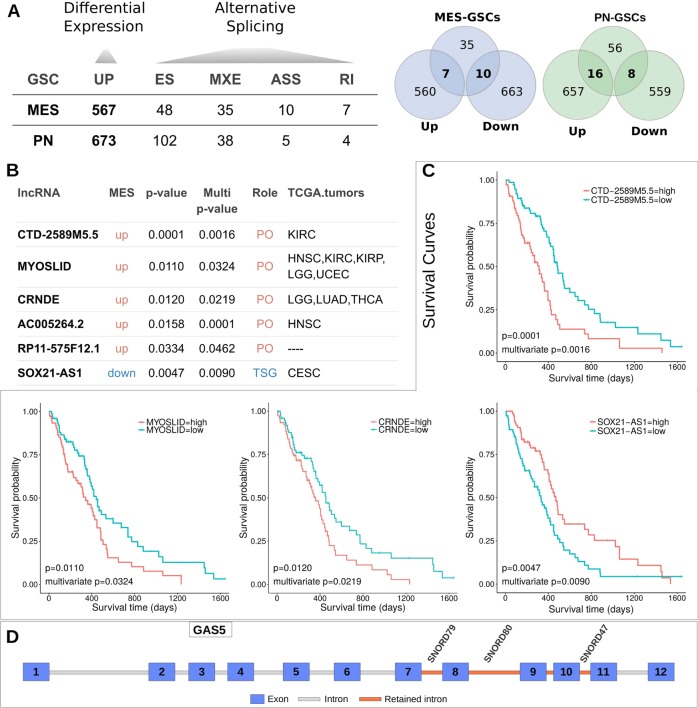
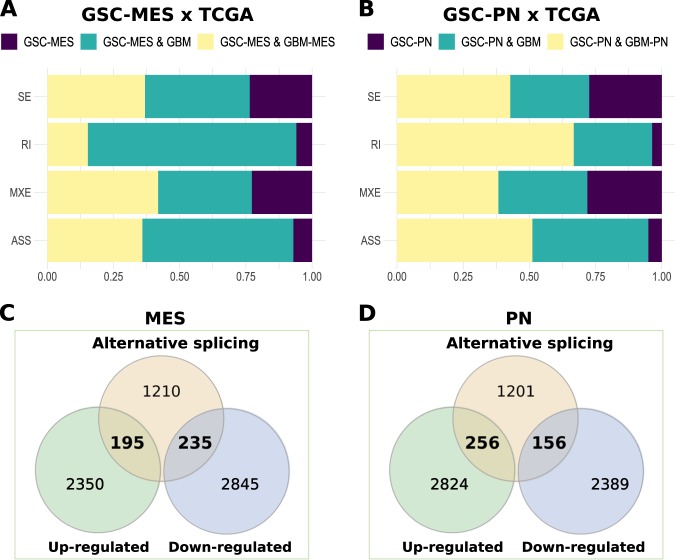
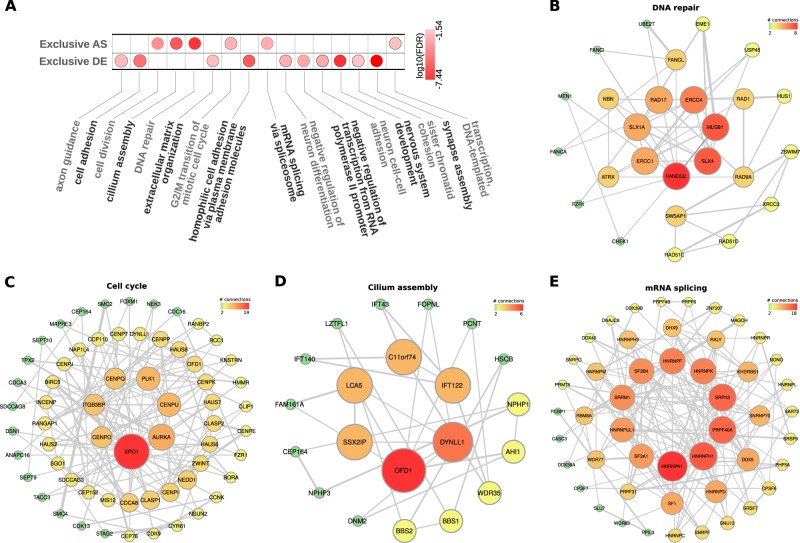
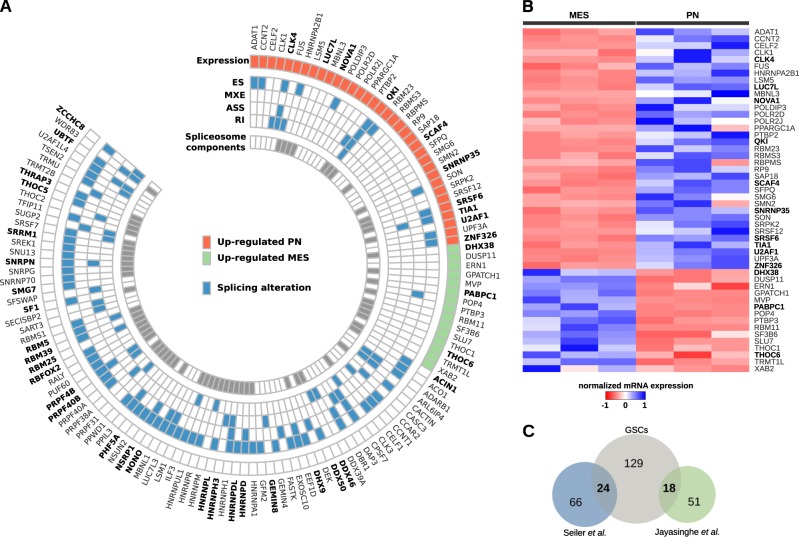
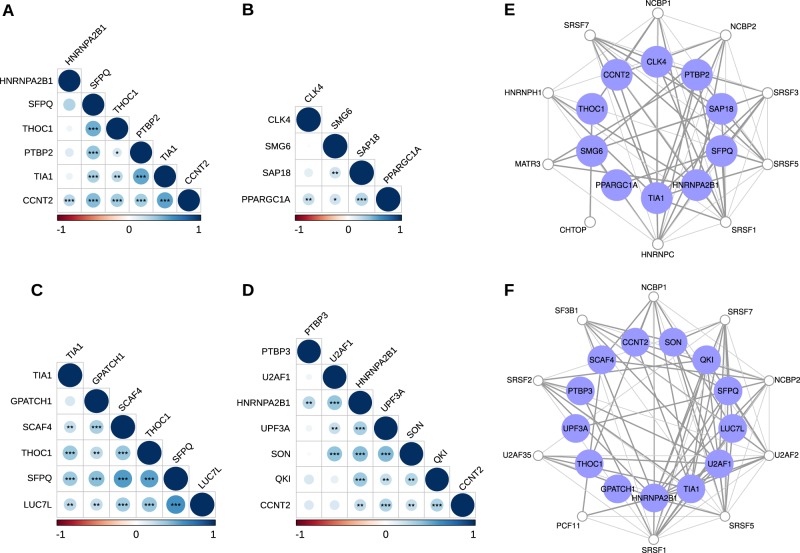
Therapy resistance and recurrence in high-grade gliomas are driven by their populations of glioma stem cells (GSCs). Thus, detailed molecular characterization of GSCs is needed to develop more effective therapies. We conducted a study to identify differences in the splicing profile and expression of long non-coding RNAs in proneural and mesenchymal GSC cell lines. Genes related to cell cycle, DNA repair, cilium assembly, and splicing showed the most differences between GSC subgroups. We also identified genes distinctly associated with survival among patients of mesenchymal or proneural subgroups. We determined that multiple long non-coding RNAs with increased expression in mesenchymal GSCs are associated with poor survival of glioblastoma patients. In summary, our study established critical differences between proneural and mesenchymal GSCs in splicing profiles and expression of long non-coding RNA. These splicing isoforms and lncRNA signatures may contribute to the uniqueness of GSC subgroups, thus contributing to cancer phenotypes and explaining differences in therapeutic responses.
高级别胶质瘤的治疗耐药性和复发是由其胶质瘤干细胞(GSC)群体驱动的。因此,需要对GSC进行详细的分子特征分析,以开发更有效的治疗方法。我们开展了一项研究,以确定神经干细胞样和间充质GSC细胞系中剪接谱和长链非编码RNA表达的差异。与细胞周期、DNA修复、纤毛组装和剪接相关的基因在GSC亚组之间表现出最大差异。我们还确定了与间充质或神经干细胞样亚组患者生存明显相关的基因。我们确定,在间充质GSC中表达增加的多种长链非编码RNA与胶质母细胞瘤患者的不良生存相关。总之,我们的研究确定了神经干细胞样和间充质GSC在剪接谱和长链非编码RNA表达方面的关键差异。这些剪接异构体和lncRNA特征可能导致GSC亚组具有独特性,从而导致癌症表型并解释治疗反应的差异。