College of Pharmacy and Medical Research Center, Chungbuk National University, Osongsaengmyeong 1-ro 194-21, Osong-eup, Heungduk-gu, Cheongju, Chungbuk 28160, Korea.
Life Science Research Institute, NOVAREX Co., Ltd., Ochang, Cheongju 28126, Korea.
Nutrients. 2020 Jan 22;12(2):300. doi: 10.3390/nu12020300.
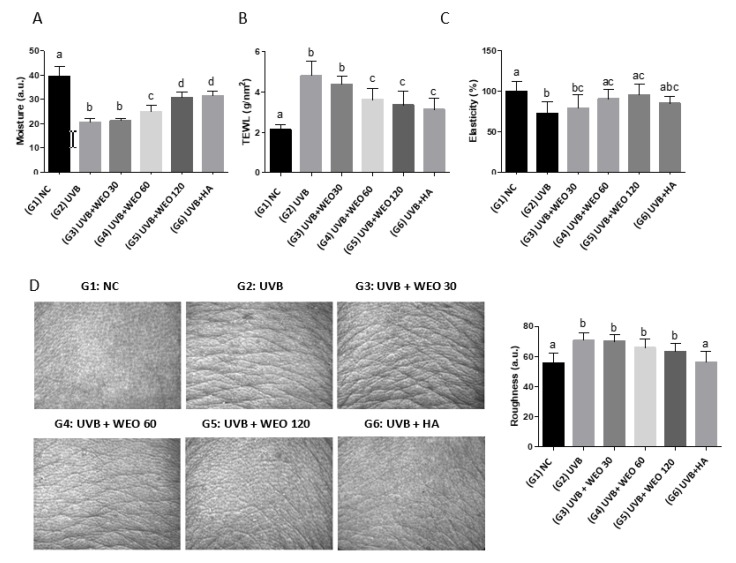
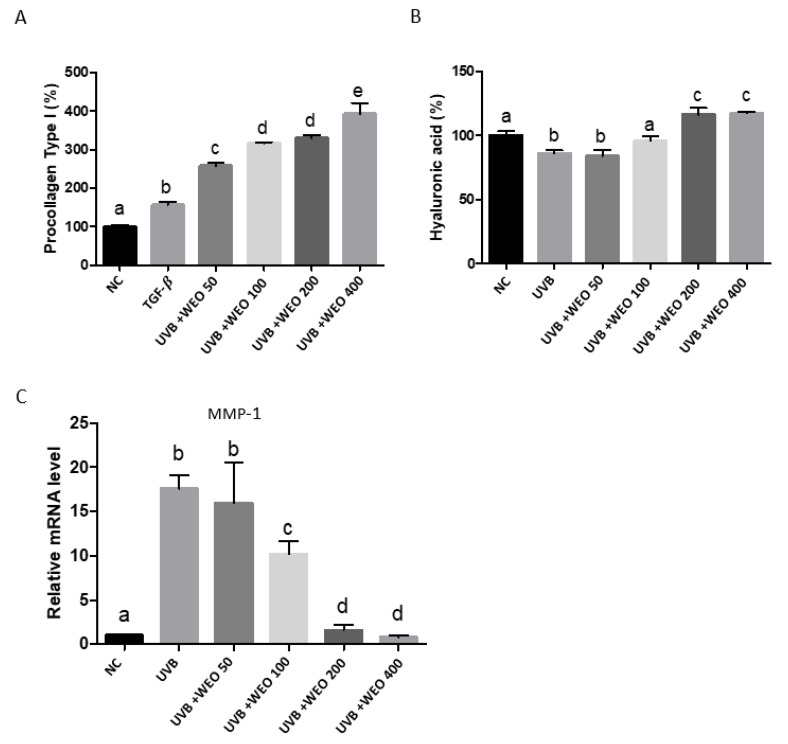
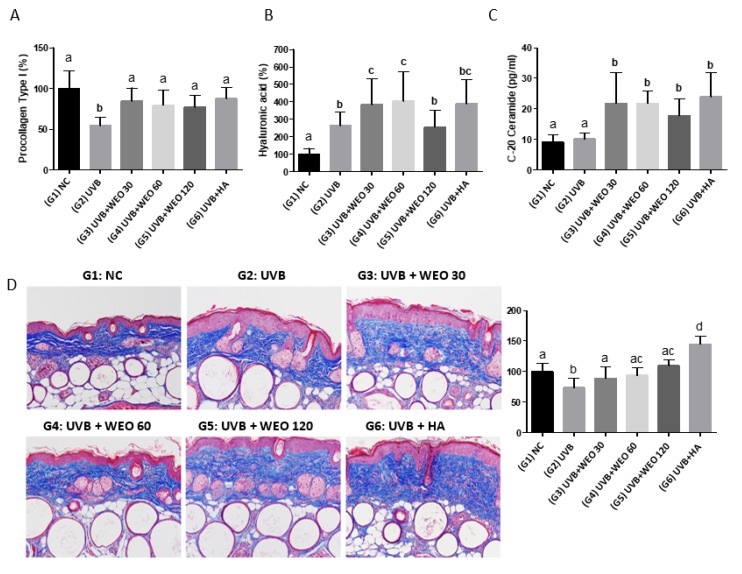
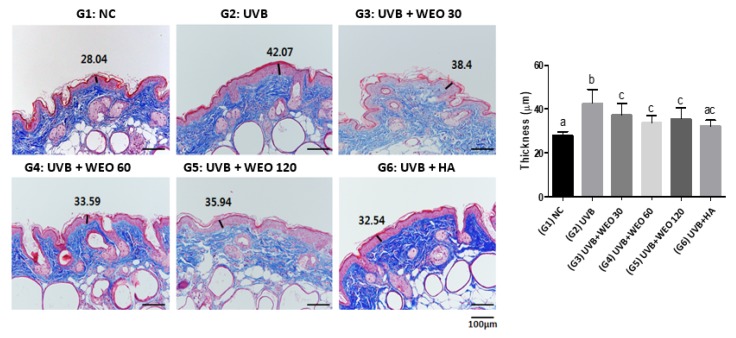
The efficacy of wheat extract oil (WEO), standardized to glucosylceramides, for protecting against ultraviolet B (UVB)-induced damage of skin barrier function was assessed using the SHK-1 hairless mouse model and two human skin cell lines, namely, CCD-986sk and HeCaT. The ability of repeated oral administration of 30, 60, and 120 mg of WEO/kg/day for 12 weeks to prevent skin damage of SKH-1 hairless mice induced by UVB irradiation was evaluated. The results demonstrated that UVB-induced water evaporation (transepidermal water loss, TEWL) was significantly decreased by WEO. Similarly, UVB-induced losses in moisture and skin elasticity were improved by WEO supplementation. WEO attenuated the tissue procollagen type I, hyaluronic acid (HA), and ceramide reductions induced by UVB treatment as well. Collagen concentrations in skin tissue were increased in the WEO-treated mice, while UVB-induced epidermal thickening was reduced. In vitro studies using HeCaT human keratinocytes confirmed increased HA and collagen synthesis in response to WEO treatment. This may occur via WEO suppression of matrix metallopeptidase-1 (MMP-1), since its induction by UVB treatment was diminished in treated CCD-986sk cells. Oral administration of WEO improves skin barrier function in UVB-irradiated mice by attenuating damage typically observed in photoaging. This research further clarifies the clinical benefits previously observed by dietary WEO consumption.
小麦胚芽油(WEO)经葡糖神经酰胺标准化,用于保护皮肤屏障功能免受紫外线 B(UVB)损伤的功效,使用 SHK-1 无毛小鼠模型和两种人体皮肤细胞系,即 CCD-986sk 和 HeCaT 进行了评估。评估了重复口服 30、60 和 120 mg/kg/天 WEO 12 周对预防 UVB 照射诱导的 SKH-1 无毛小鼠皮肤损伤的能力。结果表明,WEO 显著降低了由 UVB 诱导的水分蒸发(经表皮水分损失,TEWL)。同样,WEO 补充也改善了由 UVB 处理引起的水分和皮肤弹性的损失。WEO 还减弱了组织原胶原蛋白 I、透明质酸(HA)和神经酰胺减少的诱导。WEO 处理的小鼠皮肤组织中的胶原蛋白浓度增加,而 UVB 诱导的表皮增厚减少。使用 HeCaT 人角质形成细胞的体外研究证实,WEO 处理可增加 HA 和胶原蛋白的合成。这可能是由于 WEO 抑制基质金属蛋白酶-1(MMP-1)的诱导,因为其在经 CCD-986sk 细胞处理的 UVB 处理中被减弱。口服 WEO 通过减轻光老化中通常观察到的损伤来改善 UVB 照射小鼠的皮肤屏障功能。这项研究进一步阐明了以前通过饮食 WEO 摄入观察到的临床益处。