Rice Alistair, Cortes Ernesto, Lachowski Dariusz, Oertle Philipp, Matellan Carlos, Thorpe Stephen D, Ghose Ritobrata, Wang Haiyun, Lee David A, Plodinec Marija, Del Río Hernández Armando E
Cellular and Molecular Biomechanics Laboratory, Department of Bioengineering, Faculty of Engineering, Imperial College London, South Kensington Campus, London SW7 2AZ, UK.
Biozentrum and the Swiss Nanoscience Institute, University of Basel, 4056 Basel, Switzerland.
Cancers (Basel). 2020 Jan 25;12(2):289. doi: 10.3390/cancers12020289.
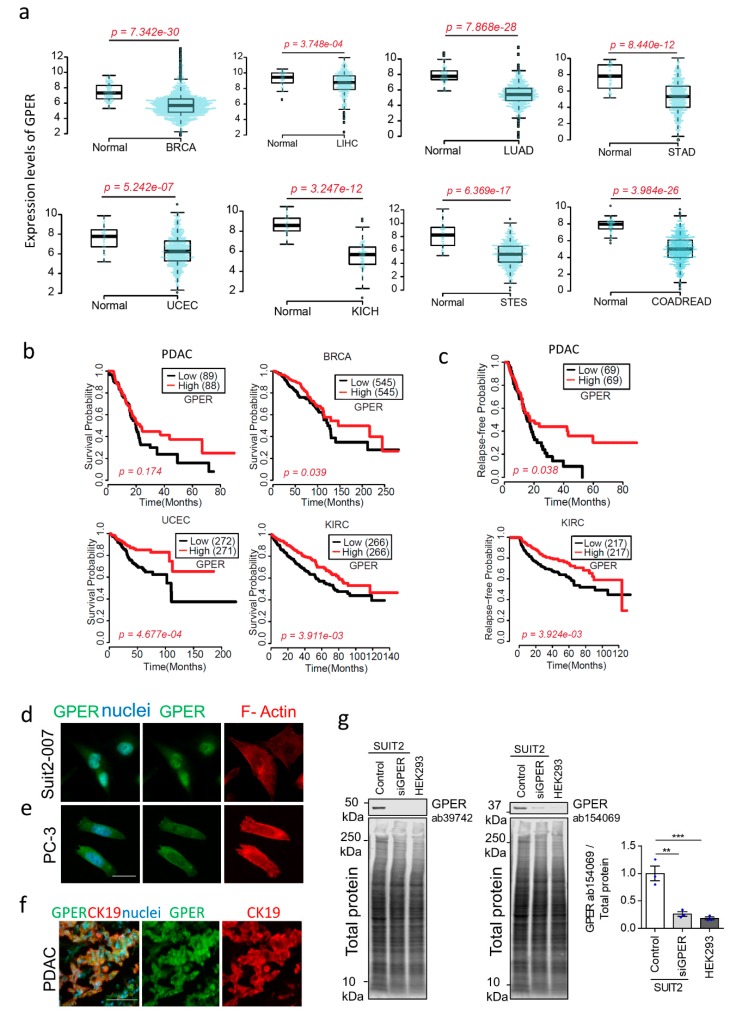
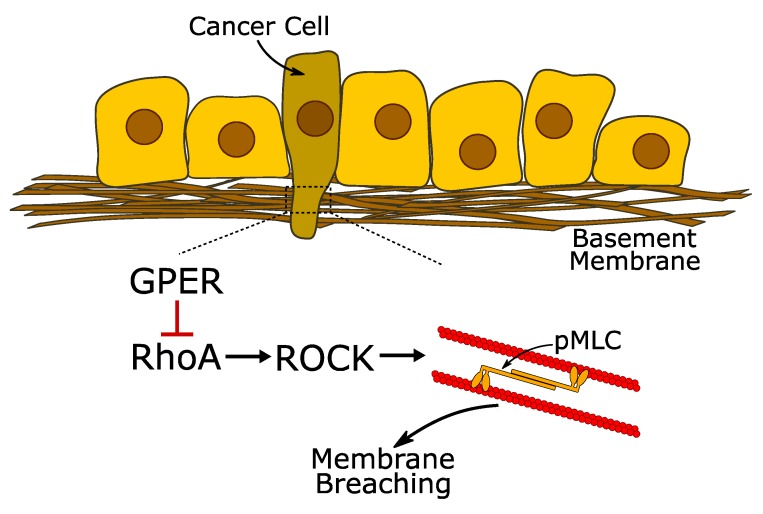
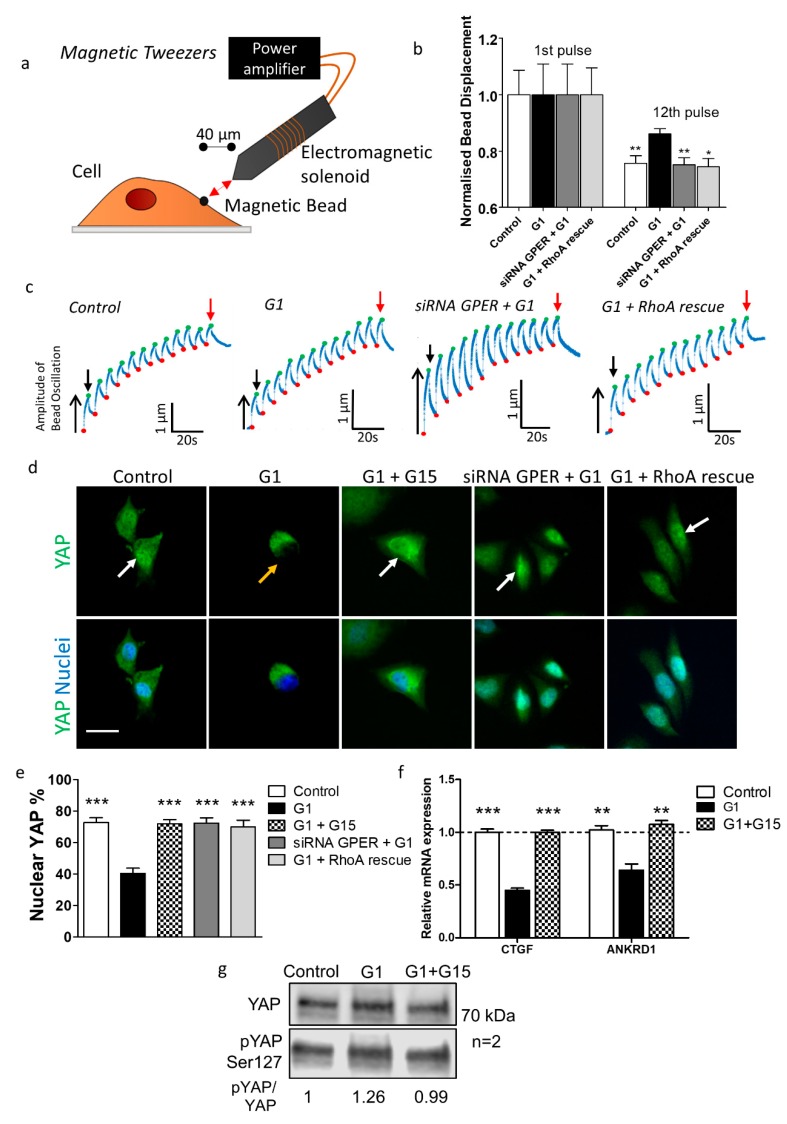
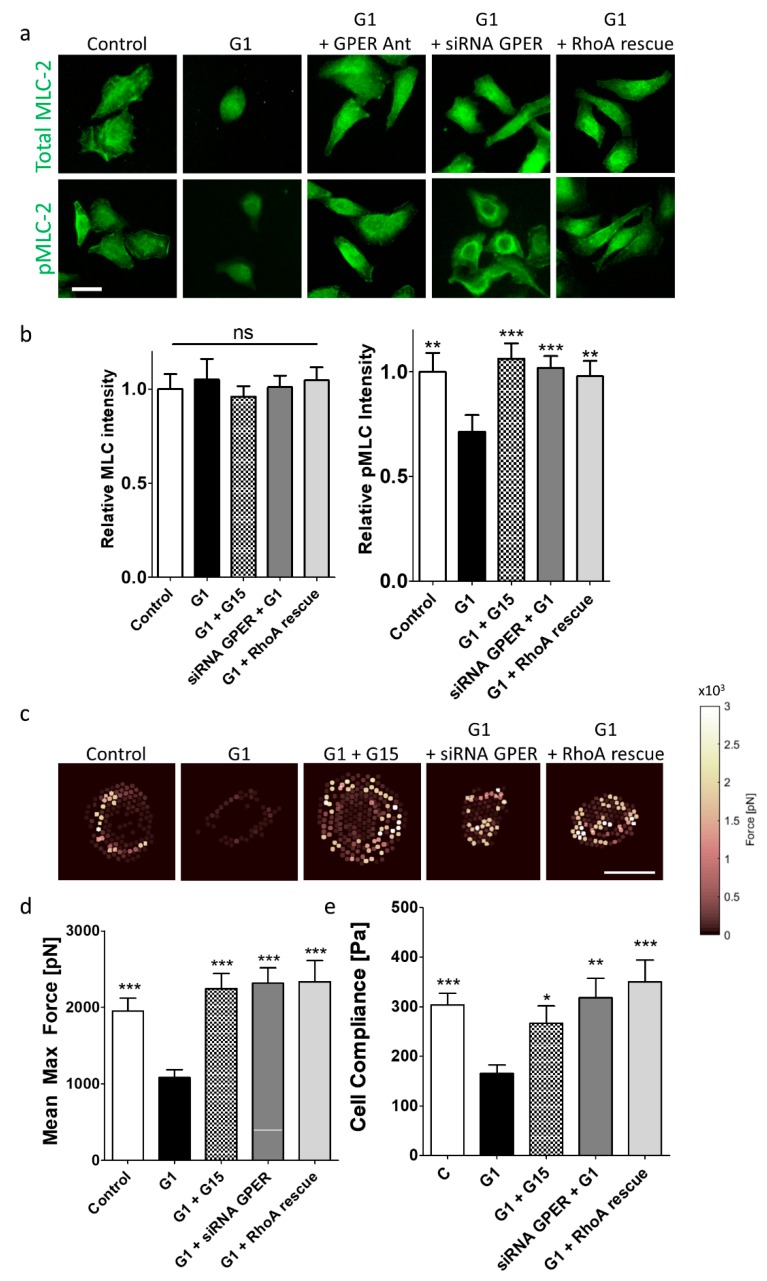
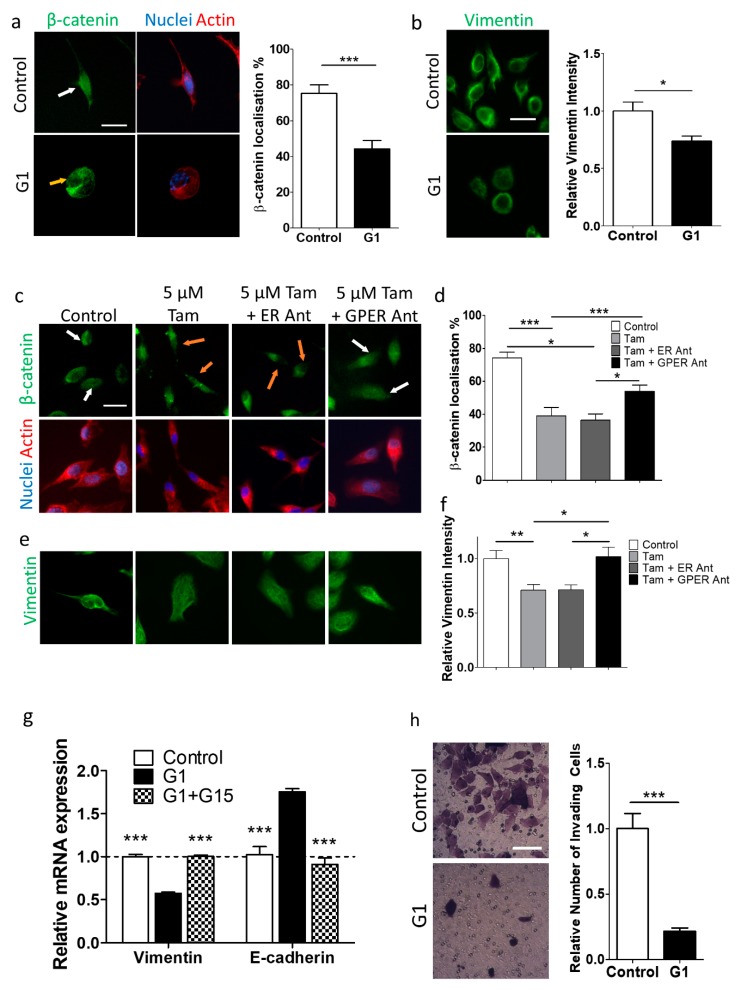
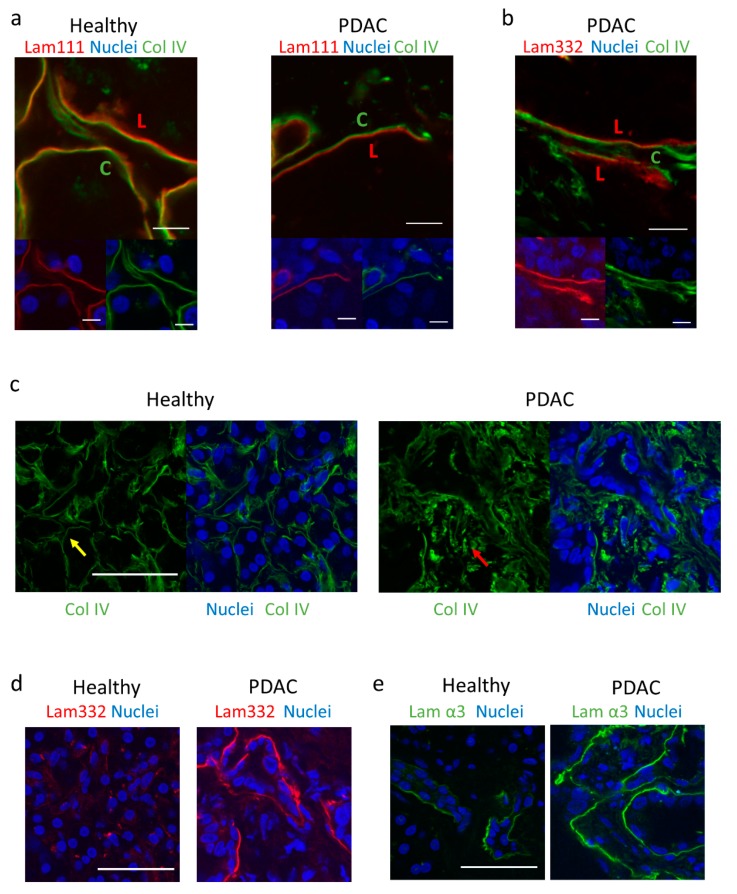
The invasive properties of cancer cells are intimately linked to their mechanical phenotype, which can be regulated by intracellular biochemical signalling. Cell contractility, induced by mechanotransduction of a stiff fibrotic matrix, and the epithelial-mesenchymal transition (EMT) promote invasion. Metastasis involves cells pushing through the basement membrane into the stroma-both of which are altered in composition with cancer progression. Agonists of the G protein-coupled oestrogen receptor (GPER), such as tamoxifen, have been largely used in the clinic, and interest in GPER, which is abundantly expressed in tissues, has greatly increased despite a lack of understanding regarding the mechanisms which promote its multiple effects. Here, we show that specific activation of GPER inhibits EMT, mechanotransduction and cell contractility in cancer cells via the GTPase Ras homolog family member A (RhoA). We further show that GPER activation inhibits invasion through an in vitro basement membrane mimic, similar in structure to the pancreatic basement membrane that we reveal as an asymmetric bilayer, which differs in composition between healthy and cancer patients.
癌细胞的侵袭特性与其机械表型密切相关,而机械表型可由细胞内生化信号传导调节。由僵硬的纤维化基质的机械转导诱导的细胞收缩性以及上皮-间质转化(EMT)促进侵袭。转移涉及细胞穿过基底膜进入基质,随着癌症进展,这两者的组成都会发生改变。G蛋白偶联雌激素受体(GPER)的激动剂,如他莫昔芬,已在临床上广泛使用,尽管对促进其多种作用的机制缺乏了解,但在组织中大量表达的GPER的研究兴趣大大增加。在这里,我们表明GPER的特异性激活通过GTP酶Ras同源家族成员A(RhoA)抑制癌细胞中的EMT、机械转导和细胞收缩性。我们进一步表明,GPER激活通过体外基底膜模拟物抑制侵袭,该模拟物在结构上类似于我们揭示为不对称双层的胰腺基底膜,其在健康患者和癌症患者之间的组成不同。