MRC Integrative Epidemiology Unit, Department of Population Health Sciences, University of Bristol, Bristol, UK.
Department of Population Health Sciences, Bristol Medical School, University of Bristol, Bristol, UK.
Int J Epidemiol. 2021 Jan 23;49(6):1972-1995. doi: 10.1093/ije/dyz272.
Systematic reviews of prenatal alcohol exposure effects generally only include conventional observational studies. However, estimates from such studies are prone to confounding and other biases.
To systematically review the evidence on the effects of prenatal alcohol exposure from randomized controlled trials (RCTs) and observational designs using alternative analytical approaches to improve causal inference.
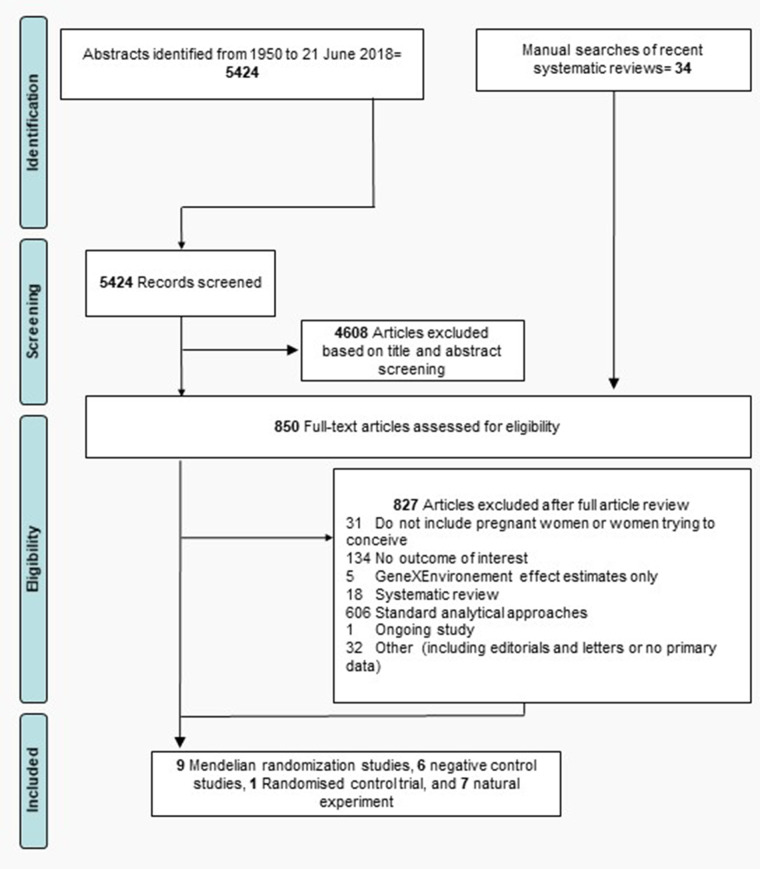
Medline, Embase, Web of Science, PsychINFO from inception to 21 June 2018. Manual searches of reference lists of retrieved papers.
RCTs of interventions to stop/reduce drinking in pregnancy and observational studies using alternative analytical methods (quasi-experimental studies e.g. Mendelian randomization and natural experiments, negative control comparisons) to determine the causal effects of prenatal alcohol exposure on pregnancy and longer-term offspring outcomes in human studies.
One reviewer extracted data and another checked extracted data. Risk of bias was assessed using customized risk of bias tools. A narrative synthesis of findings was carried out and a meta-analysis for one outcome.
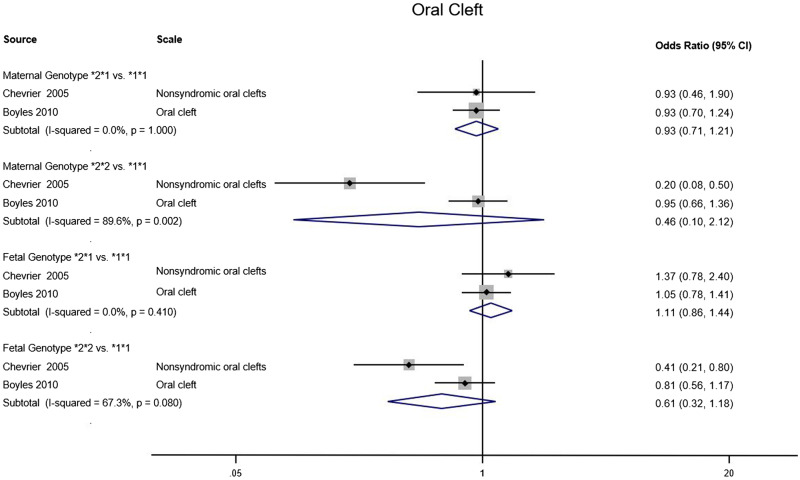
Twenty-three studies were included, representing five types of study design, including 1 RCT, 9 Mendelian randomization and 7 natural experiment studies, and reporting on over 30 outcomes. One study design-outcome combination included enough independent results to meta-analyse. Based on evidence from several studies, we found a likely causal detrimental role of prenatal alcohol exposure on cognitive outcomes, and weaker evidence for a role in low birthweight.
None of the included studies was judged to be at low risk of bias in all domains, results should therefore be interpreted with caution.
This study is registered with PROSPERO, registration number CRD42015015941.
系统评价产前酒精暴露效应通常只包括常规观察性研究。然而,这些研究的估计值容易受到混杂和其他偏倚的影响。
系统评价来自随机对照试验(RCT)和使用替代分析方法的观察性设计的产前酒精暴露效应的证据,以改善因果推断。
从建库到 2018 年 6 月 21 日,检索 Medline、Embase、Web of Science 和 PsychINFO。检索检索到的文献的参考文献列表的手动搜索。
RCT 干预停止/减少妊娠期间饮酒和使用替代分析方法(准实验研究,例如孟德尔随机化和自然实验、负对照比较)的观察性研究,以确定产前酒精暴露对人类研究中妊娠和长期后代结局的因果影响。
一位评审员提取数据,另一位评审员核对提取的数据。使用定制的偏倚风险工具评估偏倚风险。对研究结果进行叙述性综合,并对一项结果进行荟萃分析。
共纳入 23 项研究,代表五种研究设计类型,包括 1 项 RCT、9 项孟德尔随机化和 7 项自然实验研究,报告了 30 多个结局。一种研究设计-结局组合包含足够的独立结果进行荟萃分析。基于几项研究的证据,我们发现产前酒精暴露对认知结果可能存在有害的因果作用,而对低出生体重的作用较弱。
没有一项纳入的研究在所有领域都被认为是低偏倚风险的,因此结果应谨慎解释。
本研究在 PROSPERO 注册,注册号为 CRD42015015941。