Khalil Noha, Fikry Sahar, Salama Osama
Faculty of Pharmaceutical Sciences and Pharmaceutical Industries, Future University in Egypt, Cairo, 11835, Egypt.
Faculty of Applied Health Sciences Technology, Pharos University in Alexandria, Alexandria, 21311, Egypt.
AMB Express. 2020 Jan 28;10(1):21. doi: 10.1186/s13568-020-0958-3.
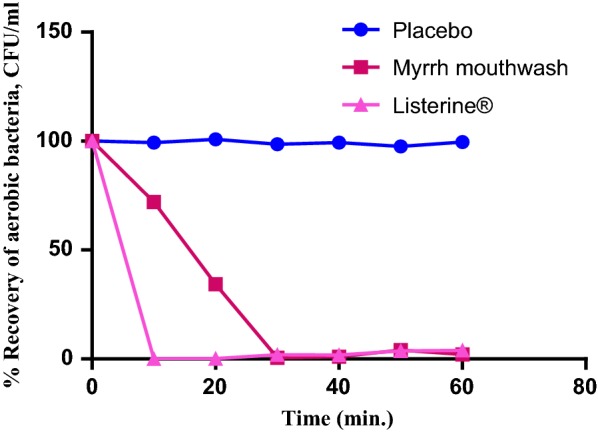
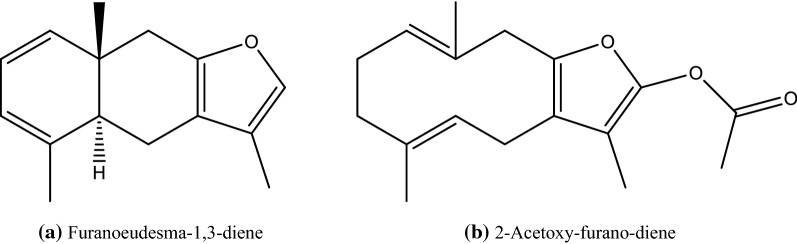
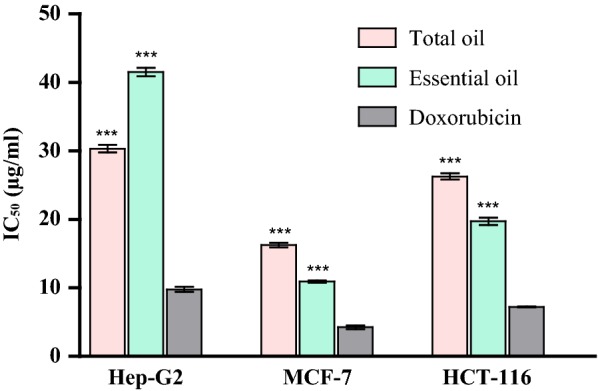
Myrrh is the resinous exudate obtained by the incision in Commiphora molmol trees (Family Burseraceae). The bactericidal activity of its hexane extract was compared to its essential oil (MEO) using viable count technique against Staphylococcus aureus (S. aureus) and Pseudomonas aeruginosa (Ps. aeruginosa). MEO exhibited a better activity with > 99.999% killing of both tested strains after 2 h contact time. MEO was tested using the same technique against four multidrug resistant isolates: S. aureus (MRSA, sputum), Escherichia coli (E. coli, urine), Ps. aeruginosa (wound) and Klebsiella pneumonia (K. pneumonia, sputum). Highest bactericidal activity was observed against Ps. aeruginosa while lowest was against K. pneumonia (99.59 and 54.04% killing, respectively after 2 h contact time). A cream and mouthwash were formulated using 5% v/v MEO. The cream showed a better activity against Ps. aeruginosa than S. aureus (95.11 and 86.76% killing, respectively after 2 h contact time). The in vitro treatment of ca 10 CFU/ml S. aureus cells suspended in 10% saliva with the mouthwash produced ca 46% killing within the first 15 min reaching ca 99.999% after 30 min. Cytotoxic studies of both the essential oil and hexane extract on human liver cancer (Hep G2), human breast cancer (MCF-7) and colon cancer cell lines (HCT-116) revealed a promising in vitro activity. Highest activity was recorded for the essential oil on MCF-7 with IC 10.93 ± 0.32 μg/ml. GC/MS analysis allowed the identification of 17 and 9 compounds representing 92.01 and 99.99% of the hexane extract and essential oil, respectively. Furano-eudesma-1,3-diene (15.99%) and 2-acetoxy-furano-diene (26.82%) were the major identified compounds in the hexane extract and essential oil, respectively. These results indicate that Myrrh essential oil is a promising antibacterial and cytotoxic agent that can be formulated in suitable dosage forms.
没药是通过在没药树(橄榄科)上切口获得的树脂状渗出物。使用活菌计数技术,将其己烷提取物的杀菌活性与其精油(没药精油)针对金黄色葡萄球菌和铜绿假单胞菌进行了比较。没药精油表现出更好的活性,在接触2小时后对两种测试菌株的杀灭率均>99.999%。使用相同技术对四种多重耐药菌株进行了测试:金黄色葡萄球菌(耐甲氧西林金黄色葡萄球菌,痰液)、大肠杆菌(尿液)、铜绿假单胞菌(伤口)和肺炎克雷伯菌(痰液)。观察到对铜绿假单胞菌的杀菌活性最高,而对肺炎克雷伯菌的活性最低(接触2小时后杀灭率分别为99.59%和54.04%)。使用5%(v/v)的没药精油配制了一种乳膏和一种漱口水。该乳膏对铜绿假单胞菌的活性比对金黄色葡萄球菌更好(接触2小时后杀灭率分别为95.11%和86.76%)。用漱口水对悬浮在10%唾液中的约10 CFU/ml金黄色葡萄球菌细胞进行体外处理,在最初15分钟内产生约46%的杀灭率,30分钟后达到约99.999%。对没药精油和己烷提取物对人肝癌(Hep G2)、人乳腺癌(MCF-7)和结肠癌细胞系(HCT-116)的细胞毒性研究显示出有前景的体外活性。没药精油对MCF-7的活性最高,IC50为10.93±0.32μg/ml。气相色谱/质谱分析分别鉴定出己烷提取物和精油中的17种和9种化合物,分别占己烷提取物和精油的92.01%和99.99%。己烷提取物和精油中主要鉴定出的化合物分别是呋喃桉叶-1,3-二烯(15.99%)和2-乙酰氧基呋喃二烯(26.82%)。这些结果表明,没药精油是一种有前景的抗菌和细胞毒性剂,可以配制成合适的剂型。