China National Health Development Research Centre, National Health Commission of China; WHO Collaborating Centre for Health Systems Strengthening, Beijing, 100044, China.
National Institute of Parasitic Diseases at Chinese Center for Diseases Control and Prevention; Chinese Center for Tropical Diseases Research, Shanghai, 200025, China.
Infect Dis Poverty. 2020 Jan 30;9(1):11. doi: 10.1186/s40249-020-0626-5.
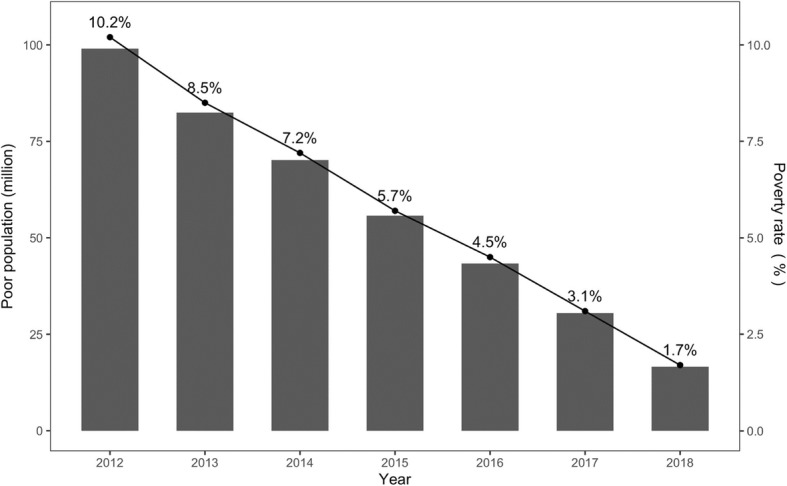
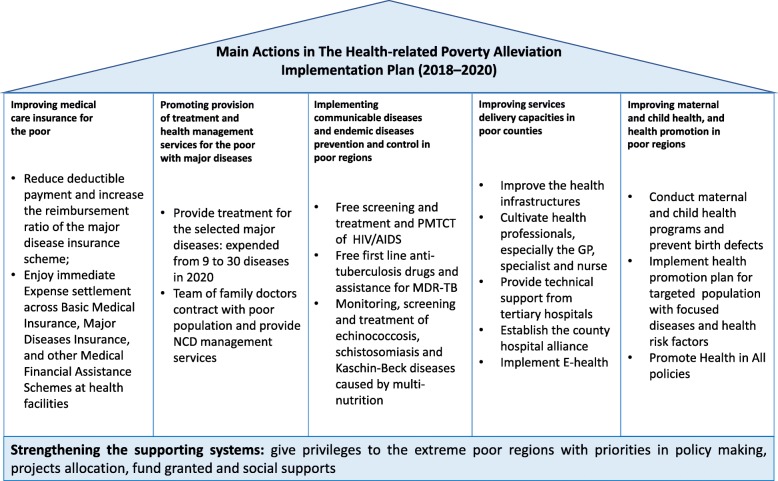
Marking the end of the five-year programme initiated by the Chinese Government to lift more than 70 million people out of poverty, the year 2020 is a milestone. Poverty alleviation has moved strongly forward in China and the major health indicators are now better than the average of all middle- and high-income countries. However, the dual burden of infectious and chronic diseases remains a challenge with respect to achieving the health target in the United Nations 2030 Agenda for sustainable development goals (SDGs). In 2015, about 44% of the poor population in China were impoverished by illness but already in 2018, multi-sectoral actions delivered by the Health-related Poverty Alleviation programme had reduced the number almost by half. In the past three years 15 million poor people (98% of the poor population) with infectious and chronic diseases had been treated and taken care of thanks to financial support through multiple health insurance schemes and other governmental subsidies. This article discusses the lessons learnt with regard to health-related poverty alleviation in China with special reference to those still remaining impoverished by illness. Consolidation of the achievements reached and provision of basic needs to those still disadvantaged and in poor health will require a major improvement of accessibility to, and affordability of, health services. The next step towards enhanced productivity and better living conditions will involve upgrading of the capacity of health professionals in the poor regions, promotion of coherent efforts in health-related poverty alleviation and rural revitalization measures. As an additional measure, data monitoring and research on health poverty alleviation should be strengthened as they are essential to generate the evidence and knowledge needed to support the move in the direction envisioned by the SDGs, and the new Healthy China 2030 programme.
标志着中国政府启动的为期五年的脱贫计划的结束,2020 年是一个里程碑。中国的减贫工作取得了巨大进展,主要健康指标现在优于所有中高收入国家的平均水平。然而,在实现联合国 2030 年可持续发展目标(SDGs)中的健康目标方面,传染病和慢性病的双重负担仍然是一个挑战。2015 年,中国约有 44%的贫困人口因病致贫,但到 2018 年,健康扶贫计划的多部门行动已将贫困人口数量减少了近一半。在过去的三年里,通过多种医疗保险计划和其他政府补贴,已经为 1500 万患有传染病和慢性病的贫困人口(贫困人口的 98%)提供了治疗和照顾。本文讨论了中国在健康扶贫方面的经验教训,特别是那些仍然因病致贫的人。要巩固所取得的成果,为那些仍然处于劣势和健康状况不佳的人提供基本需求,就需要大大改善卫生服务的可及性和负担能力。迈向提高生产力和改善生活条件的下一步将涉及提高贫困地区卫生专业人员的能力,促进健康扶贫和农村振兴措施的协调努力。作为一项额外措施,应加强健康扶贫数据监测和研究,因为这对于为支持可持续发展目标所设想的方向和新的健康中国 2030 计划提供所需的证据和知识至关重要。