Berding Kirsten, Donovan Sharon M
Division of Nutritional Sciences, University of Illinois, Urbana, IL, United States.
Department of Food Science and Human Nutrition, University of Illinois, Urbana, IL, United States.
Front Nutr. 2020 Jan 10;6:193. doi: 10.3389/fnut.2019.00193. eCollection 2019.
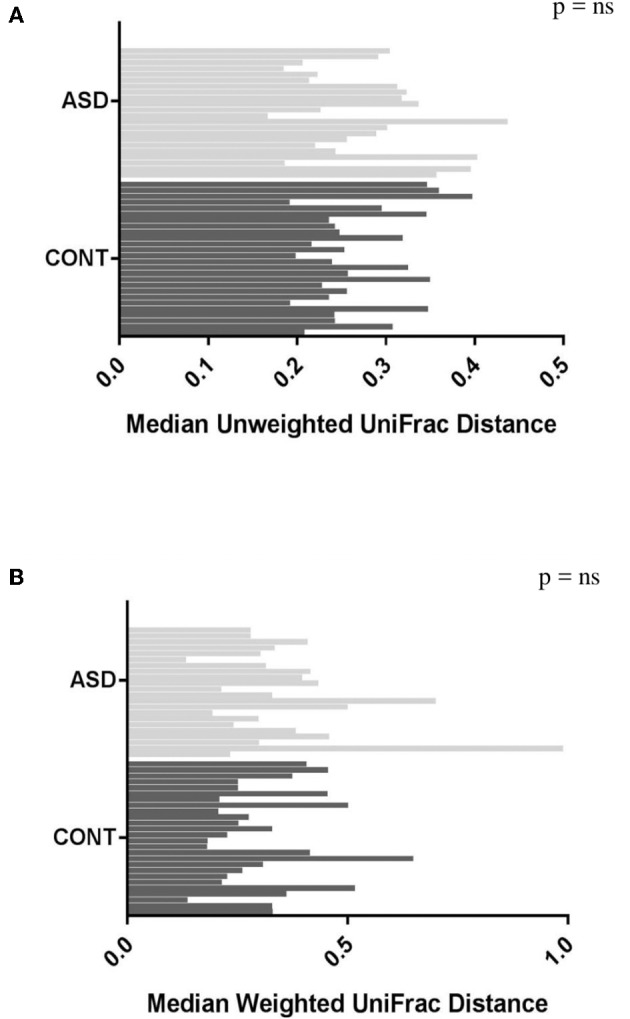
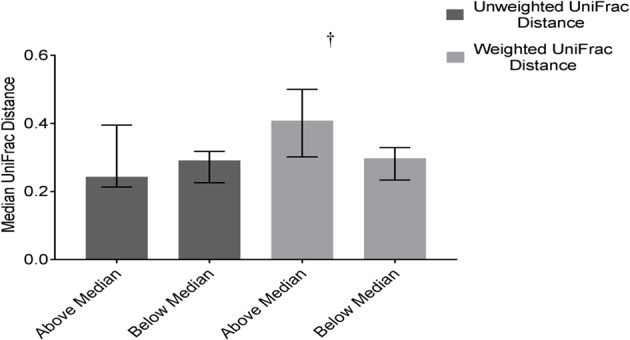
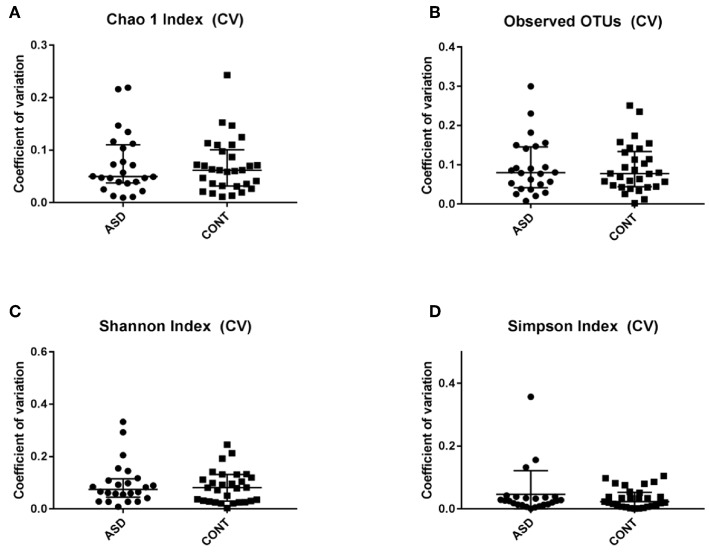
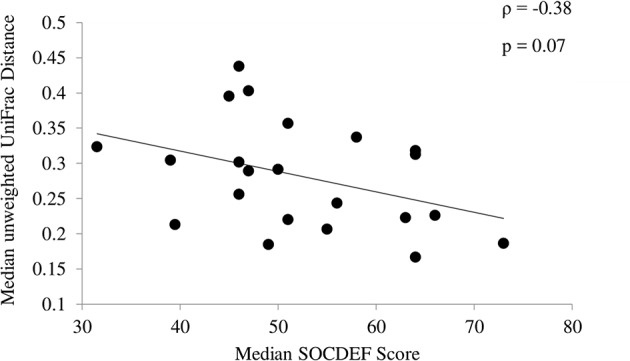
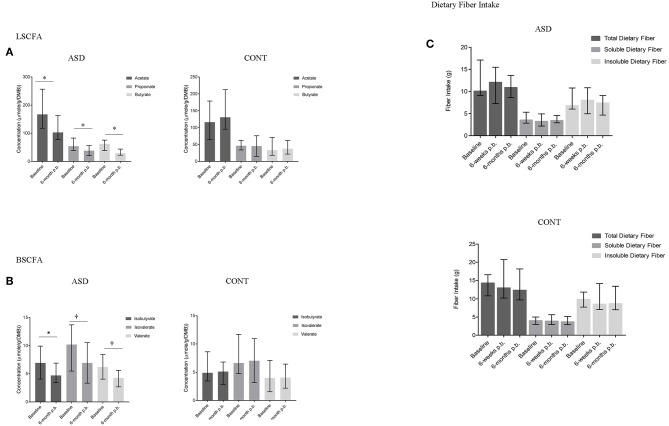
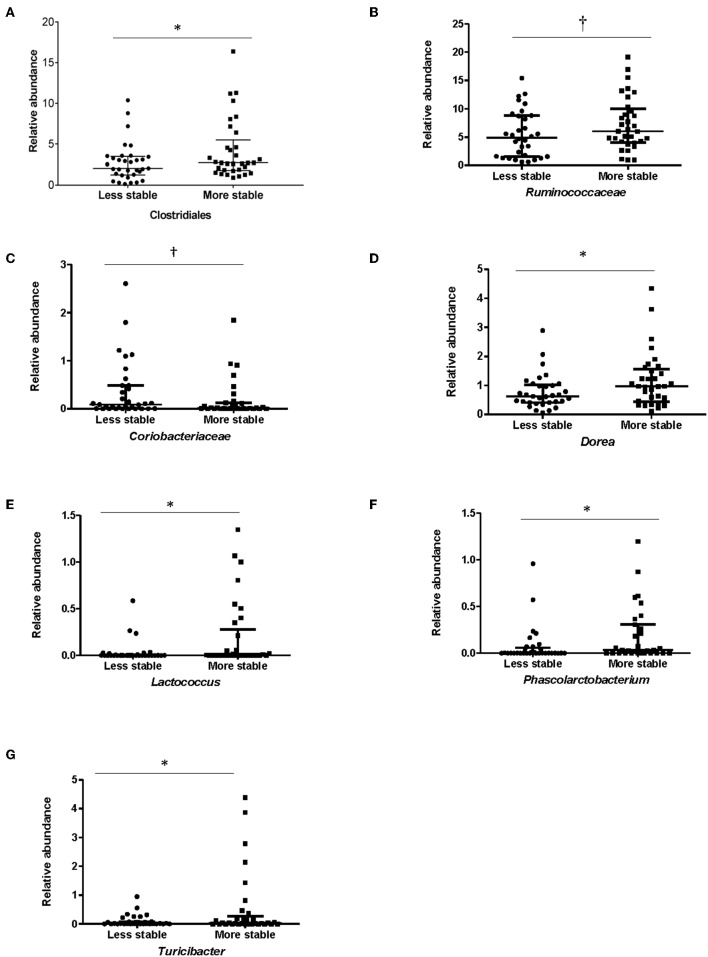
Environmental factors such as diet are known influencers on gastrointestinal (GI) microbiota variability and some diseases are associated with microbial stability. Whether microbial variability is related to symptoms of Autism Spectrum Disorder (ASD) and how diet impacts microbial stability in ASD is unknown. Herein, temporal variability in stool microbiota in relation to dietary habits in 2-7 years-old children with ASD (ASD, = 26) and unaffected controls (CONT, = 32) was investigated. Fecal samples were collected at baseline, 6-weeks and 6-months. Bacterial composition was assessed using 16S rRNA sequencing. Short fatty acid (SCFA) concentrations were analyzed by gas chromatography. Nutrient intake was assessed using a 3-day food diary and dietary patterns (DP) were empirically derived from a food frequency questionnaire. Social deficit scores (SOCDEF) were assessed using the Pervasive Developmental Disorder Behavior Inventory-Screening Version (PDDBI-SV). GI symptoms were assessed using the GI severity index. Overall, temporal variability in microbial structure, and membership did not differ between the groups. In children with ASD, abundances of , Streptophyta, , varied significantly, and concentrations of all SCFAs decreased over time. Variability in community membership was negatively correlated with median SOCDEF scores. Additionally, Clostridiales, , and were components of a more stable microbiota community in children with ASD. DP1, characterized by vegetables, starchy vegetables, legumes, nuts and seeds, fruit, grains, juice and dairy, was associated with changes in species diversity, abundance of , and and concentrations of propionate, butyrate, isobutyrate and isovalerate in children with ASD. DP2 characterized by fried, protein and starchy foods, "Kid's meals," condiments, and snacks was associated with variations in microbiota structure, abundance of , and and changes in all SCFA concentrations. However, no association between microbial stability and SOCDEF or GI severity scores were observed. In conclusion, microbiota composition varies over time in children with ASD, might be related to social deficit scores and can be impacted by diet. Future studies investigating the physiological effect of the changes in specific microbial taxa and metabolites are needed to delineate the impact on ASD symptomology.
饮食等环境因素是已知的影响胃肠道(GI)微生物群变异性的因素,一些疾病与微生物稳定性有关。微生物变异性是否与自闭症谱系障碍(ASD)的症状相关,以及饮食如何影响ASD中的微生物稳定性尚不清楚。在此,研究了2至7岁ASD儿童(ASD,n = 26)和未受影响的对照组(CONT,n = 32)粪便微生物群的时间变异性与饮食习惯的关系。在基线、6周和6个月时收集粪便样本。使用16S rRNA测序评估细菌组成。通过气相色谱分析短链脂肪酸(SCFA)浓度。使用3天食物日记评估营养摄入,并根据食物频率问卷经验性得出饮食模式(DP)。使用广泛性发育障碍行为量表筛查版(PDDBI-SV)评估社会缺陷评分(SOCDEF)。使用GI严重指数评估GI症状。总体而言,两组之间微生物结构和成员的时间变异性没有差异。在ASD儿童中,绿藻门、厚壁菌门、放线菌门的丰度有显著变化,所有SCFA的浓度随时间下降。群落成员的变异性与SOCDEF中位数评分呈负相关。此外,梭菌目、双歧杆菌属和瘤胃球菌属是ASD儿童中更稳定的微生物群落的组成部分。以蔬菜、淀粉类蔬菜、豆类、坚果和种子、水果、谷物、果汁和乳制品为特征的DP1与ASD儿童的物种多样性变化、厚壁菌门、放线菌门的丰度以及丙酸、丁酸、异丁酸和异戊酸的浓度有关。以油炸食品、蛋白质和淀粉类食物、“儿童餐”、调味品和零食为特征的DP2与微生物群结构变化、厚壁菌门、放线菌门的丰度以及所有SCFA浓度的变化有关。然而,未观察到微生物稳定性与SOCDEF或GI严重评分之间的关联。总之,ASD儿童的微生物群组成随时间变化,可能与社会缺陷评分有关,并且可能受到饮食的影响。需要进一步研究特定微生物分类群和代谢物变化的生理效应,以阐明对ASD症状学的影响。