Department of Neurobiology, University of Chicago, Chicago, Illinois, United States of America.
Committee on Computational Neuroscience, University of Chicago, Chicago, Illinois, United States of America.
PLoS Comput Biol. 2020 Jan 30;16(1):e1007591. doi: 10.1371/journal.pcbi.1007591. eCollection 2020 Jan.
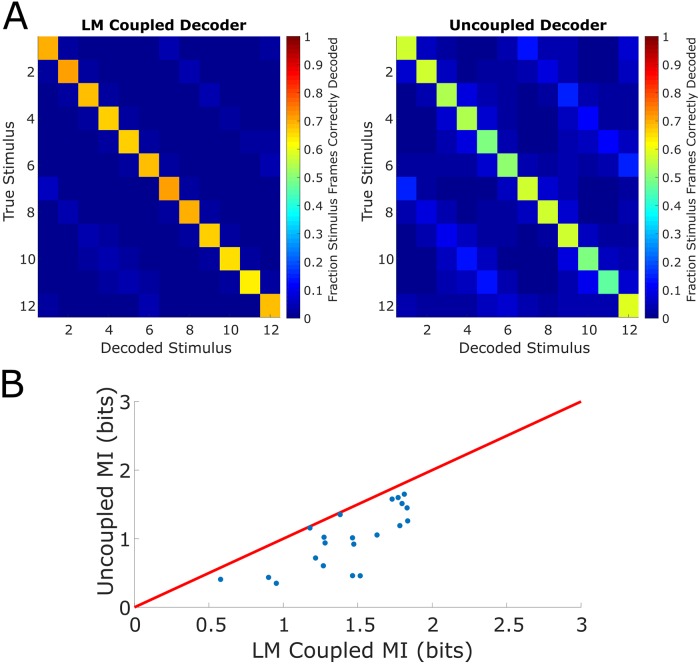
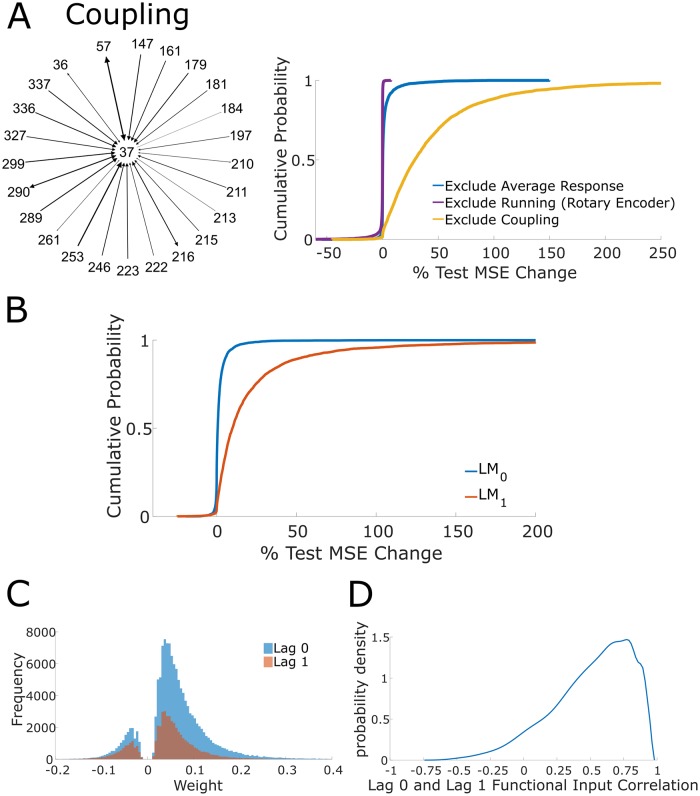
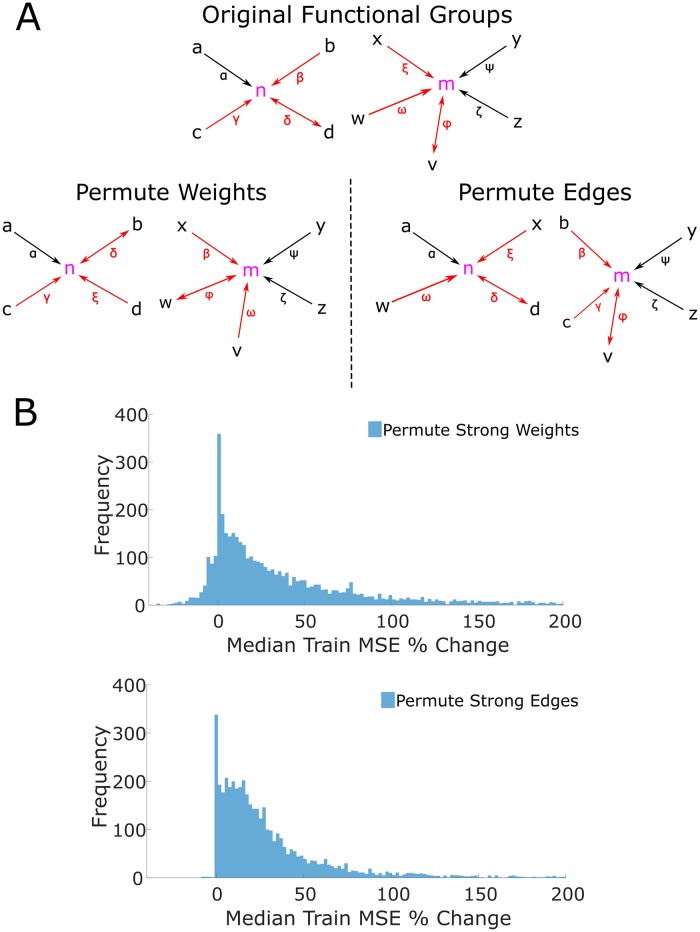
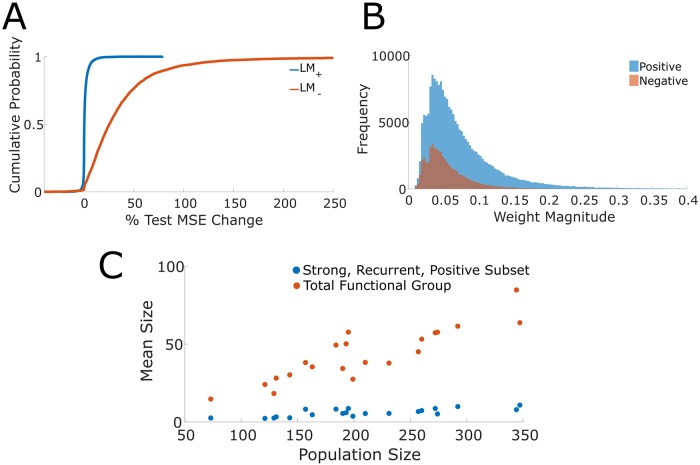
To develop a complete description of sensory encoding, it is necessary to account for trial-to-trial variability in cortical neurons. Using a linear model with terms corresponding to the visual stimulus, mouse running speed, and experimentally measured neuronal correlations, we modeled short term dynamics of L2/3 murine visual cortical neurons to evaluate the relative importance of each factor to neuronal variability within single trials. We find single trial predictions improve most when conditioning on the experimentally measured local correlations in comparison to predictions based on the stimulus or running speed. Specifically, accurate predictions are driven by positively co-varying and synchronously active functional groups of neurons. Including functional groups in the model enhances decoding accuracy of sensory information compared to a model that assumes neuronal independence. Functional groups, in encoding and decoding frameworks, provide an operational definition of Hebbian assemblies in which local correlations largely explain neuronal responses on individual trials.
为了对感觉编码进行完整描述,有必要解释大脑皮层神经元的试验间变异性。通过使用包含视觉刺激、老鼠奔跑速度和实验测量神经元相关性等项的线性模型,我们对 L2/3 鼠视觉皮层神经元的短期动力学进行建模,以评估每个因素对单个试验中神经元变异性的相对重要性。与基于刺激或奔跑速度的预测相比,我们发现当基于实验测量的局部相关性进行条件预测时,单次试验的预测会得到最大改善。具体而言,由正协变和同步激活的神经元功能群驱动准确的预测。与假设神经元独立性的模型相比,在模型中包含功能群可提高对感觉信息的解码准确性。在编码和解码框架中,功能群为赫布集合提供了一个操作定义,其中局部相关性在很大程度上解释了单个试验中的神经元反应。