Key Laboratory of Tropical and Subtropical Fishery Resource Application and Cultivation, Ministry of Agriculture and Rural Affairs, Pearl River Fisheries Research Institute, Chinese Academy of Fishery Science, No. 1, Xingyu Road, Liwan District, Guangzhou City, 510380, China.
Shanghai Ocean University, College of Fisheries and Life Science, Shanghai, 201306, China.
BMC Genomics. 2020 Jan 31;21(1):110. doi: 10.1186/s12864-020-6512-5.
Osmotic stress is a widespread phenomenon in aquatic animal. The ability to cope with salinity stress and alkaline stress is quite important for the survival of aquatic species under natural conditions. Tilapia is an important commercial euryhaline fish species. What's more tilapia is a good experimental material for osmotic stress regulation research, but the molecular regulation mechanism underlying different osmotic pressure of tilapia is still unexplored.
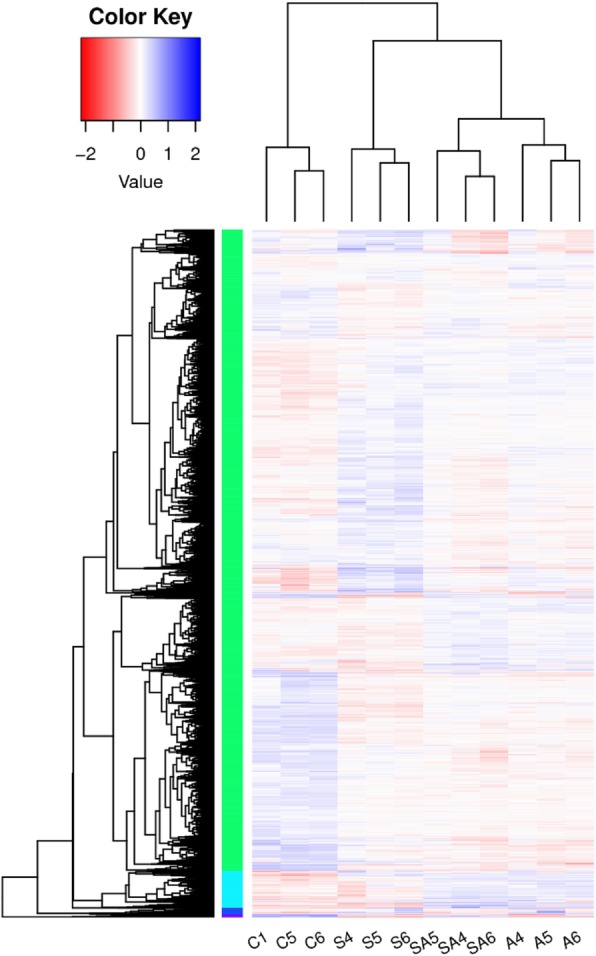
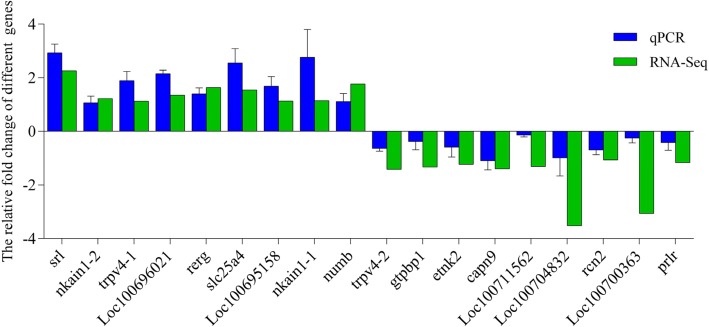
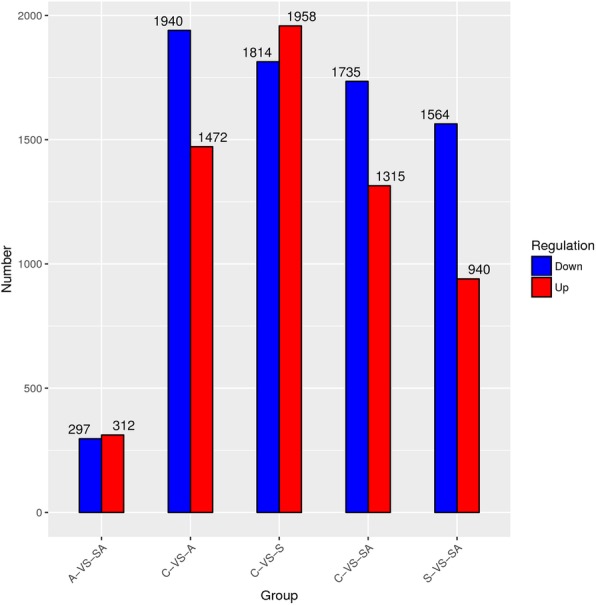
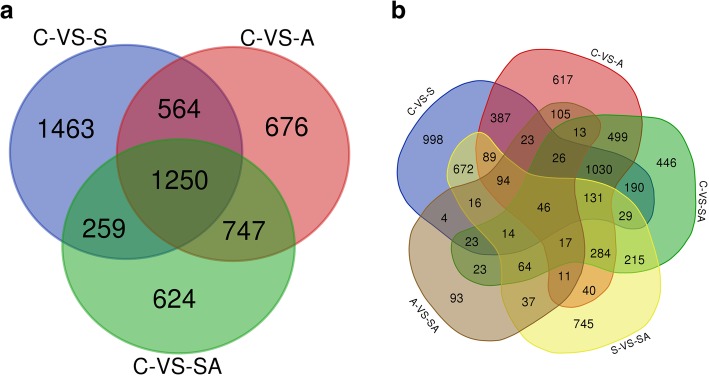
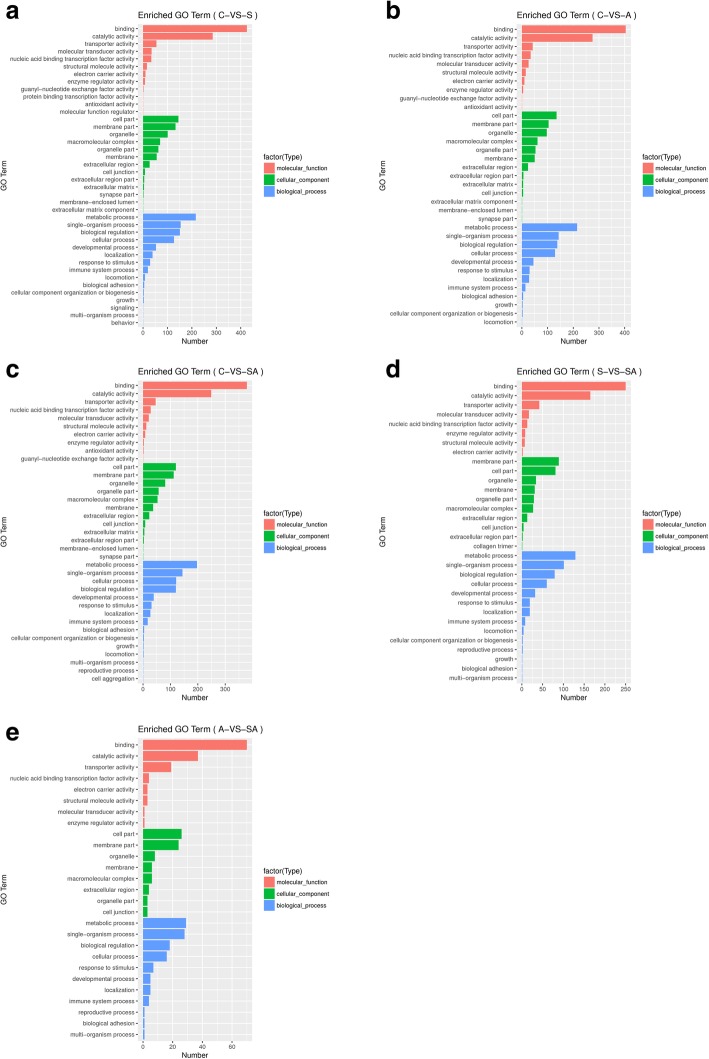
To elucidate the osmoregulation strategy behind its hyper salinity, alkalinity and salinity-alkalinity stress of tilapia, the transcriptomes of gills in hybrid tilapia (Oreochromis mossambicus ♀ × O. urolepis hornorum ♂) under salinity stress (S: 25‰), alkalinity stress(A: 4‰) and salinity-alkalinity stress (SA: S: 15‰, A: 4‰) were sequenced using deep-sequencing platform Illumina/HiSeq-2000 and differential expression genes (DEGs) were identified. A total of 1958, 1472 and 1315 upregulated and 1824, 1940 and 1735 downregulated genes (P-value < 0.05) were identified in the salt stress, alkali stress and saline-alkali stress groups, respectively, compared with those in the control group. Furthermore, Kyoto Encyclopedia of Genes and Genomes pathway analyses were conducted in the significant different expression genes. In all significant DEGs, some of the typical genes involved in osmoregulation, including carbonic anhydrase (CA), calcium/calmodulin-dependent protein kinase (CaM kinase) II (CAMK2), aquaporin-1(AQP1), sodium bicarbonate cotransporter (SLC4A4/NBC1), chloride channel 2(CLCN2), sodium/potassium/chloride transporter (SLC12A2 / NKCC1) and other osmoregulation genes were also identified. RNA-seq results were validated with quantitative real-time PCR (qPCR), the 17 random selected genes showed a consistent direction in both RNA-Seq and qPCR analysis, demonstrated that the results of RNA-seq were reliable.
The present results would be helpful to elucidate the osmoregulation mechanism of aquatic animals adapting to saline-alkali challenge. This study provides a global overview of gene expression patterns and pathways that related to osmoregulation in hybrid tilapia, and could contribute to a better understanding of the molecular regulation mechanism in different osmotic stresses.
渗透胁迫是水生动物中普遍存在的现象。水生物种在自然条件下应对盐度胁迫和碱性胁迫的能力非常重要。罗非鱼是一种重要的商业广盐性鱼类。此外,罗非鱼还是渗透压调节研究的良好实验材料,但罗非鱼不同渗透压的分子调节机制仍未得到探索。
为了阐明罗非鱼高盐度、高碱性和盐碱性胁迫下的渗透压调节策略,我们使用高通量测序平台 Illumina/HiSeq-2000 对盐度胁迫(S:25‰)、碱性胁迫(A:4‰)和盐碱性胁迫(SA:S:15‰,A:4‰)下杂交罗非鱼(奥利亚罗非鱼♀×尼罗罗非鱼♂)鳃组织的转录组进行了测序,并鉴定了差异表达基因(DEGs)。与对照组相比,盐胁迫、碱胁迫和盐碱性胁迫组分别有 1958、1472 和 1315 个上调基因和 1824、1940 和 1735 个下调基因(P 值<0.05)。此外,我们对显著差异表达基因进行了京都基因与基因组百科全书(Kyoto Encyclopedia of Genes and Genomes,KEGG)通路分析。在所有显著差异表达基因中,一些参与渗透压调节的典型基因,包括碳酸酐酶(CA)、钙/钙调蛋白依赖性蛋白激酶 II(CAMK2)、水通道蛋白 1(AQP1)、碳酸氢盐共转运蛋白(SLC4A4/NBC1)、氯离子通道 2(CLCN2)、钠/钾/氯转运蛋白(SLC12A2/NKCC1)和其他渗透压调节基因也被鉴定出来。用实时荧光定量 PCR(qPCR)验证 RNA-seq 结果,随机选择的 17 个基因在 RNA-seq 和 qPCR 分析中表现出一致的方向,表明 RNA-seq 结果是可靠的。
本研究结果有助于阐明水生动物适应盐碱性胁迫的渗透压调节机制。本研究提供了杂交罗非鱼渗透压调节相关基因表达模式和通路的全局概述,有助于更好地理解不同渗透压胁迫下的分子调节机制。