Ford James D, Labbé Jolène, Flynn Melanie, Araos Malcolm
1McGill University, Montreal, QC Canada.
2Priestley International Centre for Climate, University of Leeds, Leeds, LS2 9JT UK.
Clim Change. 2017;145(1):85-100. doi: 10.1007/s10584-017-2071-4. Epub 2017 Sep 13.
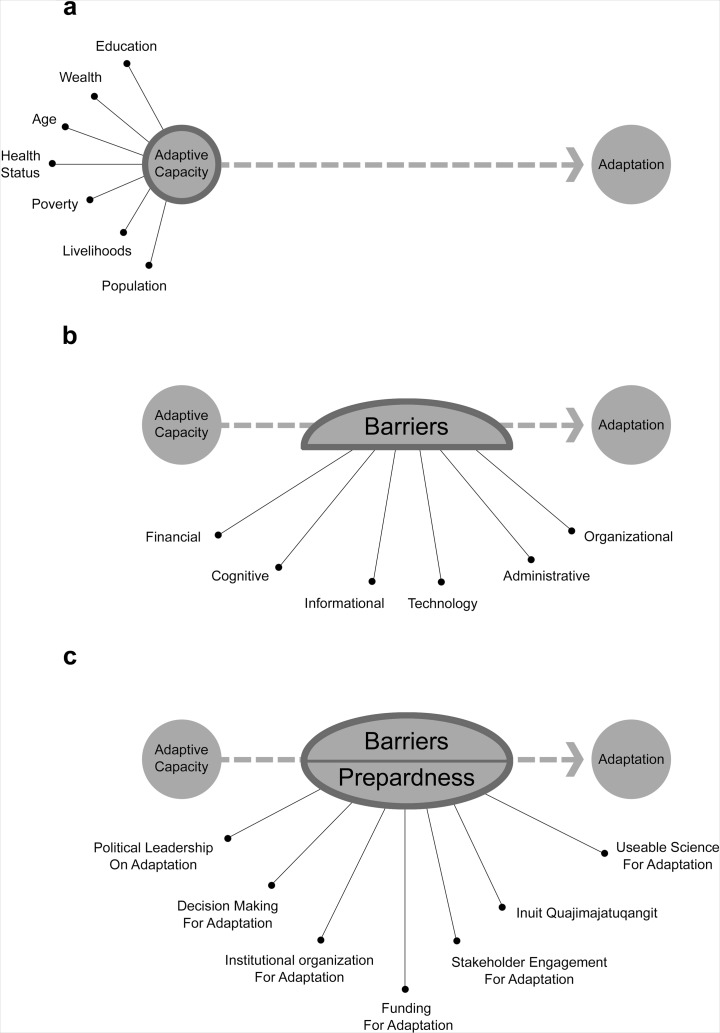
There is limited knowledge on institutional factors constraining and enabling climate change adaptation in Arctic regions, or the overall readiness of governing bodies and communities to develop, implement, and promote adaptation. This paper examines the preparedness of different levels of government to adapt in the Canadian Arctic territory of Nunavut, drawing upon semi-structured interviews with government personnel and organizations involved in adaptation. In the Government of Nunavut, there have been notable developments around adaptation planning and examples of adaptation champions, but readiness for adaptation is challenged by a number of factors including the existence of pressing socio-economic problems, and institutional and governmental barriers. Federally, there is evidence of high-level leadership on adaptation, the creation of adaptation programs, and allocation of funds for adaptation, although the focus has been mostly on researching adaptation options as opposed to supporting actual actions or policy change. The 2016 Pan-Canadian Framework on Clean Growth and Climate Change, and increasing emphasis on climate change federally and in the Government of Nunavut, offer opportunities for advancing adaptation, but concrete steps are needed to ensure readiness is enhanced.
关于制约和促进北极地区气候变化适应的制度因素,或者治理机构和社区制定、实施和推动适应措施的整体准备情况,人们了解有限。本文通过对参与适应工作的政府人员和组织进行半结构化访谈,考察了加拿大努纳武特地区北极领土不同层级政府的适应准备情况。在努纳武特政府,围绕适应规划有显著进展,也有适应倡导者的实例,但适应准备受到诸多因素的挑战,包括紧迫的社会经济问题的存在,以及制度和政府方面的障碍。在联邦层面,有证据表明在适应方面有高层领导、设立了适应项目并为适应工作拨款,尽管重点大多放在研究适应选项上,而非支持实际行动或政策变革。2016年《泛加拿大清洁增长与气候变化框架》以及联邦政府和努纳武特政府对气候变化的日益重视,为推进适应工作提供了机遇,但需要采取具体步骤以确保增强准备程度。