Wang Shuang, Sun Lei, Ling Ning, Zhu Chen, Chi Fengqin, Li Weiqun, Hao Xiaoyu, Zhang Wu, Bian Jingyang, Chen Lei, Wei Dan
Key Lab of Soil Environment and Plant Nutrition of Heilongjiang Province, Heilongjiang Fertilizer Engineering Research Center, Institute of Soil Fertilizer and Environment Resources, Heilongjiang Academy of Agricultural Sciences, Harbin, China.
Jiangsu Provincial Key Lab for Organic Solid Waste Utilization, Nanjing Agricultural University, Nanjing, China.
Front Microbiol. 2020 Jan 14;10:2902. doi: 10.3389/fmicb.2019.02902. eCollection 2019.
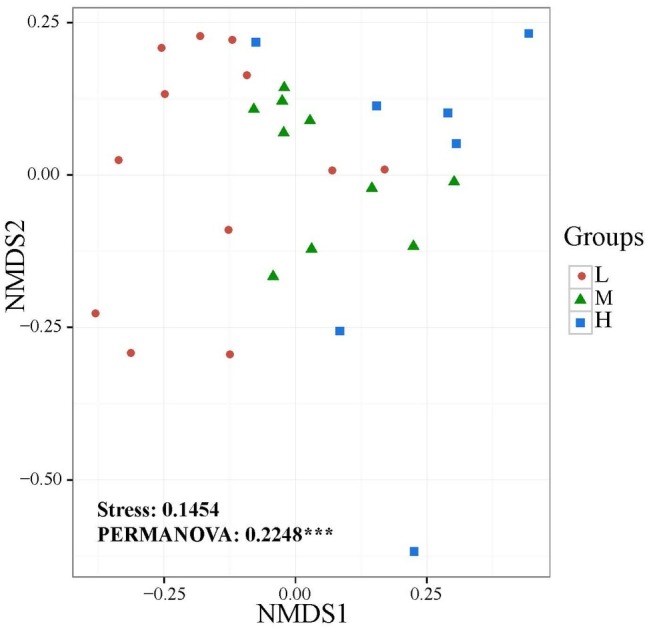
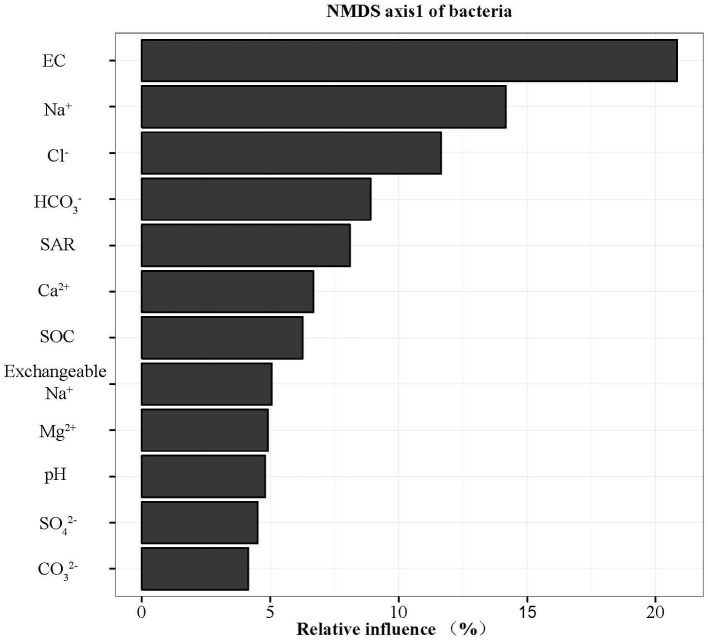
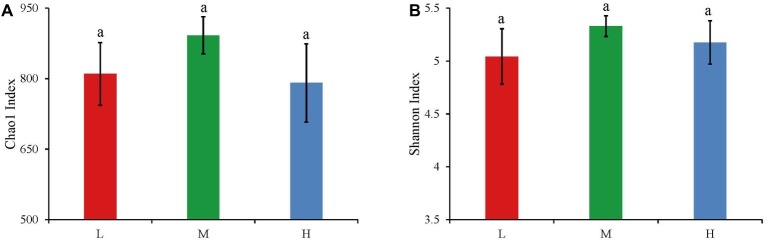
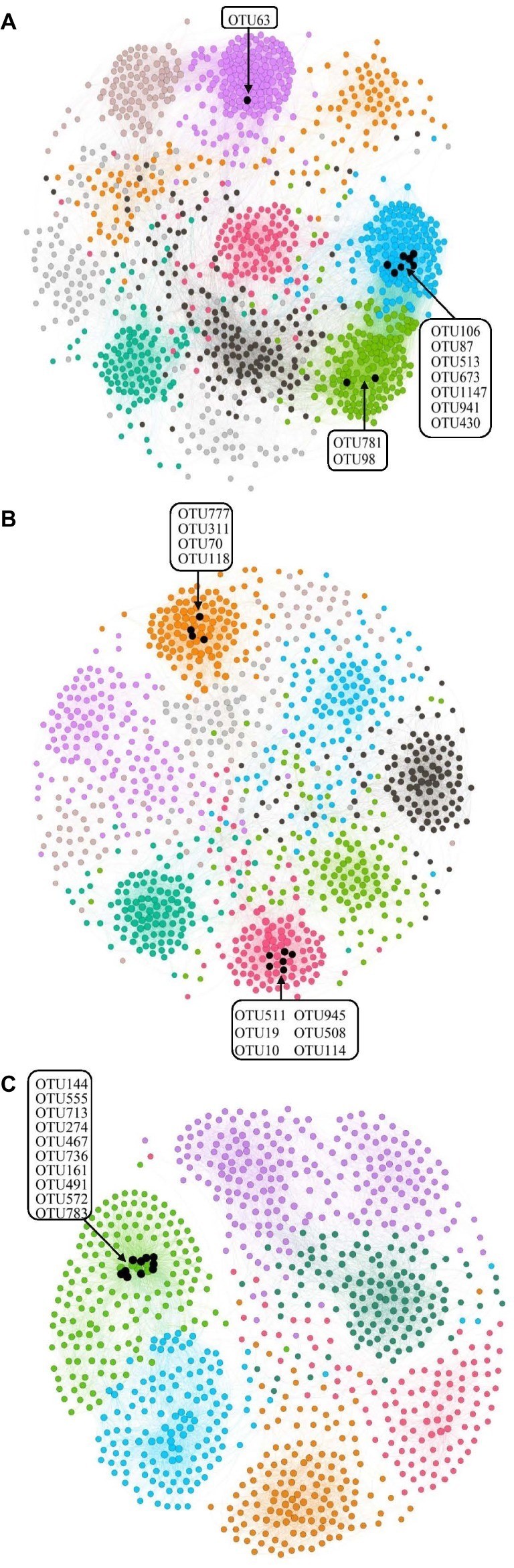
Songnen Plain is originally one of the three major glasslands in China and has now become one of the three most concentrated distribution areas of sodic-saline soil worldwide. The soil is continuously degraded by natural and anthropogenic processes, which has a negative impact on agricultural production. The investigation of microbial diversity in this degraded ecosystem is fundamental for comprehending biological and ecological processes and harnessing the potential of microbial resources. The Illumina MiSeq sequencing method was practiced to investigate the bacterial diversity and composition in saline-alkali soil. The results from this study show that the change in pH under alkaline conditions was not the major contributor in shaping bacterial community in Songnen Plain. The electrical conductivity (EC) content of soil was the most important driving force for bacterial composition (20.83%), and the second most influencing factor was Na content (14.17%). Bacterial communities were clearly separated in accordance with the EC. The dominant bacterial groups were , , and among the different salinity soil. As the salt concentration increased, the indicators changed from and to and . Our results suggest that and were the main indicator species reflecting changes of the main microbial groups and the EC as a key factor drives the composition of the bacterial community under alkaline conditions in saline-alkali soil of Songnen Plain.
松嫩平原原本是中国三大草原之一,如今已成为全球苏打盐碱土最为集中的三大分布区之一。土壤因自然和人为过程持续退化,对农业生产产生负面影响。对这个退化生态系统中的微生物多样性进行调查,对于理解生物和生态过程以及挖掘微生物资源潜力至关重要。采用Illumina MiSeq测序方法调查盐碱土中的细菌多样性和组成。本研究结果表明,碱性条件下pH的变化并非塑造松嫩平原细菌群落的主要因素。土壤电导率(EC)含量是影响细菌组成的最重要驱动力(20.83%),第二大影响因素是钠含量(14.17%)。细菌群落根据电导率明显区分开来。在不同盐度土壤中,优势细菌类群为 、 和 。随着盐浓度增加,指标从 和 变为 和 。我们的结果表明, 和 是反映主要微生物类群变化的主要指示物种,电导率作为关键因素驱动松嫩平原盐碱土碱性条件下细菌群落的组成。