Falk Hansen Hanne, Bourke Michael, Stigaard Trine, Clover James, Buckley Martin, O'Riordain Micheal, Winter Des C, Hjorth Johannesen Helle, Hansen Rasmus Hvass, Heebøll Hanne, Forde Patrick, Jakobsen Henrik Loft, Larsen Ole, Rosenberg Jacob, Soden Declan, Gehl Julie
Center for experimental drug and gene electrotransfer (CEDGE), Department of Oncology, Herlev and Gentofte Hospital, University of Copenhagen, Herlev, Denmark.
Cork Cancer Research Centre, University College Cork, Ireland.
Endosc Int Open. 2020 Feb;8(2):E124-E132. doi: 10.1055/a-1027-6735. Epub 2020 Jan 22.
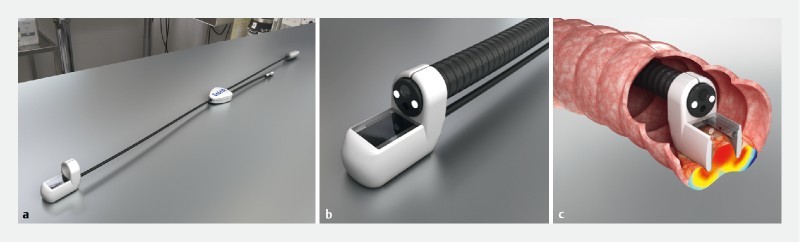
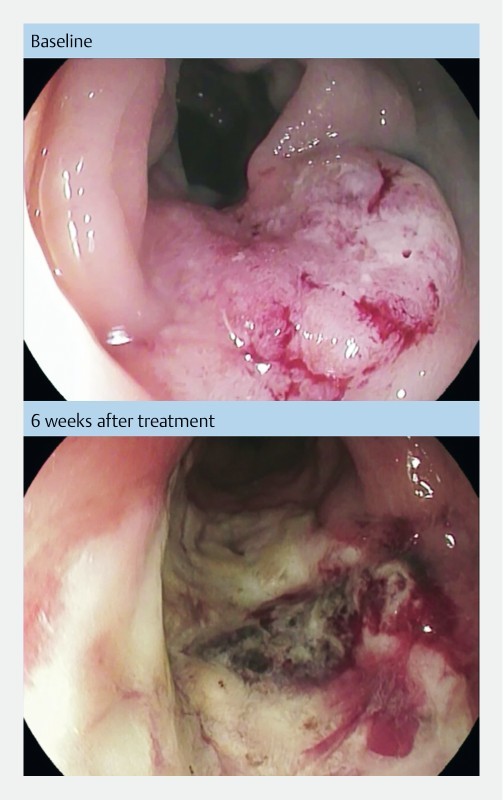
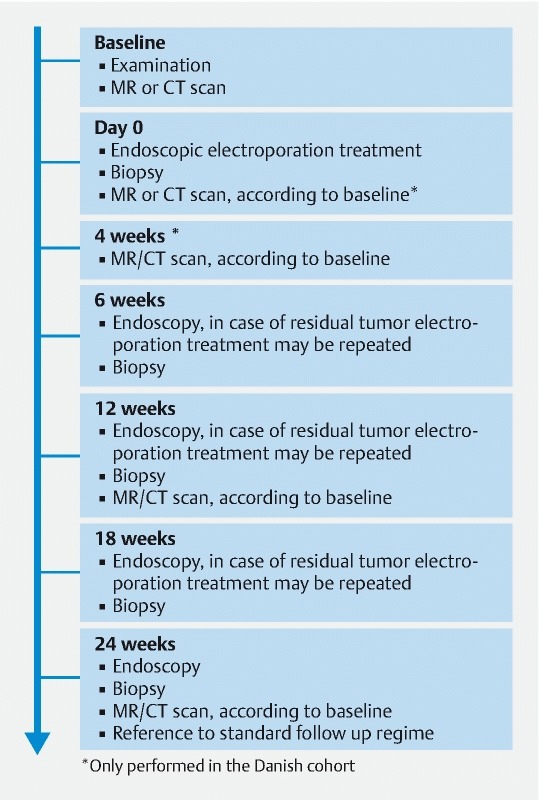
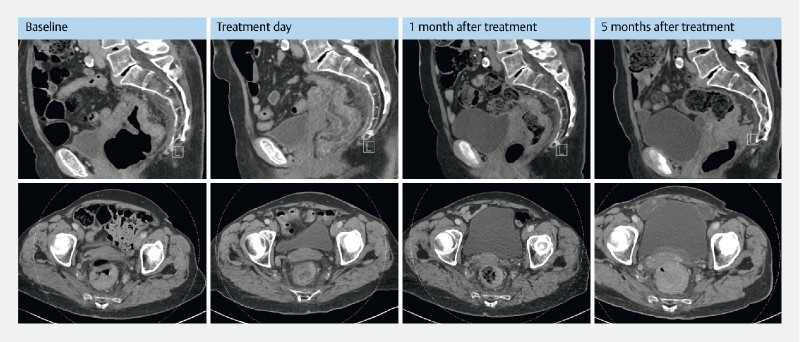
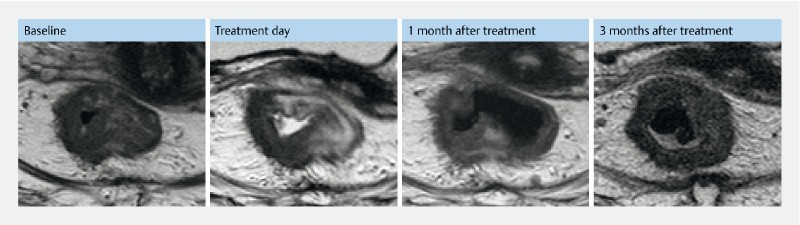
Electrochemotherapy is an anticancer treatment that uses electric pulses to facilitate uptake of chemotherapeutic drugs in tumor cells and has proven to have a high local cytotoxic effect with minimal adverse events. Electrochemotherapy has mostly been used in treatment of cutaneous metastases but development of a new endoscopic electrode device has made treatment of colorectal tumors possible. This first-in-man multicenter phase I study investigated safety and efficacy of electrochemotherapy using endoscopic electroporation in patients with colorectal tumors. Seven patients with colorectal tumors who were deemed ineligible for or had declined standard treatment were included. They were treated with bleomycin either intratumorally or intravenously and the electric pulses were delivered through the endoscopic electrode device. Safety and efficacy were assessed clinically and by scans immediately after treatment and adverse events were reported. Response was evaluated up to 6 months after treatment by scans (magnetic resonance imaging or computed tomography) and endoscopic examinations. Seven patients aged 62 to 88 years with multiple comorbidities were included and had one or two treatments each. Post-treatment scans showed tumor responses in the treated areas and no damage to surrounding tissues. Only a few grade one adverse events were reported. Three patients had preoperative rectal bleeding, of which two reported cessation of bleeding and one reported decreased bleeding. This first-in-man study shows that electrochemotherapy for colorectal tumors using the endoscopic electrode device can induce local tumor response and is safe also for fragile elderly patients with comorbidities.
电化学疗法是一种抗癌治疗方法,它利用电脉冲促进肿瘤细胞摄取化疗药物,并且已被证明具有高局部细胞毒性作用,不良事件极少。电化学疗法主要用于治疗皮肤转移瘤,但一种新型内镜电极装置的研发使结直肠肿瘤的治疗成为可能。这项首例人体多中心I期研究调查了使用内镜电穿孔进行电化学疗法治疗结直肠肿瘤患者的安全性和有效性。纳入了7例被认为不适合或已拒绝标准治疗的结直肠肿瘤患者。他们接受了瘤内或静脉注射博来霉素治疗,并通过内镜电极装置施加电脉冲。治疗后立即通过临床评估和扫描评估安全性和有效性,并报告不良事件。通过扫描(磁共振成像或计算机断层扫描)和内镜检查评估治疗后长达6个月的反应。纳入了7例年龄在62至88岁之间、患有多种合并症的患者,每人接受了一或两次治疗。治疗后的扫描显示治疗区域出现肿瘤反应,周围组织未受损。仅报告了少数一级不良事件。3例患者术前有直肠出血,其中2例报告出血停止,1例报告出血减少。这项首例人体研究表明,使用内镜电极装置对结直肠肿瘤进行电化学疗法可诱导局部肿瘤反应,对患有合并症的体弱老年患者也很安全。