Zainal-Abidin Mohamad Hamdi, Hayyan Maan, Ngoh Gek Cheng, Wong Won Fen
Department of Chemical Engineering, Faculty of Engineering, University of Malaya Centre for Ionic Liquids (UMCiL), Faculty of Engineering, Department of Medical Microbiology, Faculty of Medicine, and Centre for Separation Science and Technology (CSST), Department of Chemical Engineering, Faculty of Engineering, University of Malaya, Kuala Lumpur 50603, Malaysia.
Chemical Engineering Program, Faculty of Engineering & Technology, Muscat University, PO Box 550, Muscat P.C.130, Sultanate of Oman.
ACS Omega. 2020 Jan 15;5(3):1656-1668. doi: 10.1021/acsomega.9b03709. eCollection 2020 Jan 28.
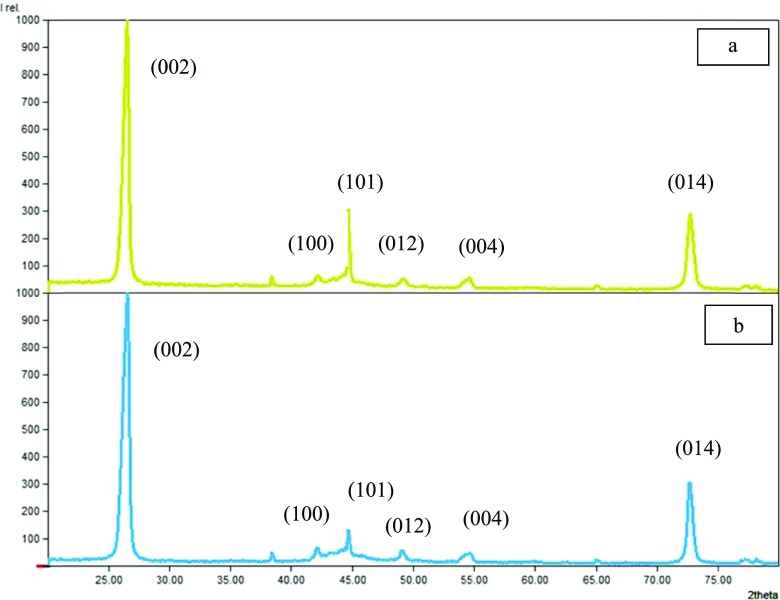
The application of graphene in the field of drug delivery has attracted massive interest among researchers. However, the high toxicity of graphene has been a drawback for its use in drug delivery. Therefore, to enhance the biocompatibility of graphene, a new route was developed using ternary natural deep eutectic solvents (DESs) as functionalizing agents, which have the capability to incorporate various functional groups and surface modifications. Physicochemical characterization analyses, including field emission scanning electron microscope, fourier-transform infrared spectroscopy, Raman spectroscopy, Brunauer-Emmett-Teller, X-ray diffraction, and energy dispersive X-ray, were used to verify the surface modifications introduced by the functionalization process. Doxorubicin was loaded onto the DES-functionalized graphene. The results exhibited significantly improved drug entrapment efficiency (EE) and drug loading capacity (DLC) compared with pristine graphene and oxidized graphene. Compared with unfunctionalized graphene, functionalization with DES choline chloride (ChCl):sucrose:water (4:1:4) resulted in the highest drug loading capacity (EE of 51.84% and DLC of 25.92%) followed by DES ChCl:glycerol:water (1:2:1) (EE of 51.04% and DLC of 25.52%). Following doxorubicin loading, graphene damaged human breast cancer cell line (MCF-7) through the generation of intracellular reactive oxygen species (>95%) and cell cycle disruption by increase in the cell population at S phase and G2/M phase. Thus, DESs represent promising green functionalizing agents for nanodrug carriers. To the best of our knowledge, this is the first time that DES-functionalized graphene has been used as a nanocarrier for doxorubicin, illustrating the potential application of DESs as functionalizing agents in drug delivery systems.
石墨烯在药物递送领域的应用引起了研究人员的广泛关注。然而,石墨烯的高毒性一直是其在药物递送中应用的一个缺点。因此,为了提高石墨烯的生物相容性,开发了一种新方法,使用三元天然深共熔溶剂(DESs)作为功能化剂,其能够引入各种官能团并进行表面修饰。采用场发射扫描电子显微镜、傅里叶变换红外光谱、拉曼光谱、布鲁诺尔-埃米特-泰勒法、X射线衍射和能量色散X射线等物理化学表征分析方法,验证功能化过程引入的表面修饰。将阿霉素负载到DES功能化的石墨烯上。结果表明,与原始石墨烯和氧化石墨烯相比,药物包封率(EE)和载药量(DLC)显著提高。与未功能化的石墨烯相比,用DES氯化胆碱(ChCl):蔗糖:水(4:1:4)进行功能化导致最高的载药量(EE为51.84%,DLC为25.92%),其次是DES ChCl:甘油:水(1:2:1)(EE为51.04%,DLC为25.52%)。负载阿霉素后,石墨烯通过产生细胞内活性氧(>95%)和扰乱细胞周期,使S期和G2/M期的细胞群体增加,从而对人乳腺癌细胞系(MCF-7)造成损伤。因此,DESs是纳米药物载体有前景的绿色功能化剂。据我们所知,这是首次将DES功能化的石墨烯用作阿霉素的纳米载体,说明了DESs作为功能化剂在药物递送系统中的潜在应用。