Besser Gerold, Erlacher Brigitte, Aydinkoc-Tuzcu Kadriye, Liu David T, Pablik Eleonore, Niebauer Verena, Koenighofer Martin, Renner Bertold, Mueller Christian A
Department of Otorhinolaryngology and Head and Neck Surgery, Medical University of Vienna, Währinger Gürtel 18-20, 1090 Vienna, Austria.
Medical Department, Krankenhaus der Barmherzigen Schwestern, Stumpergasse 13, 1060 Vienna, Austria.
J Clin Med. 2020 Jan 29;9(2):366. doi: 10.3390/jcm9020366.
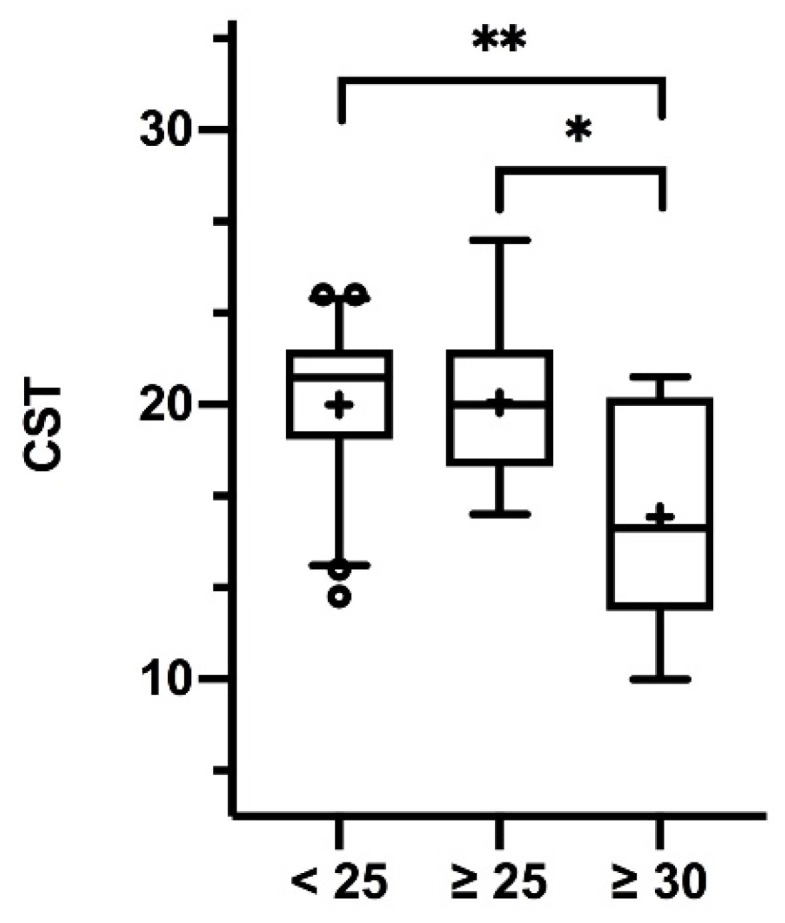
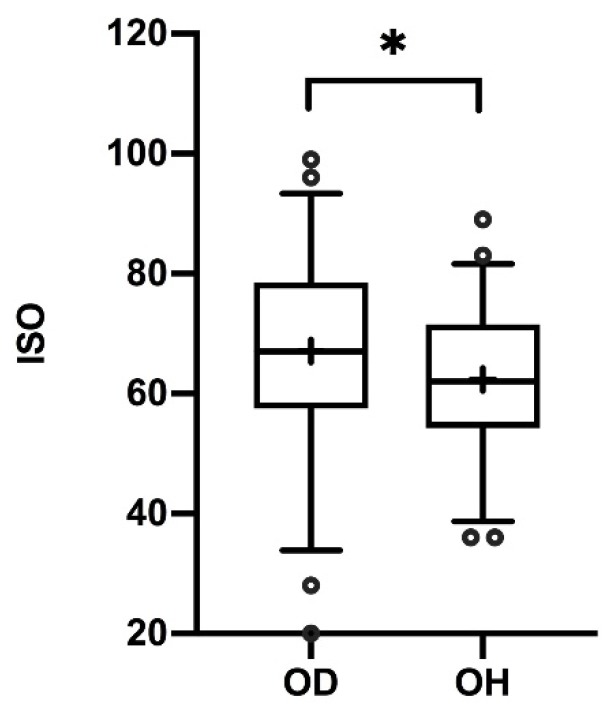
Odor (including flavor) perception plays a major role in dietary behavior. Orthonasal olfactory function (OOF) has been shown to decrease in obese subjects. Changes in retronasal olfactory function (ROF) after weight loss and in the individual significance of olfaction (ISO) in obesity are yet to be investigated. Firstly, 15 obese subjects were recruited in a pilot study and supported to conventionally lose weight. OOF (Sniffin' Sticks) was measured at the beginning and after 5.6 ± 1.3 months. Eleven subjects re-visited but barely lost weight and no major changes in OOF were observed. Secondly, the body-mass-index (BMI), OOF, and ROF (Candy Smell Test, CST) were recorded in subjectively olfactory-healthy subjects (SOHSs) and additionally the ISO questionnaire was collected in patients with olfactory dysfunction (OD). BMI correlated significantly negatively with odor discrimination ( = 0.00004) in 74 SOHSs and negatively with CST ( < 0.0001) in 66 SOHSs. In 48 SOHSs, there was a gender difference in ISO scores ( = 0.034), but no significant correlation with BMI was found ( > 0.05). ISO scores were significantly higher in 52 OD patients in comparison to SOHSs ( = 0.0382). Not only OOF but also ROF may decline with higher BMI. ISO does not seem to alter with BMI, but olfaction becomes more important once it is consciously impaired.
气味(包括风味)感知在饮食行为中起着重要作用。已证实肥胖受试者的鼻前嗅觉功能(OOF)会下降。减肥后鼻后嗅觉功能(ROF)的变化以及嗅觉在肥胖中的个体重要性(ISO)尚待研究。首先,在一项试点研究中招募了15名肥胖受试者,并支持他们按常规方式减肥。在开始时以及5.6±1.3个月后测量OOF(嗅棒测试)。11名受试者再次接受检查,但几乎没有体重减轻,且未观察到OOF有重大变化。其次,记录主观嗅觉健康受试者(SOHSs)的体重指数(BMI)、OOF和ROF(糖果嗅觉测试,CST),另外还收集了嗅觉功能障碍(OD)患者的ISO问卷。在74名SOHSs中,BMI与气味辨别能力显著负相关(=0.00004),在66名SOHSs中与CST负相关(<0.0001)。在48名SOHSs中,ISO得分存在性别差异(=0.034),但未发现与BMI有显著相关性(>0.05)。与SOHSs相比,52名OD患者的ISO得分显著更高(=0.0382)。不仅OOF,ROF也可能随着BMI的升高而下降。ISO似乎不会随BMI改变,但一旦嗅觉受到有意识的损害,嗅觉就会变得更加重要。