Bengtson May-Bente, Haugen Margaretha, Brantsæter Anne Lise, Aamodt Geir, Vatn Morten H
EpiGen-Institute, Faculty Division Akershus University Hospital, University of Oslo, Oslo, Norway.
Medical Department, Vestfold Hospital Trust, P.O. Box 2168, 3103, Tønsberg, Norway.
BMC Gastroenterol. 2020 Feb 3;20(1):28. doi: 10.1186/s12876-020-1182-y.
Patients with inflammatory bowel disease (IBD) tend to avoid dairy products to minimize abdominal pain and diarrhea. The aim of this study was to estimate the proportion of protein from dairy sources (PPDS) in mothers with and without IBD, and to explore the impact of PPDS on inadequate gestational weight gain (GWG) or small for gestational age (SGA) in IBD compared to non-IBD in the population-based Norwegian Mother, Father and Child Cohort Study (MoBa).
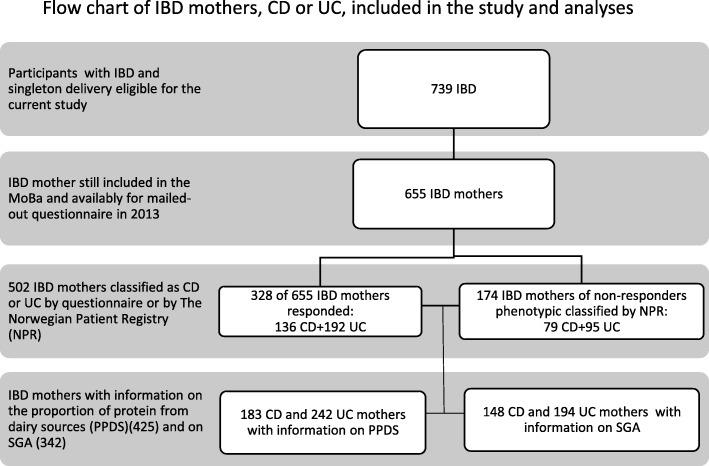
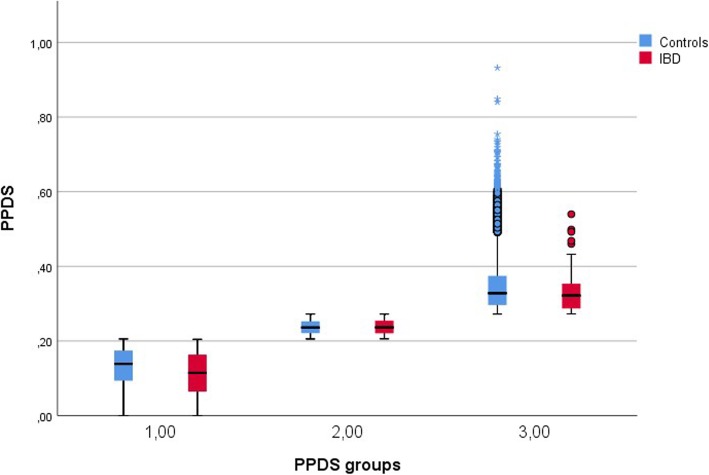
MoBa includes about 95,000 pregnant women recruited throughout Norway from 1999 to 2008. IBD phenotype and complications during pregnancy and delivery were ascertained. This study included 148 mothers with Crohn disease (CD) and 194 with ulcerative colitis and 68,858 non-IBD mothers. In mid-pregnancy participants answered a comprehensive semi-quantitative food frequency questionnaire assessing diet since the start of pregnancy. PPDS was ranked in quartiles. The two lowest quartiles were merged and considered to represent the lowest of three PPDS groups. We used logistic regression analyses to model multivariate associations, adjusting for potential confounders.
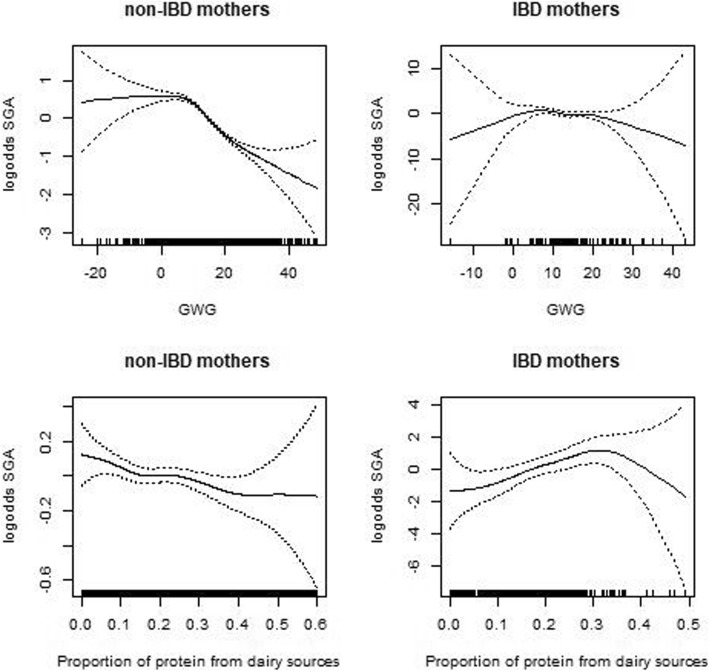
The risk of belonging to the lowest PPDS group was twice as high in IBD mothers compared to non-IBD mothers (aOR = 2.02, 95% CI: 1.53, 2.67). Low compared to high PPDS strongly predicted inadequate GWG in CD (aOR = 4.22, 95% CI: 1.28, 13.92). Surprisingly, and in opposition to the non-IBD mothers, PPDS was positively associated with the risk of SGA in IBD mothers. IBD mother with low PPDS was associated with significantly lower risk of SGA than non-IBD mothers and IBD mothers with high PPDS (aOR = 0.19, 95% CI: 0.07, 0.50). The interaction term IBD/PPDS was the factor that linked SGA to IBD compared to non-IBD, and increased the association between IBD and SGA with a factor of three.
This study shows that intake of dairy products is lower in IBD mothers than in non-IBD mothers, and further, that low intake of dairy products in IBD mothers is associated with reduced risk of SGA compared to non-IBD and IBD mothers with high PPDS.
炎症性肠病(IBD)患者往往会避免食用乳制品,以尽量减少腹痛和腹泻。本研究的目的是估计患有和未患有IBD的母亲中来自乳制品的蛋白质比例(PPDS),并在基于人群的挪威母亲、父亲和儿童队列研究(MoBa)中,探讨与非IBD母亲相比,PPDS对IBD母亲孕期体重增加不足(GWG)或小于胎龄(SGA)的影响。
MoBa研究纳入了1999年至2008年期间在挪威各地招募的约95,000名孕妇。确定了IBD的表型以及孕期和分娩期间的并发症。本研究纳入了148名克罗恩病(CD)母亲、194名溃疡性结肠炎母亲和68,858名非IBD母亲。在孕中期,参与者回答了一份全面的半定量食物频率问卷,该问卷评估了自怀孕开始以来的饮食情况。PPDS被分为四分位数。将最低的两个四分位数合并,并视为代表三个PPDS组中最低的一组。我们使用逻辑回归分析来建立多变量关联模型,并对潜在的混杂因素进行调整。
与非IBD母亲相比,IBD母亲属于最低PPDS组的风险高出两倍(调整后比值比[aOR]=2.02,95%置信区间[CI]:1.53,2.67)。与高PPDS相比,低PPDS强烈预示着CD患者GWG不足(aOR=4.22,95%CI:1.28,13.92)。令人惊讶的是,与非IBD母亲相反,PPDS与IBD母亲发生SGA的风险呈正相关。PPDS低的IBD母亲发生SGA的风险显著低于非IBD母亲和PPDS高的IBD母亲(aOR=0.19,95%CI:0.07,0.50)。IBD/PPDS交互项是将SGA与IBD(与非IBD相比)联系起来的因素,并使IBD与SGA之间的关联增加了三倍。
本研究表明,IBD母亲的乳制品摄入量低于非IBD母亲,此外,与非IBD母亲和PPDS高的IBD母亲相比,IBD母亲乳制品摄入量低与SGA风险降低有关。