Key Laboratory of Laboratory Medical Diagnostics Designated by the Ministry of Education, School of Laboratory Medicine, Chongqing Medical University, Chongqing, China.
Department of Clinical Laboratory, The Third Affiliated Hospital of Chongqing Medical University, Chongqing 401120, China.
Int J Biol Sci. 2020 Jan 1;16(3):471-482. doi: 10.7150/ijbs.39123. eCollection 2020.
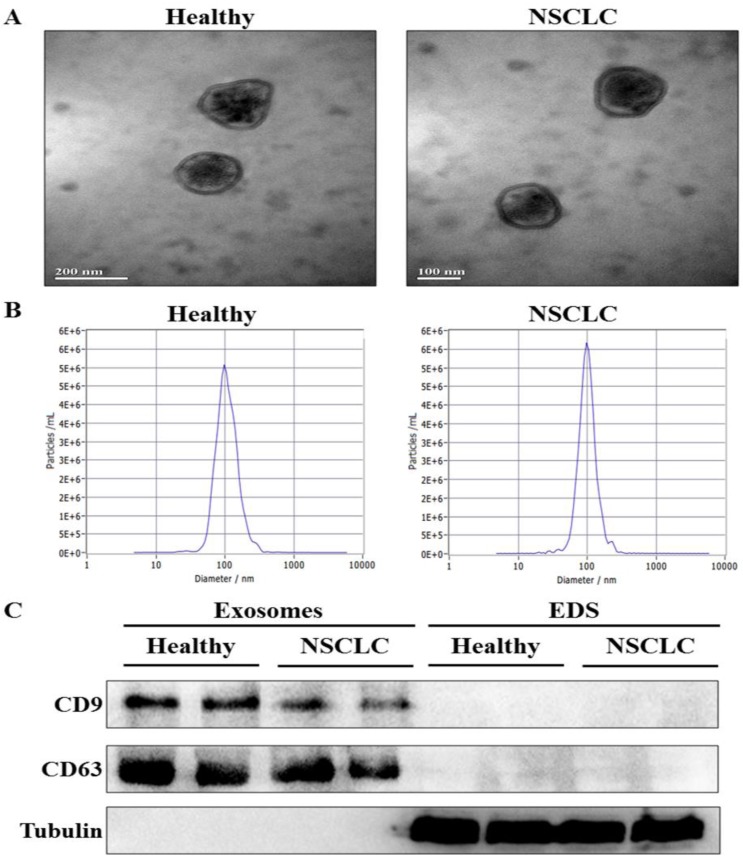
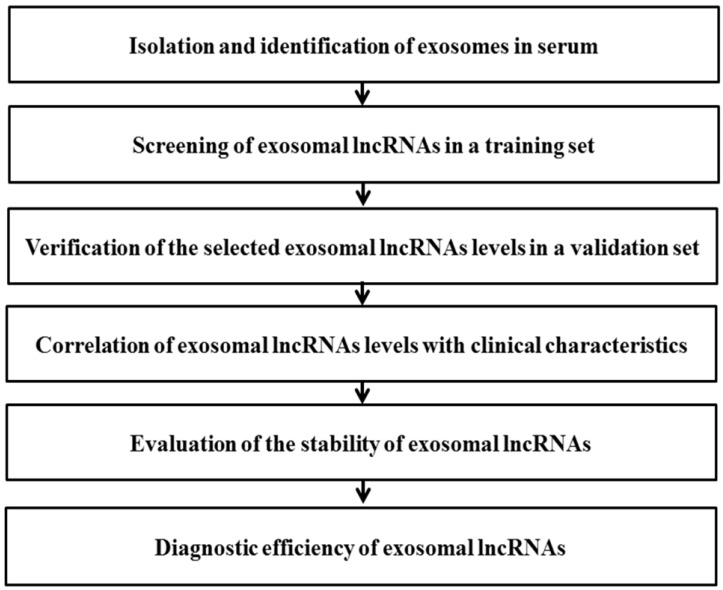
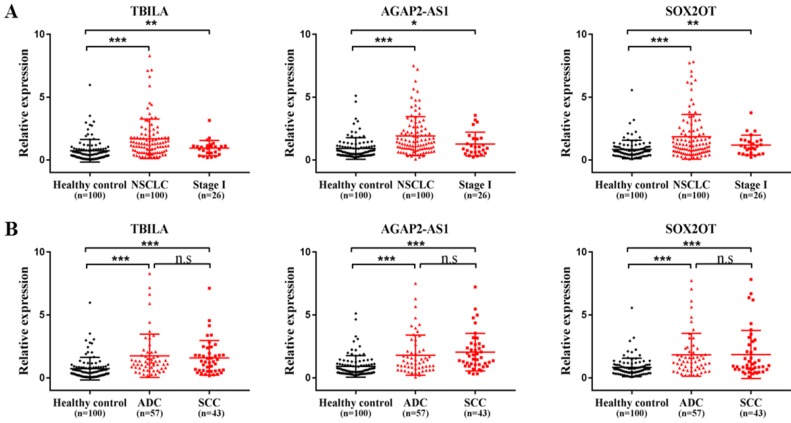
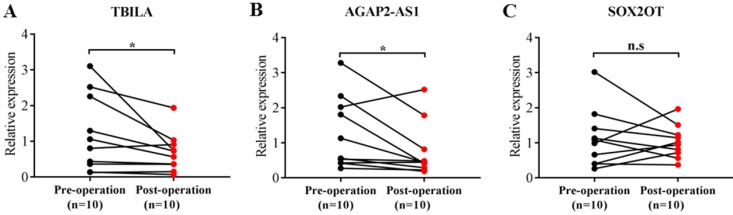
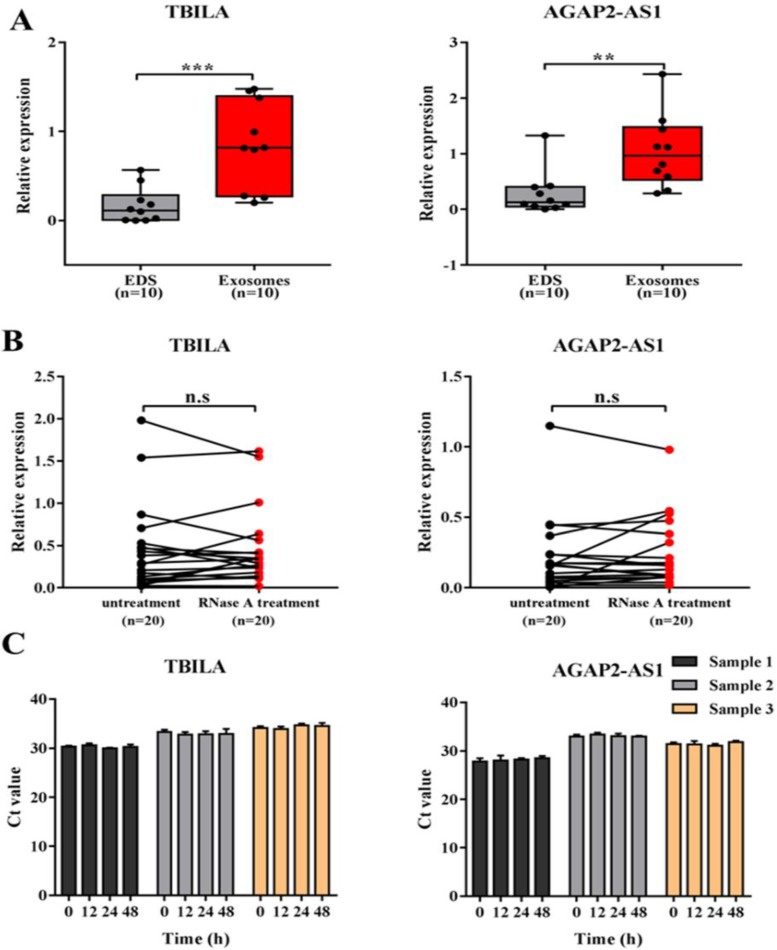
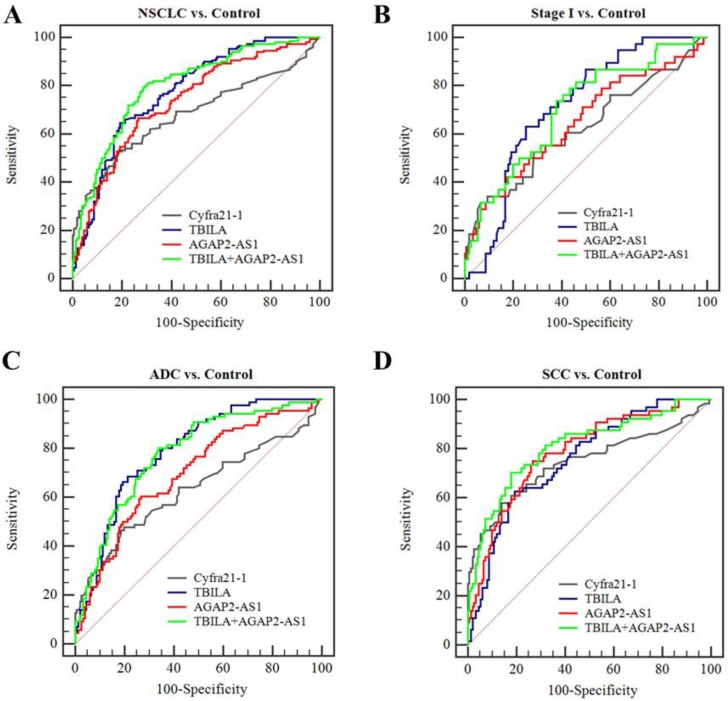
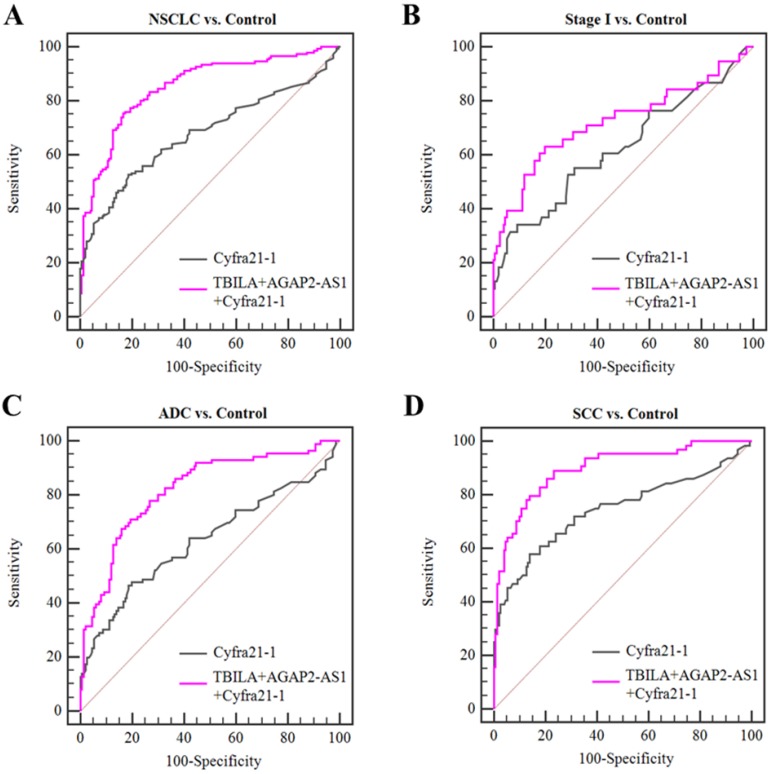
Non-small cell lung cancer is the most common type of cancer with a poor prognosis, and development of an effective diagnostic method is urgently needed. Exosomal lncRNAs, a class of transcripts longer than 200 nucleotides packaged into exosomes, have been defined as an ideal diagnostic biomarker for cancer. However, little is known about the clinical utility of exosomal lncRNAs in NSCLC. Here, we aimed to identify exosomal lncRNAs as promising biomarkers for NSCLC diagnosis. First, serum exosomes from NSCLC patients were successfully isolated by a polymer precipitation kit and then identified by TEM, NTA and western blot analysis. A total of nine candidate lncRNAs were detected by qRT-PCR in a training set. The two exosomal lncRNA TBILA and AGAP2-AS1 were screened out for the higher levels in NSCLC patients than that of healthy controls in a validation set. And there was a significant positive correlation between these exosomal lncRNAs levels and tumor size, lymph node metastasis and TNM stage. Additionally, we validated that these exosomal lncRNAs were stable in serum. Next, we evaluated the diagnostic efficiency of exosomal lncRNAs in NSCLC patients by ROC curve analysis. The data showed that individual TBILA or AGAP2-AS1 exhibited better diagnostic efficiency in NSCLC patients with different tumor pathologic subtypes and early stage, whereas the combination of lncRNAs did not provide better results than individual lncRNAs. Notably, the combination of two exosomal lncRNAs and the serum tumor biomarker Cyfra21-1 widely used in clinical practices further improved the diagnostic accuracy for NSCLC patients. This study suggests that exosomal lncRNA TBILA and AGAP2-AS1 may be promising biomarkers for diagnosis of NSCLC.
非小细胞肺癌是最常见的癌症类型,预后较差,因此迫切需要开发一种有效的诊断方法。外泌体 lncRNA 是一类长度超过 200 个核苷酸的转录本,被定义为癌症的理想诊断生物标志物。然而,外泌体 lncRNA 在非小细胞肺癌中的临床应用知之甚少。在这里,我们旨在确定外泌体 lncRNA 作为非小细胞肺癌诊断的有前途的生物标志物。首先,通过聚合物沉淀试剂盒成功分离了非小细胞肺癌患者的血清外泌体,然后通过 TEM、NTA 和 western blot 分析进行鉴定。通过 qRT-PCR 在训练集中检测到 9 个候选 lncRNA。在验证集中,筛选出了两种外泌体 lncRNA TBILA 和 AGAP2-AS1,它们在非小细胞肺癌患者中的水平高于健康对照者。并且这些外泌体 lncRNA 水平与肿瘤大小、淋巴结转移和 TNM 分期呈显著正相关。此外,我们验证了这些外泌体 lncRNA 在血清中是稳定的。接下来,我们通过 ROC 曲线分析评估了外泌体 lncRNA 在非小细胞肺癌患者中的诊断效率。数据表明,TBILA 或 AGAP2-AS1 单独在不同肿瘤病理亚型和早期的非小细胞肺癌患者中具有更好的诊断效率,而 lncRNA 的组合并没有比单个 lncRNA 提供更好的结果。值得注意的是,两种外泌体 lncRNA 和广泛应用于临床实践的血清肿瘤标志物 Cyfra21-1 的组合进一步提高了非小细胞肺癌患者的诊断准确性。这项研究表明,外泌体 lncRNA TBILA 和 AGAP2-AS1 可能是非小细胞肺癌诊断的有前途的生物标志物。